
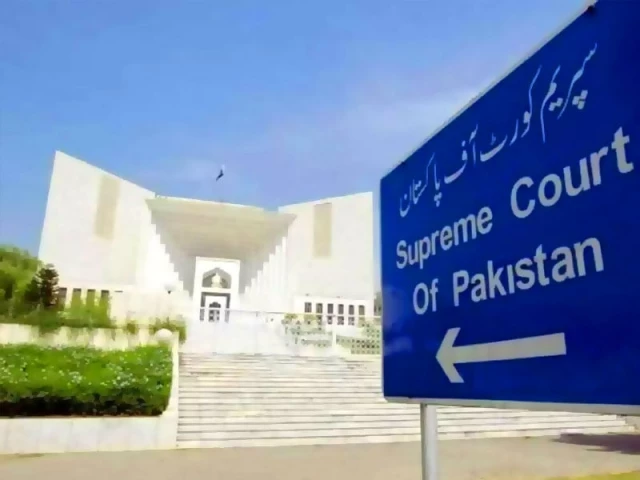
The Court considers that administrative inefficiency, poor governance or inaction cannot be used to deny legitimate rights.
ISLAMABAD:
The Supreme Court has held that promotion is a natural and integral part of public service and that every eligible public servant has a legitimate expectation of being considered for advancement within a reasonable time.
The court also held that administrative inefficiency, poor governance or inaction could not be used to deny legitimate service rights as it restored the promotion of a civil servant from the date of the first meeting of the Departmental Promotion Committee (DPC) held in 2012.
A three-member bench comprising Justice Ayesha A Malik, Justice Muhammad Hashim Khan Kakar and Justice Ishtiaq Ibrahim allowed the civil petition of Fakhar Majeed, a draftsman in the Punjab irrigation department, setting aside a February 16, 2024 order of the Punjab Administrative Tribunal which had dismissed his appeal.
The court said the petitioner would be considered to have been promoted to the post of Draftsman (BPS-14) with effect from January 21, 2012.
The verdict was written by Justice Ayesha A Malik and spans seven pages. The judiciary transformed the civil request into an appeal and allowed it, finding that the court had not appreciated the applicant’s unjustified deprivation of promotion despite his eligibility.
Fakhar Majeed was appointed to the Punjab Irrigation Department in October 1999.
According to the record, he was entrusted with the duties of a draftsman on the basis of current rates from December 2008, under rule 10(b) of the Punjab Civil Servants (Appointment and Conditions of Service) Rules, 1974.
He continued to serve in the senior position for several years through repeated extensions before being officially promoted in May 2019 following a DPC meeting held on May 4, 2019.
The petitioner claimed that he became eligible for regular promotion as early as 2010 when posts were available and his case should have been considered in the first DPC convened in January 2012. However, his case was not placed before the committee and no explanation was provided for this omission.
The Punjab government defended the court’s decision relying on Section 8(3) of the Punjab Civil Services Act, 1974, arguing that promotion could only be granted with immediate effect and not from the date of availability of a vacant post.
The Deputy General Counsel argued that promotion was not a vested right and that retrospective promotion was prohibited by law.
Rejecting this argument, the Supreme Court observed that the facts of the case did not fall within the scope of Article 8(3), as the petitioner had been holding the post continuously on the basis of the going rate since 2008.


