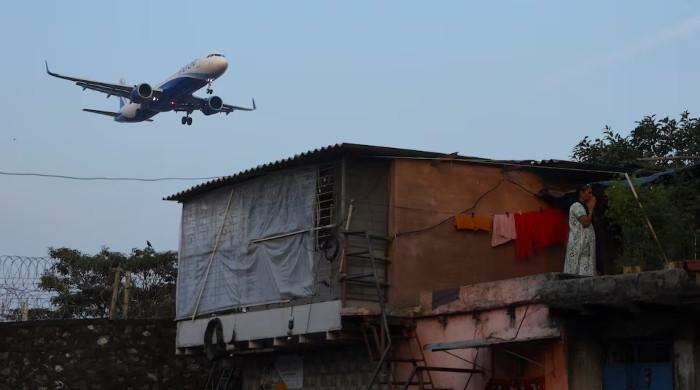
A wave of flight cancellations by IndiGo, India’s largest airline, has triggered a week of chaos and grounded tens of thousands of passengers, highlighting the risks of a duopoly-like situation in the world’s fastest-growing aviation market.
For years, IndiGo, with a 65% domestic market share, has helped Indians realize their dreams of flying – an aspiration shared by Prime Minister Narendra Modi who once said that “those who wear slippers should also be seen on planes”.
The airline has become the poster child for the country’s aviation boom in recent years, with its promise of low fares and on-time performance.
But last week changed everything: IndiGo canceled at least 2,000 flights due to a pilot shortage after failing to properly plan for new rules limiting the number of working hours. It disrupted holiday plans, weddings and flooded social media with photos and videos of baggage piling up in terminals – scenes never before seen in the history of Indian aviation.
IndiGo’s woes come at a critical time for the airline and the industry. Rival Air India, which has a 27% market share and was government-owned until 2022, has faced years of complaints about an aging fleet and poor service, and has faced tougher scrutiny since a crash in June killed 260 people.
IndiGo said it hoped to return to normal in the coming days, but its problems have prompted warnings from politicians and aviation experts. The crisis has raised concerns about the risks of over-reliance on a single carrier and whether the airline is truly too big to fail.
The government intervened quickly, relaxing rules on pilot fatigue management to mitigate disruption. IndiGo has repeatedly apologized but has not disclosed financial losses due to the crisis.
“IndiGo’s size has grown to the point where operational setbacks pose systemic risk,” said Harsh Vardhan, chairman of Starair Consulting.
If IndiGo or Air India encounter “problems, there will be chaos in Indian aviation… the government must reduce taxes on jet fuel and encourage more competition”, he added.
IndiGo’s dominance in India
Airline duopolies exist in a few countries, such as Australia and Canada. Even China, the second most populous country in the world, has three state-owned airlines and several private ones.
The Indian aviation market is not a duopoly in the strict sense, but analysts say the 92% market share of IndiGo and Air India – including its low-cost carrier Air India Express – means it is a duopoly-like situation and creates vulnerabilities.
On many routes connecting small towns, IndiGo has a monopoly.
“A country cannot grow robustly with duopolies, or effective monopolies, in any sector,” GR Gopinath, founder of the now-defunct low-cost airline Air Deccan, wrote in a weekend editorial in the Economic Times newspaper.
Despite government efforts to expand airports and simplify operating rules, few carriers have succeeded. High taxes, fierce competition and supply chain problems have driven airlines like Kingfisher, Jet Airways and Go First into bankruptcy in recent years.
IndiGo did not respond to a Reuters request for comment. On Sunday, it said it was on track to operate more than 1,650 flights and expressed confidence that operations would stabilize by Wednesday.
Rapid rise of IndiGo
Modi spoke about his ambitions for India’s aviation sector at the World Airlines Conference in New Delhi this year, but that vision depends primarily on the success of IndiGo and Air India.
About 174 million passengers traveled to and within India by air in 2024, 10% more than a year ago, according to data from the International Air Transport Association.
Founded in 2006 by Indian businessmen Rakesh Gangwal and Rahul Bhatia, IndiGo has grown rapidly. It now has a fleet of more than 400 aircraft, mainly Airbus A320s, and serves nearly 380,000 customers per day through its more than 2,000 daily flights.
The airline is led by CEO Pieter Elbers, former head of KLM Royal Dutch Airlines.
“This seems to be the lowest point in the company’s history. The disruptions are hurting the brand’s image,” said an IndiGo executive, who requested anonymity due to the sensitivity of the matter.
With $9 billion in revenue and $807 million in profits in the last fiscal year, IndiGo dominates the Indian aviation sector. Its annual revenue will likely take a hit due to disruption – with customer refunds already reaching $68 million on Sunday and set to rise.
But the biggest blow will be its reputation, built over the years by making punctuality a key selling point.
A 2011 IndiGo YouTube advert had pilots and other staff singing in unison: “Every time we fly, we’ll make sure you land on time.”
The carrier had an average on-time performance of 91.4% as recently as July – the best among Indian airlines at six major airports. However, on Friday, that figure plunged to just 3.7%.
The crisis is reminiscent of Southwest Airlines’ holiday season crisis of 2022, which resulted in the cancellation of 16,900 flights and stranded more than 2 million passengers. These disruptions cost the American carrier at least $400 million in revenue.