
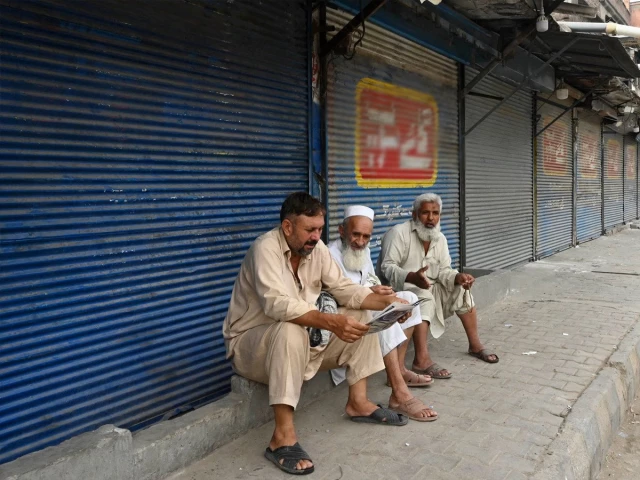
AKTA cites widespread lockdowns, soaring inflation and unemployment and warns of no economic recovery in sight for 2026
Small traders have declared 2025 as “the worst year” in the country’s history in terms of business activity, investment, unemployment and inflation. They said overall business activity remained below 60% throughout the year due to political instability and economic uncertainty.
According to a report authored by Atiq Mir, president of the Karachi Alliance of Traders (AKTA), 2025 turned out to be a “year of closures” as a large number of industries and business units shut down, triggering a sharp rise in unemployment. The report said investor confidence was severely shaken, while capital flight accelerated as local investors continued to move their funds abroad.
The report further said that persistent and unbearable inflation made 2025 a nightmare for the poor and middle classes, while the economy suffered setbacks on all fronts. He criticized policymakers who claim to have avoided default but who have failed to protect industry and commerce from collapse and bankruptcy.
AKTA observed that the performance of government institutions remained extremely poor during the year. He claimed that despite 35 foreign visits by leaders in the name of attracting foreign investments, no notable investments materialized, while domestic capital continued to leave the country.
The report adds that no serious efforts or effective economic strategies are visible to pull the country out of the crisis, and warns that no signs of improvement are expected in 2026 either. The traders’ report points to excessive taxation, soaring prices of electricity, gas, gasoline and the dollar, as well as the inability to curb artificial price increases as major factors in the continued economic decline.
It says essential commodities have become out of reach of poor and middle-income groups, while traditional market activity, crowds and purchasing trends have remained absent even during peak sales periods. Atiq Mir said the uncontrolled expansion of indirect taxes has plunged the labourers, workers and salaried classes into severe difficulties with many of them facing unemployment and hunger.
The sharp decline in job opportunities, he added, has also contributed to a worrying increase in crime. According to the report, 80% of traders suffered losses, many were unable to pay their employees’ salaries and more than 50% of workers lost their jobs. Rising store rents, electricity bills and operational costs have become impossible to bear.
The report criticizes the government for relying on artificial and misleading economic indicators to reassure the public instead of taking concrete measures to control inflation and revive trade and industry.
He further points out that even though the stock market has reached record highs, commercial and industrial activity has remained at historically low levels. Prices of essential commodities including pulses, cooking oil, milk, meat and vegetables continued to increase daily.
The report describes Karachi – the country’s economic hub – as having become a “mafia-controlled city”, where traders and industrialists are under constant threat of extortion. The metropolis of more than 40 million people, he claims, continues to suffer from inflation, unemployment, encroachments, land grabbing, traffic jams, water shortages, insecurity, lawlessness and serious municipal mismanagement.
The AKTA report also criticizes the performance of the Sindh government, saying that like previous years, governance remained poor in 2025, with corrupt institutions failing to bring about improvements in any sector. The report claims that agencies responsible for controlling prices made deals with profiteering mafias instead of carrying out effective enforcement measures, leading to widespread artificial inflation in the markets.


