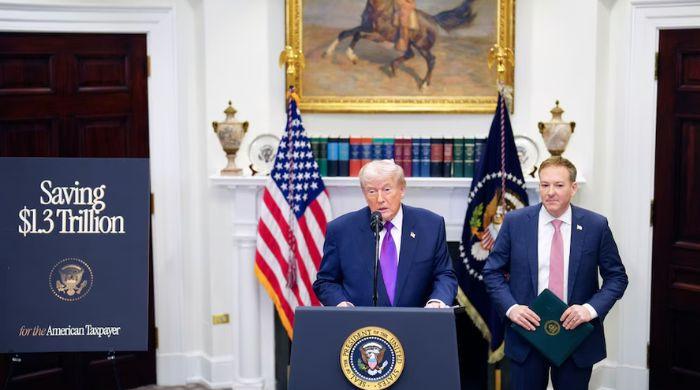
On Thursday, February 12, the Trump administration erased scientific findings that supported the federal government’s legal authority to combat climate change for nearly two decades.
U.S. President Donald Trump announced the repeal of the 2009 “hazard finding,” the EPA’s determination that greenhouse gases threaten human health and well-being.
With this decision, the federal government has legal authority to regulate carbon dioxide, methane and other global warming pollution from vehicles, power plants and oil and gas operations.
At the White House, Trump said, “This is about as big as it gets,” accompanied by EPA Administrator Lee Zeldin.
“We are officially ending so-called endangerment due to disastrous Obama-era policies,” Trump added.
This finding was first established under the Clean Air Act and has been the legal basis for virtually all federal climate regulations since 2009.
With its repeal, the EPA can no longer limit emissions from the nation’s biggest sources of climate pollution, even as scientists warn of accelerating heat waves, wildfires, drought and extreme weather.
The repeal, called the “Holy Grail” of what Zeldin calls the “religion of climate change,” hinges, from a legal perspective, on the idea that Congress never authorized greenhouse gas regulation and that the Obama and Biden administrations overstepped the authority granted to them.
Zeldin said, “If Congress wouldn’t allow it, EPA shouldn’t do it. If Congress wants EPA to completely regulate greenhouse gases, then Congress can clearly make it law.”
However, critics called the decision a catastrophic abdication of duty.
Natural Resources Defense Council Chairman Manish Bapna said, “This is a final blow in the years-long fight by oil, gas and coal interests to stop America’s transition to clean energy. The science and the law are crystal clear.”
Legal challenges are currently underway. The American Lung Association announced its intention to file a lawsuit against the decision.
According to them, “the repeal is illegal”. Environmental legal experts say the Supreme Court has “repeatedly and expressly recognized” the EPA’s power in previous decisions, including in 2022.
If upheld, the repeal would make it impossible for the EPA to regulate carbon emissions forever and would prevent any future administration from being able to restore those powers without an act of Congress.
“We will see them in court and we will win,” Bapna said.