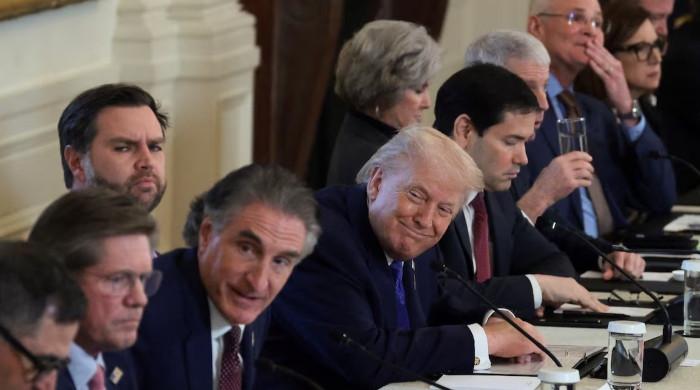
WASHINGTON: US President Donald Trump met with executives from some of the world’s biggest oil companies at the White House on Friday to discuss Venezuela, saying he wanted them to invest $100 billion in the country to significantly increase its production.
Trump named oil as the priority in his strategy for the South American nation after US forces captured its leader Nicolas Maduro in a nighttime raid on the capital on January 3.
“American companies will have the opportunity to rebuild Venezuela’s rotten energy infrastructure and, ultimately, increase oil production to levels never seen before,” Trump said at the opening of the meeting.
He was flanked by top executives from Exxon Mobil, ConocoPhillips, Chevron Corp and others.
“We will decide which oil companies will establish themselves,” declared the Republican president.
He praised the agreement reached with Venezuela’s interim leaders to supply 50 million barrels of crude oil to the United States, where many refineries are specially equipped to refine it. Trump has said he expects these deliveries to continue indefinitely.
“One of the things the United States will get out of this situation will be even lower energy prices,” he said.
U.S. forces continued to apprehend Venezuelan oil tankers at sea to enforce an embargo. The fifth such seizure was announced on Friday.
Trump administration officials have said they must control Venezuela’s oil sales and revenues indefinitely to ensure the country acts in the U.S. interest, including reducing corruption and drug trafficking.
Some Democratic lawmakers have called the approach extortion. Industry analysts have also warned of political instability as the country walks a fine line between denouncing Maduro’s capture and appeasing the United States.
“Not investable”
Companies like Chevron, Vitol and Trafigura are competing for U.S. licenses to market existing Venezuelan crude oil, but oil majors are reluctant to commit to big, long-term investments in Venezuela due to high costs and political instability.
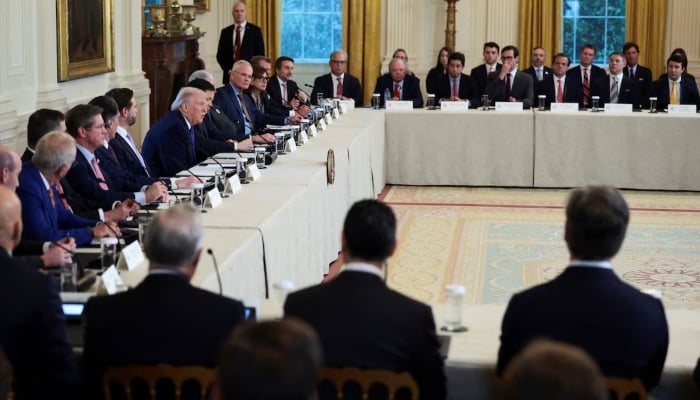
Exxon CEO Darren Woods said during the White House meeting that the company views Venezuela as currently “uninvestable” and needs significant changes to return there.
“Our assets have been seized there twice, and so you can imagine that going back a third time would require some pretty significant changes,” he said.
“We are confident that with this administration and President Trump, working hand in hand with the Venezuelan government, these changes can be implemented,” he said.
Exxon and ConocoPhillips left Venezuela almost 20 years ago after nationalizing their assets.
Chevron Vice President Mark Nelson said the company was committed to investing in Venezuela. Chevron is the only American oil major still present in the country.
Several smaller independents and private equity-backed players were also invited to the meeting, including some with ties to Colorado, Energy Secretary Chris Wright’s home state. Many of these leaders praised Trump for his policies toward Venezuela and expressed willingness to invest in the country and market its oil.
Decades of underinvestment have eroded production in Venezuela, an OPEC member that has the world’s largest oil reserves but accounts for only about 1% of global supply.
Venezuela pumped up to 3.5 million barrels per day in the 1970s, more than triple current levels.
Trump said during the meeting that the United States would guarantee the physical and financial security of oil companies investing in Venezuela, but did not provide details.
Friday morning, Energy Secretary Chris Wright said in an interview on Fox News ahead of White House negotiations, there is “a real possibility” that the United States will use its Export-Import Bank to help finance major oil projects in Venezuela. This could reduce financial risks for companies that decide to invest there.
Trump added that ongoing discussions with oil companies were aimed at securing commitments.
“We need to get them to invest and then get their money back as quickly as possible,” Trump said. “And then we can share everything between Venezuela, the United States and them. I think it’s simple. I think the formula is simple.”