
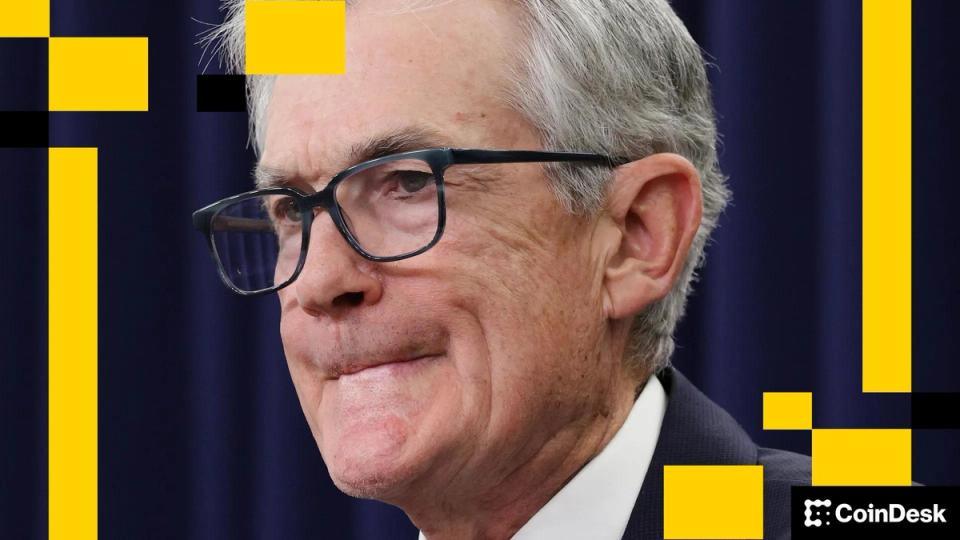
The U.S. Federal Reserve announced a widely expected 25 basis point rate cut on Wednesday, lowering the range for its benchmark federal funds rate by 25 basis points, to between 3.50% and 3.75%. This is the third consecutive quarter-point reduction and brings short-term borrowing costs to their lowest level since 2022.
“Uncertainty regarding the economic outlook remains high,” the Fed said in its monetary policy statement. “The Committee is attentive to the risks weighing on both sides of its dual mandate and judges that the downside risks to employment have increased in recent months.”
In its statement, the Fed also noted that reserve balances had declined and said it intended to begin purchasing short-term Treasury securities, if necessary, to “maintain an adequate supply of reserves.”
The price of bitcoin was volatile in the minutes following the news, but remained around the $92,400 level. U.S. stocks rose slightly and the 10-year Treasury yield fell two basis points to 4.15%.
Today’s rate cut takes on particular significance given the unusual extent of public dissension among Fed members over the direction of monetary policy. Over the past few weeks, several people have been vocal about their opposition not only to today’s easing, but also to the central bank’s 25 basis point cut at its previous meeting in October.
Indeed, two members – Jeffrey Schmid of the Kansas City Fed and Austan Goolsbee of the Chicago Fed – voted to maintain monetary policy. A third member, Fed Governor Stephen Miran – recently appointed by Trump – voted for a 50 basis point cut.
Updated economic projections
Alongside the policy decision, this Fed meeting was accompanied by an updated set of economic projections from the central bank.
Core inflation is now estimated at 3% for 2025 and 2.5% for 2026, each down 10 basis points from previous estimates. GDP growth is expected to be 1.7% this year and 2.3% in 2026, compared to 1.6% and 1.8% respectively previously estimated.
The dot plot has barely changed, with policymakers still forecasting only one rate cut in 2026, even though markets have priced in two rate cuts next year.
Today’s news comes at a time when policymakers are still operating without the release of several key economic data that remain delayed or suspended due to the U.S. government shutdown. Also in play is President Trump’s continued disparagement of current Fed Chairman Jerome Powell, alongside his search for a replacement when Powell’s term ends next year.
Attention now turns to Powell’s post-meeting news conference at 2:30 p.m. ET, where listeners will try to better discern his and the Fed’s thoughts on the future direction of monetary policy. Before Powell’s appearance, traders had forecast a 24% chance of another rate cut in January, according to CME FedWatch.


