
For the first time, the US Securities and Exchange Commission sought to clearly define the different types of crypto assets and how the regulator will approach them, releasing these new standards on Tuesday alongside its sister agency responsible for commodities.
The SEC’s interpretive guidance, which does not yet have the weight of a formal new rule, was promised by its head, Chairman Paul Atkins, who was put in place by President Donald Trump to implement a pro-crypto agenda. And it was released in partnership with the Commodity Futures Trading Commission, just days after the two agencies agreed to a formal relationship in which they plan to regulate crypto and other industries as close partners.
“After more than a decade of uncertainty, this interpretation will allow market participants to clearly understand how the Commission treats crypto assets under the federal securities laws,” Atkins said in a statement.
Former SEC Chairman Gary Gensler, a Democratic appointee, had refused to commit to policies tailored to the crypto sector, leaving a long-standing gap in his regulator’s certainty in the world’s most important market. Atkins said Tuesday that the new interpretation of the “token taxonomy” takes a position that Gensler’s agency had rejected: “Most crypto assets are not themselves securities.”
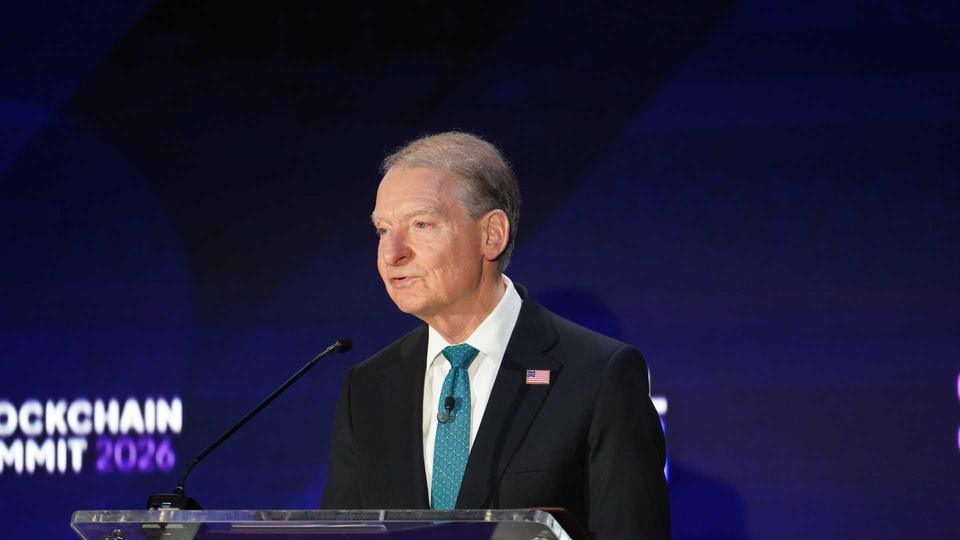
Atkins spoke about it at the Digital Chamber’s DC Blockchain Summit, and his agency plans to launch a formal rulemaking process “in a week or two,” which will feature other crypto “proposals” that we’ll address,” he said in response to a question from CoinDesk after his remarks. That proposal — expected to be more than 400 pages long — will include his plans for an “innovation exemption” for crypto companies.
But the guidance released by the CFTC on Tuesday is an important step and outlines the classification of four categories of crypto tokens from the legal perspective of regulators.
“The interpretation then clarifies that only one class of crypto assets remains subject to securities laws, namely digital securities, which are traditional new technology securities,” it said. “This distinction returns the SEC to its core mission and statutory authority to protect investors involved in securities transactions.”
Additionally, investment contracts that are securities do not necessarily retain that status permanently, he said.
“We’re not the securities commission and everything else anymore,” he said Tuesday at the Digital Chamber’s DC Blockchain Summit, just minutes after the new standard was released. The line drew enthusiastic applause from the cryptocurrency crowd.
The guidelines seek to define digital products, digital collectibles, digital tools, stablecoins and digital securities. It also clarifies how U.S. securities laws should address airdrops, protocol mining, protocol staking, and wrapping of non-security crypto assets.
“For too long, America’s builders, innovators and entrepreneurs have waited for clear guidance on the status of crypto assets under the federal securities and commodities laws,” said CFTC Chairman Mike Selig.
Atkins said that legislation being developed in Congress to establish new crypto laws will be the only way to ensure policy changes in favor of digital assets are permanent.
In the new guidelines, the commission says a digital asset becomes a security when its issuer offers it as an investment in a joint venture with promises of profits based on management’s efforts. Such an investment contract, however, terminates when “either the issuer has fulfilled its representations or promises, or the issuer has failed to fulfill its representations or promises,” in which case it will no longer be regulated as a security.
The SEC says its scope in digital securities does not include airdrops, protocol staking and protocol mining.
The CFTC’s Selig said his agency also adheres to the same taxonomy, as part of both agencies’ efforts toward “harmonization.”
“I think the signal is now clear: it’s time to build in America,” he said.
Atkins told a group of reporters after the Washington event to “hold your seats” as the agency prepares dozens of proposals, including some on digital assets.
UPDATE (March 17, 2026, 8:35 p.m. UTC): Adds additional details.
UPDATE (March 17, 2026, 9:17 p.m. UTC): Adds comments from Atkins after Washington event.


