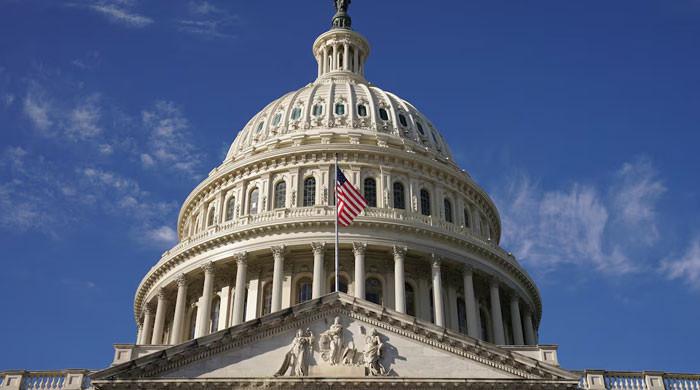
- The War Act gives Trump 60 days to stop the fighting or run for Congress.
- Resolution intended to restore the war authorization role of Congress.
- House passes measure reaffirming Iran as leading state sponsor of terrorism.
WASHINGTON: The U.S. House of Representatives on Thursday rejected an attempt to end President Donald Trump’s air war against Iran and require that any hostility against Iran be authorized by Congress, supporting the Republican president’s military campaign on the sixth day of the escalating conflict.
The vote was 219 to 212, largely along party lines, in the House, where Trump’s fellow Republicans control a narrow majority of seats. Two Republicans voted in favor of the resolution and four Democrats voted against it.
Opponents have accused Democrats of putting the issue up for a vote only because they oppose Trump, putting Americans at greater risk.
“We all know we wouldn’t be here today if the president’s name wasn’t Donald Trump,” Arizona Rep. Rick Crawford, Republican chairman of the House Intelligence Committee, said Wednesday.
Supporters of the resolution described it as an attempt to take back responsibility from Congress for authorizing war, as provided for in the U.S. Constitution.
The United States and Israel launched attacks Saturday against Iran, a conflict that has killed more than 1,000 people, including at least six U.S. service members, and caused damage and instability across the Middle East.
Supporters said the resolution, by requiring Trump to come to Congress for war authorization, would force him to explain to Americans why the United States is fighting and how it might end.
“This is a war of choice, launched by this administration without authorization, without clearly stated goals or defined purpose, and without explaining how it intends to keep Americans safe,” said Rep. Gregory Meeks of New York, the top Democrat on the Foreign Affairs Committee.
Approval would not have stopped Iran’s air war
Just before the resolution was voted on, lawmakers from both parties overwhelmingly passed a measure “reaffirming that Iran remains the largest state sponsor of terrorism.”
The vote would not have ended the conflict even if the House had voted yes.
To enter into force, the resolution would also have had to pass the Senate and garner the two-thirds majority needed to override Trump’s expected veto.
The Senate, also closely controlled by Trump’s party, backed his military campaign against Iran in a vote Wednesday, voting to block a bipartisan resolution similar to the measure passed by the House. This week’s votes are not the end of the problem. The War Powers Resolution of 1973, which provides for voting on resolutions, states that a president may involve the military in an armed conflict only when Congress has declared war or granted specific authority or in response to an attack.
Trump and his Republicans argued that Iran posed an “imminent threat,” so its actions were legal under that law.
However, the war powers measure also requires unauthorized military actions to end within 60 days, giving the Trump administration a deadline of late April to seek congressional approval.