
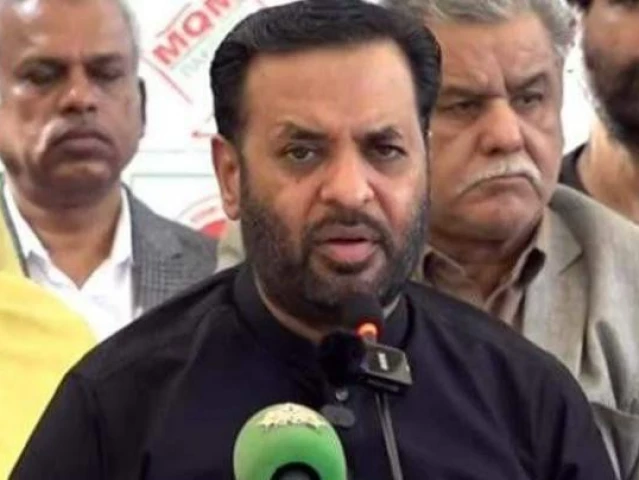
MQM-P leader Mustafa Kamal addressing a press conference in Karachi on Thursday, January 22, 2026.
ISLAMABAD:
Health Minister Mustafa Kamal has warned that Pakistan could face an annual vaccine bill of up to $1.2 billion by 2031 if domestic production is not established, calling the current reliance on imported vaccines a looming economic burden.
Addressing a press conference, Kamal said the government is currently providing 13 types of vaccines free of cost to citizens, but none are produced locally. Pakistan, with a population of around 240 million, is the world’s fifth most populous country and records around 6.2 million births each year, significantly increasing demand for vaccines.
Currently, he said, Pakistan imports all vaccines with the support of international organizations, at an annual cost of around $400 million. Of this amount, 49% is covered by international partners, while the government covers the remaining 51%, keeping the immediate financial pressure relatively manageable.
However, Kamal warned that international aid is expected to end after 2031. “If Pakistan fails to develop its own vaccine production capacity by then, annual costs are expected to rise sharply to $1.2 billion, putting a strain on the national economy,” he warned.
“We are purchasing vaccines through GAVI, which previously came from India,” Kamal said, referring to the Global Alliance for Vaccines and Immunization. During and after the May 2025 conflict with India, he added, these arrivals stopped.
He said the government had already started preparatory work rather than waiting for donor support to expire. He said Pakistan aims to achieve self-sufficiency in vaccine production in the near future.
Drawing comparisons with regional and international examples, he noted that Saudi Arabia had been working on vaccine development for the past decade, while Indonesia was already producing two million doses a year.


