
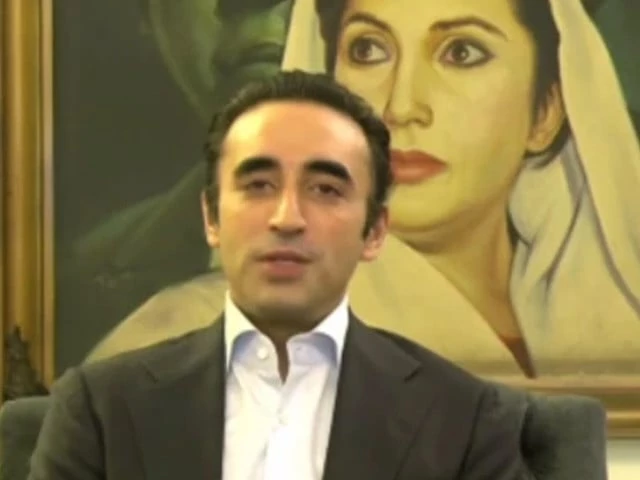
Pakistan Peoples Party Chairman Bilawal-Bhutto Zardari said on Saturday "war is not an option" and hailed the Islamabad talks as a key opportunity for peace as US and Iranian delegations arrived in Pakistan. In an interview with Al Jazeera, Bilawal said the negotiations came after weeks of devastation, noting that the world was watching. "with cautious optimism" as efforts are made to move from conflict to dialogue.
"The fact that these negotiations are taking place constitutes the greatest achievement to date," he said, adding that it is significant that "the ceasefire is in effect" and that "bombing stopped in most of the Middle East." He added that there is hope that the current ceasefire could lead to "a more lasting and permanent resolution to this conflict."
Referring to the broader diplomatic effort, he said several countries have played a role in creating space for dialogue, including Pakistan, China, Saudi Arabia, Turkey, Egypt and Qatar. "Everyone has been affected by this, so everyone is making a collective effort to create the diplomatic space necessary for this ceasefire." he said. However, he warned that the road ahead remained difficult, adding that talks were ongoing. "complex and demanding," but emphasized that "war is not an option," warning that the conflict will continue to have serious consequences unless common ground is found for lasting peace. Responding to questions regarding the reshaping of alliances in the Gulf region, Bilawal said regional players remain focused on resolving the ongoing conflict. "I think everyone is focused on the present, on resolving the current conflict," he said, adding that the situation had "the greatest impact on the Middle East," including Iran and several Gulf countries. He further noted that broader questions on changing alliances would need to be addressed later, stressing that this would only be possible "if this ceasefire is permanent and we have a solution to this conflict."
He also warned of broader consequences if the efforts fail, saying it remains "the danger that we will not succeed," adding that such a result would have repercussions "for the entire region."
A day earlier, Bilawal, speaking to Sky News, said the international community "has no plan B"warning of catastrophic human and economic consequences if talks between the United States and Iran fail. According to the PPP leader, "all eyes" were among the visiting delegations, adding that the conflict had affected people in Pakistan, London, New York, the Middle East and Asia. He was asked if there was a "Plan B" While the talks did not result in a formal agreement during the ceasefire period, Bilawal said: "I believe the international community does not have a plan B. Our plan A must achieve a peaceful resolution of this conflict and a more permanent peace."
"We can somehow measure the toll of this conflict not only in terms of loss of human life, but also in terms of the economic cost borne by the populations of my country and yours. So we are all hopeful," he said. He said the current ceasefire space should be used to move towards "a more lasting and permanent peace for the benefit of the international community". Responding to a question on Pakistan’s diplomatic role and associated challenges, Bilawal said Islamabad’s engagement was a significant achievement, adding that efforts had been underway over the past month to bring the United States and Iran to a ceasefire and outline the outline for continued dialogue. However, he acknowledged that challenges remained, notably the trust deficit between the two parties.
"But as with diplomatic engagements and negotiations, both sides will take confidence-building measures to expand the space for dialogue and diplomacy in the pursuit of peace." he said.


