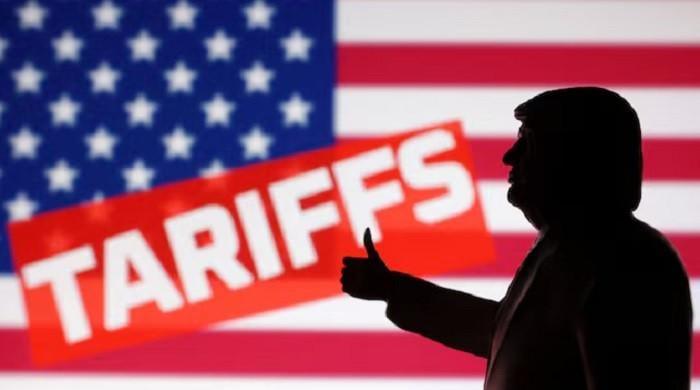
The Supreme Court’s reversal of President Donald Trump’s global tariffs, while a relief to many, heralds more months of uncertainty as U.S. businesses prepare for new levies and a fight over refunds plays out.
A long road to repayments
This decision opens a long struggle for the reimbursement of customs duties, because the duties, now deemed illegal, generated some $133.5 billion between January 2025 and mid-December.
The top court has not addressed the issue of reimbursement, and analysts say that issue will be decided by lower courts in the coming months.
The US Court of International Trade should manage this process, said ING analysts Carsten Brzeski and Julian Geib.
“Refunds will not be automatic, as any importer who wants their money back must take legal action individually,” they said.
“This process has already started, with more than 1,000 companies now involved in a legal battle.”
Trump told reporters Friday, “We’re going to end up in court for the next five years.”
More volatility
Hours after the court’s ruling, Trump pledged to impose new 10 percent tariffs on imports under another authority.
The move is widely seen as a temporary measure aimed at paving the way for more sustainable tariffs, but it risks triggering further challenges and upheaval in the meantime.
The law Trump is using for this tariff — Section 122 of the Trade Act of 1974 — only allows for a 150-day tariff unless Congress extends it.
Trump said there would be new investigations into unfair trade practices under Section 301, a path to more lasting rights.
Josh Lipsky, president of international economics at the Atlantic Council, said Friday’s decision “simply opens a new chapter” in Trump’s tariff policies.
There will be “more uncertainty, more volatility for businesses and more difficult trade deals for countries to negotiate,” Lipsky added.
Loss of speed
But for now, the court’s decision “removes one of the quickest tools Trump has to impose broad tariffs,” ING said.
US Treasury Secretary Scott Bessent told Fox News on Friday that tariffs based on the International Emergency Economic Powers Act (IEEPA) “were tailor-made for President Trump to exert his influence” over other countries.
“We were able to get them to the table very quickly,” he said.
“We will return to the same tariff level for the countries,” Bessent promised. “It will just be in a less direct and slightly more convoluted way.”
Uncertainty about trade deals?
While tariffs imposed through emergency economic powers form the basis of recent trade negotiations, analysts have warned that some partners may try to rethink their commitments.
Lipsky expects economies that already have deals to keep them rather than “risk destroying an agreement that has at least brought some stability.”
But those still finalizing deals could now have more leverage.
Wendy Cutler, senior vice president of the Asia Society Policy Institute, expects that walking away from the announced agreements “does not seem to be in the cards for our partners.”
“They know full well that such a move could end up putting them in a worse situation with the White House,” she said.
Lower prices?
With the Supreme Court’s decision, consumers “face an overall average effective tariff rate of 9.1 percent, which remains the highest since 1946, excluding 2025,” according to the Budget Lab at Yale University.
This is down from 16.9%.
Despite Trump’s plan to enact more lasting tariffs, Navy Federal Credit Union chief economist Heather Long expects Friday’s decision to “force a reset of tariff policy.”
She predicts that this “will likely lead to lower overall tariff rates and a more orderly imposition of future tariffs.”