
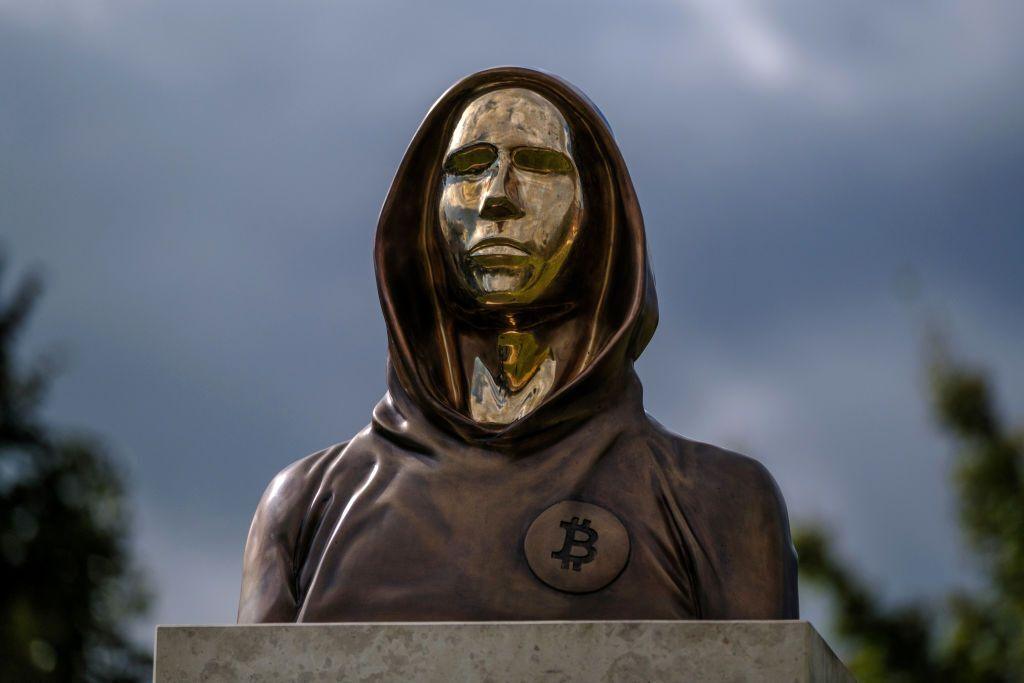
Who created Bitcoin?
More than 16 years ago, on the day of Halloween 2008, an entity named Satoshi Nakamoto sent the white paper for an electronic cash system between peers to a Cypherpunk diffusion list. Bitcoin launched shortly after; He quickly caused a global cultural movement and an industry of several billion dollars.
Benjamin Wallace wrote an article on the Wired phenomenon in November 2011, making him one of the very first traditional journalists to cover the cryptographic space. At the time, no one seemed to know the identity of Nakamoto, and despite robust efforts, Wallace could not understand either.
In a funny way, the author of “billionaire vinegar: the mystery of the most expensive wine bottle in the world” (2009) was recovered in the enigma in 2022 after receiving persistent emails from an ex-tesla-up-time who was absolutely convinced that Elon Musk was throughout Nakamoto. Wallace remains away from this particular theory, but he exhibits his own conclusions in “The mysterious Mr. Nakamoto”, a 342 -page investigation scheduled for March 18.
Read more: Marc Hochstein – Satoshi Nakamoto: the mystery that (probably) will never be resolved
The conclusion? Well, at the end of it, Wallace is forced to admit that he failed to solve the enigma of Nakamoto. But his obsession gave a thoughtful investigation into Bitcoin’s history by emphasizing the cypherpunks whose ideas contributed to the birth of cryptocurrency. “The mysterious M. Nakamoto” is a perfect work for crypto veterans and beginners who are curious to know more about the origins of Bitcoin; In this regard, it is comparable to “The cryptopians: idealism, greed, lies, and the manufacture of the first great craze for cryptocurrency” (2022), which focuses on the first days of Vitalik Buterin and Ethereum.
Wallace crosses a long list of suspects through the book. His favorites include Hal Finney, recipient of the very first Bitcoin transaction; Nick Szabo, who designed a digital currency in the 1990s called “Bit Gold”; Len Sassaman, one of the main developers and operators of the Remailer mixture; The relatively obscure cypherpunk James A. Donald; And the long -standing critic of Bitcoin Ben Laurie.
One of the things that makes “the mysterious Mr. Nakamoto“” A fun reading is that you can watch Wallace get slowly crazy while it bounces between these names. Whenever he shrinks to a person, new information arrives and explodes his theory. Wallace deserves the merit of his multiple facets of the case. He uses abundant pen for emails and Nakamoto code, deeply studies the circumstantial evidence, interviews almost all potential candidates and even learns to code to better understand what cypherpunks are talking about.
Of course, the debate on the question of whether the identity of Satoshi Nakamoto is even important in the first place. There was a renewed interest in the question recently, between the documentary “Money Electric: The Bitcoin Mystery” by HBO (which was released last fall) and the digital active chief of Vaneck, Matthew Sigel, declaring in February that he thought that the co-founder of Twitter Jack Dorsey had created Bitcoin.
As Wallace notes, Nakamoto’s identity is one of the great secrets of the 21st century. With Wall Street and the White House that is starting to fully kiss the cryptography sector, there may be the feeling that putting a face on the Bitcoin inventor is necessary to make digital assets a little cleaner and safer to integrate into the global financial system.
Nakamoto’s identity is crucial because his discovery would have an impact on how people see Bitcoin, supports Wallace. Crypto, he says, prefer to consider Satoshi as a kind of Promethean figure that triggered Bitcoin as a gift to humanity before disappearing for the greatest good. But what happens if Nakamoto was a pure and simple criminal like the former boss of the Cartel Paul Le Roux who simply cannot access his private keys because he is behind bars? Blackrock and Fidelity would they still run to recommend an exposure to cryptocurrency to their customers?
Wallace ends up resolving in a way on the idea that Hal Finney probably took part in the creation of Bitcoin, but that he probably did not work alone, and that, in any case, any theory is almost impossible to check without Nakamoto providing irrevocable proof. But “the mysterious Mr. Nakamoto” is intelligently manufactured and the lack of resolution does not feel anti-climatic. In the end, this is the prosecution.
“What could we learn from Nakomoto’s biography?” Wallace is thinking at a given moment, after one of her friends suggests that the story would be better unanswered. “That he was a random teacher who had had lucky brainstorming?” No, what was most interesting about Nakamoto was his absence. It was defined by what we doesn’t Know him about him.


