
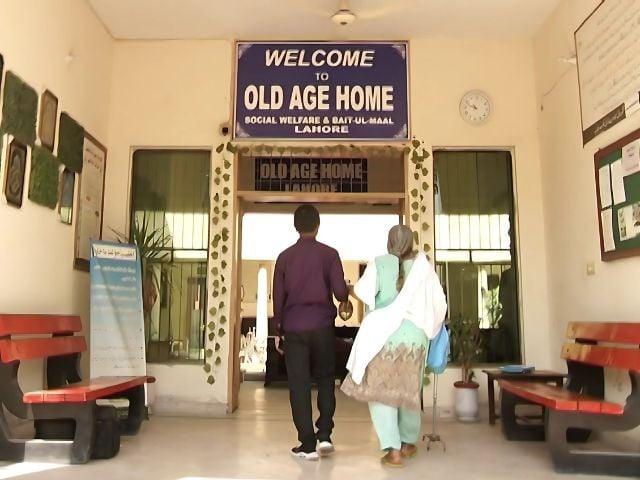
Lahore:
As Eid approaches, elderly women living in the old age house managed by the government of Lahore, Aafiyat, expect with the desire of their loved ones. Despite the efforts of the Social Protection Department of Punjab, NGOs and Philanthropes to bring them new clothes, shoes, gifts and Eid allowances, their hearts aspire to one thing – the family.
Among them, Bakmina, from Mardan. After the death of her husband, she moved to Lahore, raised her children and saw them settle in their own family. But now she lives alone in Aafiyat.
“My son is a good man,” she said, “but my daughter-in-law threatened to leave if I stayed with them. I couldn’t let my son’s house separate because of me.” Her daughter in Karachi insisted for her to move, but she refused, saying: “As a Pakhtun woman, I cannot live in my son -in -law.”
The old age house currently houses 33 elderly people – 21 men and 12 women. Among them, Rukhsana Zafar from Faisalabad and Naseem Akhtar from Shahkot share similar destinies.
Rukhsana’s voice trembles remembering her children.
“Children can forget their parents, but mothers never forget their children,” she said. “NGOs and students visit Eid and Mother’s Day, but my own sons never come.” It is sometimes called, but the others have erased it with their lives.
Naseem Akhtar, too, fights loneliness. After the death of her husband, her own brothers took possession of her inheritance, while her parents-in-law entered her husband’s property.
She lived with her only daughter until her sudden death. Left with nowhere where to go, his son -in -law forced her to get out. “Now I have no one,” she said. “I have a grandson in high school. We are talking on the phone, but he never visits.”
While some at Aafiyat have families who abandoned them, others never had their own families. To relieve their pain, the house keeps them engaged in Activiti
Es. The manager of Aafiyat, Sumaira Aslam, says: “Each resident here has a unique history. Although we cannot replace their families, we ensure that they are well maintained, offering appropriate meals, health care and a comfortable environment.”
The installation offers a television show, newspapers, magazines and religious activities such as prayers and the recitation of the Koran. A meal committee, made up of residents, helps plan their daily menu.


