
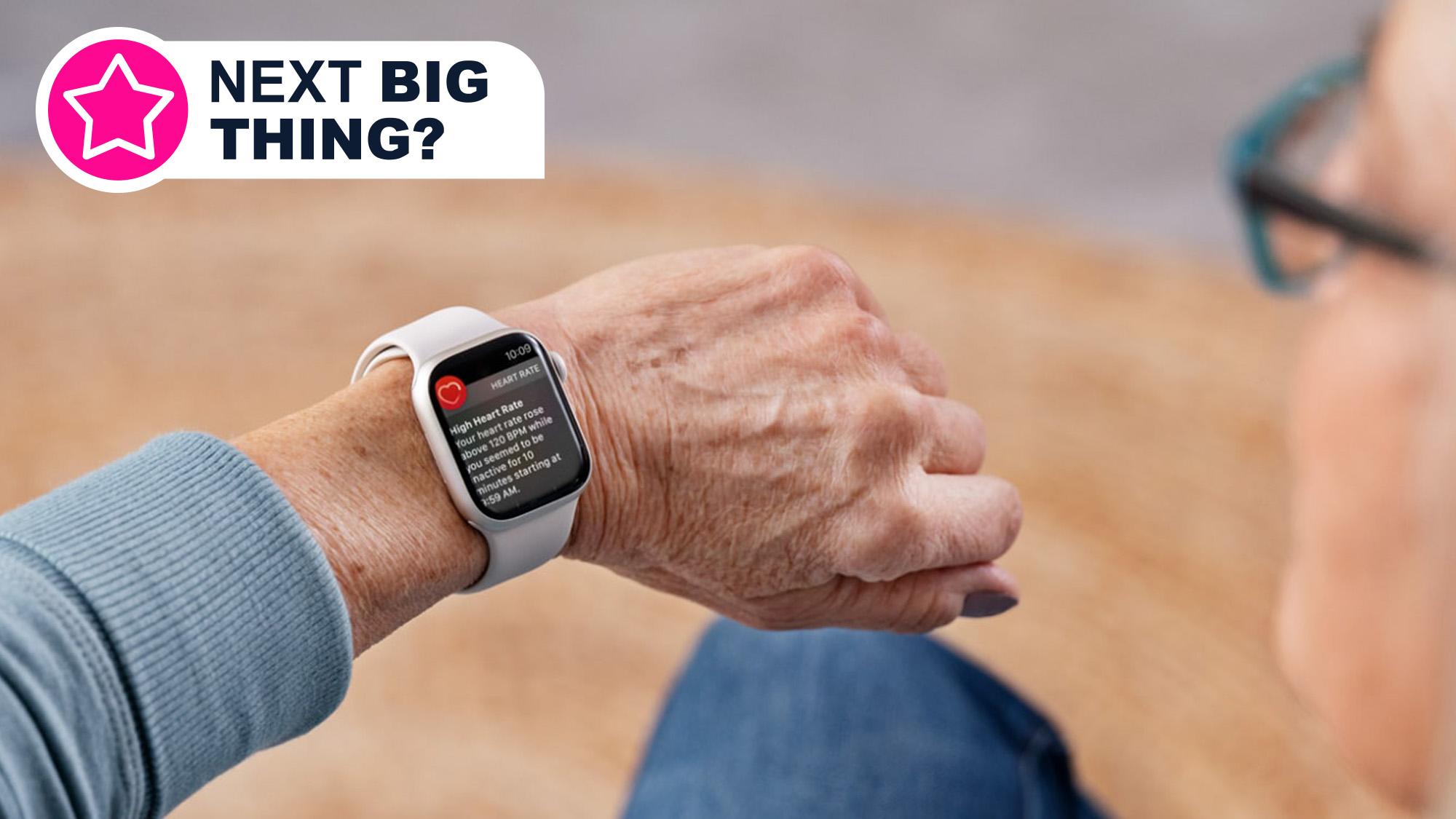
- Future Apple Watch models could use AI to detect health problems
- Apple thinks that this approach is more precise than traditional sensors
- But this raises questions about the privacy of your sensitive health data
There is a lot of misfortune and sadness surrounding artificial intelligence (IA) these days, and it is justified in many cases. But an area where AI can potentially have an extremely positive impact is in health care, and it seems that Apple envisages whether the automatic learning power can strengthen health measures in future Apple Watch models. There is no guarantee that it will make it a finished product, but if this is the case, it could upset the way you manage your well-being through the laptop.
This idea comes from a recent research article published by the search arm on Apple automatic learning. There, the company declares that a new model of AI formed on the behavioral data of Apple Watch is able to predict a wide range of health ailments. In an impressively, Apple claims that the model is able to detect these conditions more precisely than the sensors that you will generally find in many of the best smart watches today.
While traditional health -based health analysis works by scanning the data in real time directly provided by the sensors of your laptop, the AI model is rather capable of spotting models in the way you do the exercise, you move and sleep. He then uses this information to identify any potential problem with your well-being.
Apple says that its AI model – nicknamed the portable behavior model, or WBM – is particularly good to recognize the signs of pregnancy, where it has reached precision up to 92% when combined with biometric data.
The model was also a solid artist when it comes to determining static health states – as if you are taking beta -blockers – and transient health problems such as sleep quality.
Potential controversy to come
AI models have aroused a lot of controversy in the ways they are formed, with journalists, artists and affirm more than their works were used without authorization by AI companies. How is Apple’s reputation for waterproof confidentiality controls is square with this concern with regard to Apple Watch’s AI model?
Well, the model training data apparently comes from the study of the heart and the Apple movement, where 160,000 participants voluntarily shared their health data through iphones and Apple Watches. More than 2.5 billion hours of data were used to shape the model, and they were tested on 57 different health tasks.
However, there are important confidentiality problems concerning the combination of AI and health analysis, as well as in pregnancy data. The reproductive rights being released in many places, the idea that this type of information is introduced into an opaque AI algorithm – even produced by the Apple privacy champion – will be an uncomfortable perspective for many.
This also comes at a time when the American secretary for health and social services Robert F. Kennedy Jr. is committed to “making America again in good health” by encouraging each American to have a laptop in the four years. How will the AI appear in such a plan? We do not know with certainty, but if the APA is in AI in the Apple Watch, we could soon discover it.


