
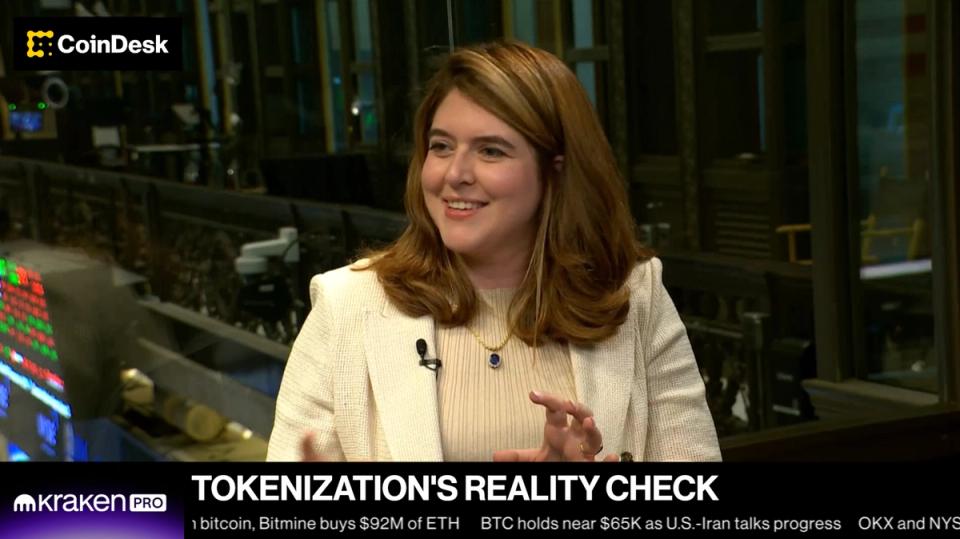
What she says: Former 21Shares co-founder Ophelia Snyder says crypto and traditional finance contradict each other when it comes to tokenization.
- Tokenization solves real problems with settlement rails and asset movement, Snyder said.
- The biggest challenge is integrating blockchain-based assets with the systems that banks, brokerages and asset managers already use.
- Existing discussions often overlook operational processes that occur after a transaction is executed and before assets are fully settled.
- Snyder joined CoinDesk’s Jennifer Sanasie on public keys.
The gap: Snyder said blockchain companies have largely addressed transaction throughput, but not the broader operational requirements of financial institutions.
- Questions remain about how tokenized assets fit into books and records systems, compliance workflows, and regulatory reporting.
- Financial institutions also need to rethink risk management frameworks if tokenized assets can be traded 24 hours a day.
- Many companies rely on third-party software providers who have not yet adapted their systems for native blockchain transactions.
Why it’s important: Snyder believes the industry’s biggest challenge is scale, not functionality.
- A tokenization project can operate on a limited scale while struggling to support the volume of U.S. capital markets.
- “A billion dollars is nothing when it comes to traditional financial flows,” Snyder said.
- Moving large amounts of bearer digital assets on behalf of clients requires significantly more oversight and controls than existing book-entry systems.


