
As the virus spreads globally. lack of coordinated monitoring in Pakistan increases threat to wildlife and humans
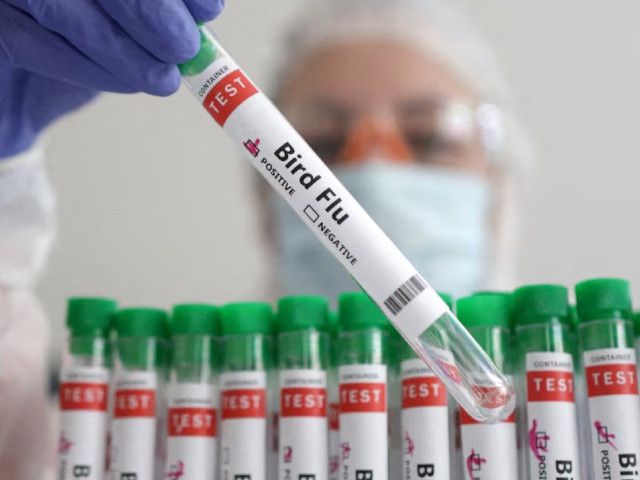
A person holds a test tube labeled “bird flu”, in this illustration, January 14, 2023. REUTERS/Dado Ruvic/Illustration/PHOTO:Reuters
Highly pathogenic avian influenza A is emerging as a major global threat to wildlife, ecosystems and human health. Experts warn that Pakistan lacks the institutional and scientific capacity to monitor, assess and respond to the virus.
This warning comes amid increasing wildlife mortality worldwide and the continued global spread of highly pathogenic avian influenza A (HPAI H5) viruses, raising serious concerns for One Health – an integrated approach to health that emphasizes the link between animal health and the environment in which they coexist – which connects wildlife, livestock and humans.
According to the World Organization for Animal Health, HPAI H5 viruses have spread across multiple continents since 2021 and now affect a wide range of bird and mammal species.
In 2025, Europe recorded exceptionally high HPAI activity during the wild bird migration season, with diagnosed cases four times higher than in 2024. In Germany alone, more than 20,000 common cranes were reported dead. The virus has also been confirmed in birds and mammals in North America and parts of the South Atlantic region.
Global experts say such large-scale mortality events contribute to population declines, disruption of reproductive cycles and long-term ecological imbalance. The increasing spread of the virus in mammal populations has further intensified concerns about the potential for cross-species transmission.
In this global context, the head of the department of zoology at Punjab University, Dr. Zulfiqar Ali, described the situation in Pakistan as alarming. He said the country was seriously lagging behind in its capacity to respond to emerging wildlife health crises and had no organized, coordinated or adequately resourced system to monitor HPAI in wild birds and mammals.
Dr Zulfiqar Ali said neither the Ministry of Climate Change nor the provincial wildlife and livestock departments have specialized diagnostic laboratories, genomic sequencing facilities or trained wildlife health experts. As a result, timely detection, confirmation and reporting of diseases in wildlife remains largely impossible.
He added that disease surveillance in Pakistan is mainly limited to the poultry sector, while scientific data on wildlife health is almost non-existent. He warned that this gap significantly increases the risk of disease transmission between wildlife, livestock and humans.
He further highlighted the lack of standardized mechanisms for examining wild animal carcasses, biosecurity protocols for field staff, and real-time data sharing between federal and provincial institutions, weaknesses that prevent Pakistan from meaningfully contributing to regional and global HPAI reporting and research efforts.
According to Dr Ali, Pakistan also lies along major flyways of migratory birds and is home to ecologically important wetlands, river deltas and coastal ecosystems. In the absence of a robust framework for wildlife health, the country faces serious risks to biodiversity, public health and the economy, he says.
Former Lahore Zoo veterinarian Dr Babar Saleem said HPAI is spreading globally and poses significant risks to wildlife, poultry and potentially human health. He explained that migratory birds are key vectors, transmitting the virus across countries and continents.
Dr Saleem said predatory birds and some zoo animals are also vulnerable, leading to dangerous disruptions in wildlife ecosystems. He warned that the virus can spread from wildlife to domestic poultry, where outbreaks can lead to extremely high mortality rates.
He added that poultry outbreaks could disrupt food supply chains and drive up meat prices. Limited human cases have already been reported globally, while recent detections of the virus in livestock have raised concerns about the adaptation of the virus and the risk of a wider pandemic.
Dr Saleem said there is currently no effective treatment or vaccine for HPAI. In the event of serious outbreaks, culling affected birds or poultry flocks remains the most effective measure to prevent further spread to animals and humans, he said.
Experts emphasize that without urgent investments in wildlife health surveillance, diagnosis and governance, Pakistan will remain highly vulnerable to the growing global threat posed by HPAI.


