
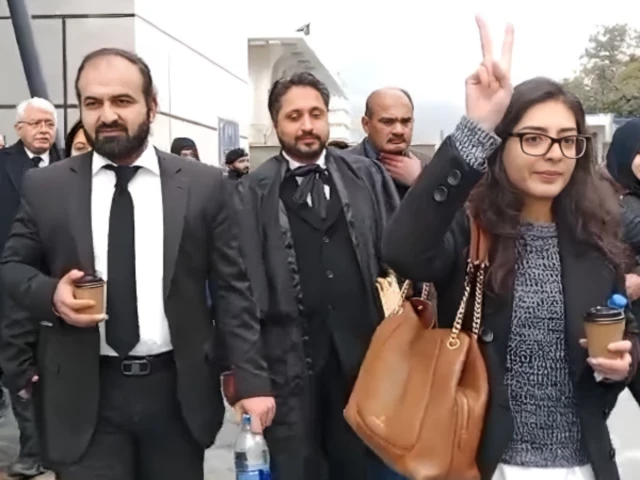
Mazari and Chattha challenged the January 24 guilty verdict in the High Court
Lawyer and rights activist Imaan Mazari and her husband, lawyer Hadi Ali Chattha. PHOTO: EXPRESS
ISLAMABAD:
The Islamabad High Court on Saturday issued a written order in the controversial tweets case, serving notices on the appeals filed against the convictions of rights activist and lawyer Imaan Mazari and her husband, lawyer Hadi Ali Chattha.
The court also issued notices regarding requests for suspension of their sentences.
Judge Muhammad Asif issued a two-page written order after the hearing.
According to the order, Mazari and Chattha challenged the January 24 guilty verdict in the High Court. The applicants’ lawyer argued that the decision was legally unfounded and should be declared void.
Read: Imaan Mazari, her husband imprisoned in the PECA affair
On January 24, an Islamabad magistrate’s court handed down a combined 17-year prison sentence to Mazari and Chattha, finding them guilty on multiple counts related to controversial social media posts that the prosecution said amounted to anti-state speech under cybercrime laws.
During today’s hearing, the court ordered the clerk’s office to prepare the paper books of the case. The matter was ordered to be fixed for hearing once the paper books are compiled.
The court did not specify a date for the early hearing of the requests for suspension of sentence. The applicants’ lawyers had requested that the applications for suspension of sentence and bail be set for an early hearing.
Earlier, an anti-terrorism court in Islamabad had granted bail to the two men in a case involving a police encounter.
Justice Abul Hasnat Muhammad Zulqarnain ruled in favor of the accused, granting post-arrest bail to the sureties of Rs 10,000 each.
Learn more: Imaan Mazari and Hadi Ali Chattha released on bail by ATC in police scuffle case
The case, registered at the Secretariat police station, involves charges of police altercation and public protest.
Representing the accused, state lawyer Ali Azad contended that the charges were baseless as the FIR was lodged on the basis of fabricated and non-existent events.
After hearing the arguments of both parties, the court rendered a decision in favor of the accused.


