
.
ISLAMABAD:
Pakistan on Thursday expressed concern over the deepening strategic and defense partnership between India and Israel, warning that the growing bond would have serious implications for regional peace and stability.
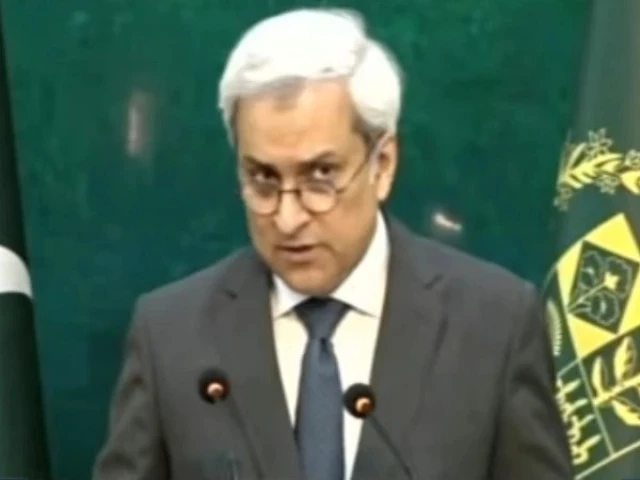
Responding to questions at his weekly press briefing, Foreign Ministry spokesperson Tahir Andrabi said Islamabad was closely monitoring the development of military ties between New Delhi and Tel Aviv, particularly in light of Indian Prime Minister Narendra Modi’s visit to Israel this week.
During the visit, both sides agreed to further deepen bilateral cooperation, particularly in the areas of defense and strategy, a development that has attracted attention in Islamabad.
“Regarding the defense ties between India and Israel, yes, we remain seized of the defense ties between Israel and India, including the systems and platforms used by India against Pakistan,” Andrabi said.
He added that Pakistan was “aware of the threat it poses to our security, sovereignty and territorial integrity, as well as regional peace and stability.”
The spokesperson’s remarks come against the backdrop of the four-day conflict between Pakistan and India last May, during which India used Israeli-made drones. This episode has heightened concerns in Pakistan about the operational dimension of the Indo-Israeli defense partnership.
Reiterating Pakistan’s preparedness, Andrabi said Islamabad had “strong military preparedness to defend and deter any Indian aggression against Pakistan”.
The Foreign Office also strongly rejected India’s condemnation of Pakistan’s recent precision strikes against terrorist hideouts in Afghanistan.
In response to a question regarding the Indian Foreign Ministry’s statement criticizing Pakistan’s actions, Andrabi said: “We completely reject India’s statement.”
He said the Indian statement confirmed Pakistan’s position that New Delhi supported the proxy groups.
Andrabi said New Delhi continues to “aid and abet terrorism in Pakistan through its support to the BLA, Fitna Al Hind and other terrorist organizations in the region.”
“We have concrete evidence of India’s involvement in sponsoring and abetting terrorism,” he said, adding that India’s recent statements provided “further circumstantial evidence of India’s complicity in promoting terrorism in Pakistan.”
The spokesperson asserted that Pakistan’s actions were carried out in exercise of its right of self-defense and were based on verifiable intelligence.
Amid escalating tensions along the western border, Andrabi clarified that there was currently no ongoing structured dialogue between Pakistan and Afghanistan.
“There is no structured dialogue at the moment,” he said, responding to a question about possible diplomatic engagement following recent cross-border incidents.
While emphasizing Pakistan’s respect for the Afghan people and the historical ties between the two countries, he identified the central problem as the presence of terrorist groups operating from Afghan soil and enjoying impunity.
“The contentious issue concerns the terrorist groups operating in Afghanistan, and the official support and impunity given to this terrorism,” he said.
The spokesperson also stressed that Pakistan would continue to respond “swiftly and firmly” in exercising its right of self-defense, while simultaneously raising the issue in bilateral, regional and multilateral forums, including the UN Security Council counter-terrorism mechanisms.
These developments highlight growing regional tensions, with Islamabad increasingly wary of the strategic convergence between India and Israel and the evolving security situation along its western border.


