
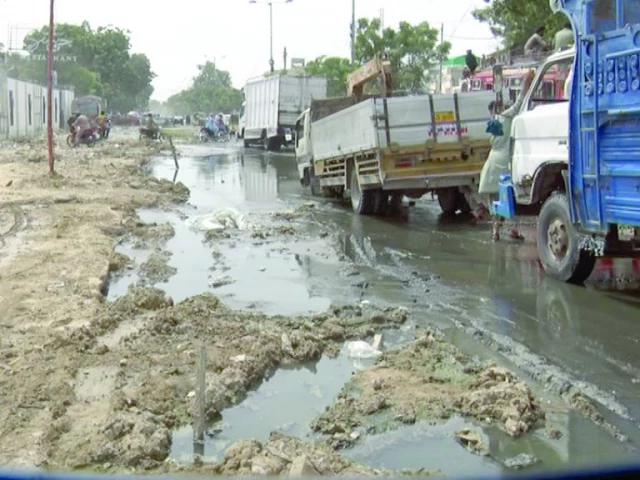
A key artery connecting Malir Cantt to Malir Halt is collapsing into a dangerous zone of potholes and sewage, turning daily commutes into tests of endurance. EXPRESS Photo
LAHORE:
An evidence-based study conducted by the Human Rights Commission of Pakistan (HRCP) has revealed significant inequalities in access to clean water and sanitation in Lahore, with low-income and marginalized groups disproportionately affected.
The report, titled “Urban Exclusion in Access to Water and Sanitation in Lahore,” highlights that the city’s population of around 13 million is served by outdated water infrastructure and a failing drainage system. Seasonal flooding during the monsoon has become commonplace, further exposing gaps in service delivery.
The study was led by public policy specialist Dr Imdad Hussain. It says bureaucratic inefficiencies, outdated regulatory frameworks and limited citizen participation have worsened long-standing structural problems. Rapid urban expansion, uncoordinated planning and the growing impact of climate change have made access to clean water and sanitation even more difficult.
According to the report, residents of informal settlements and low-income neighborhoods face the greatest obstacles.
Women, transgender people, children and people with disabilities are identified as particularly vulnerable due to inadequate and non-inclusive sanitation facilities.
The HRCP called for equitable and participatory governance of urban water, urging authorities to recognize water and sanitation as fundamental human rights.
It recommends legislation to align national legislation with Pakistan’s international commitments on the right to water and sanitation.
The report calls for prioritizing informal and low-income settlements, ensuring that access to services is not tied to land ownership. It recommends the provision of inclusive and fully accessible public restrooms, as well as enforceable legal protections for transgender people and people with disabilities.
Among other measures, the study proposes the introduction of water meters to rationalize use and reduce waste.
It also urges authorities to end dangerous manual entries into sewers and enforce strict occupational health and safety standards to protect sanitation workers.
The commission further recommended the creation of community complaint mechanisms to quickly resolve local water and sanitation problems. It calls for institutionalized preparedness for climate change, including early warning systems.


