
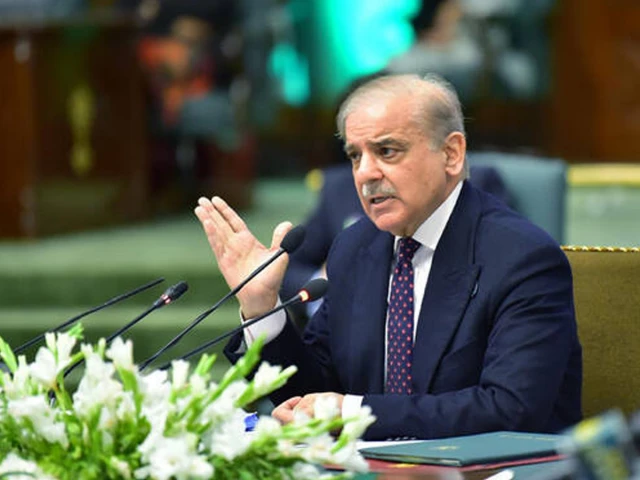
Prime Minister Shehbaz Sharif addresses the special federal cabinet meeting in Islamabad, Pakistan on March 4, 2025. Photo: PID/File
Prime Minister Shehbaz Sharif on Saturday chaired a meeting to review Pakistan’s economic situation amid ongoing global tensions. The officials briefed him on the impact of international developments on the country’s economy.
According to a statement issued by the Prime Minister’s Office, the Prime Minister ordered the formulation of a policy focused on growth, austerity and savings, with practical recommendations to be presented within 48 hours. He stressed that public assistance must remain a top priority while minimizing the burden imposed on citizens.
Regarding oil supplies, Prime Minister Shehbaz ordered strict measures against hoarding or artificial shortages, including revocation of licenses and legal action against violating companies. He also asked the finance and petroleum ministers to coordinate with provincial governments to ensure uninterrupted supply and implement conservation measures.
The recent increase in prices of petroleum products, officials said, was based on the committee’s recommendations and aimed at passing on minimum impact to consumers despite the surge in global prices.
Read: Gas pumps could close within days as dealers warn of supply cuts
The government sharply hiked the prices of petrol and high-speed diesel by 55 rupees per liter on Friday, marking the first in a series of expected adjustments as the ongoing regional conflict disrupts global oil supply chains.
Oil Minister Ali Pervaiz Malik announced the revised rates with immediate effect after the approval of Prime Minister Shehbaz Sharif. The new price of petrol has been fixed at Rs 321 per liter, while high-speed diesel has gone up to Rs 336 per litre.
The government also revised the tax structure on petroleum, increasing the tax on petrol to a record high of Rs 105.4 per liter, while reducing it to Rs 55 per liter on diesel in a bid to ease the burden on transport and agriculture sectors which rely heavily on diesel.
Besides, the price of kerosene increased by Rs 130 per liter to Rs 319, while the price of light diesel increased by Rs 68 to Rs 235 per liter, reflecting the surge in international fuel prices.
Global oil markets have seen high volatility amid escalating tensions in the Middle East, with crude prices reaching their highest levels in two years. According to Malik, the average price of gasoline in Platts increased from $78 to about $107 per barrel in six days, while the price of diesel increased from $88 to nearly $150 per barrel during the same period.
The government said the price adjustments were necessary to ensure the continued availability of fuel in the country amid supply disruptions and rising import costs. Authorities are also monitoring global markets and revising oil prices weekly as the situation evolves.


