
PM forms special committee headed by Dar to monitor progress; Friday declared additional weekly holiday
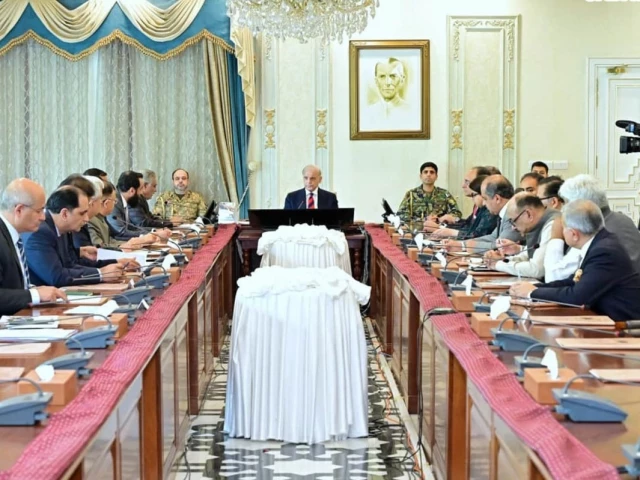
Prime Minister Shehbaz Sharif is chairing a meeting on Tuesday to review the implementation of austerity measures announced by the government in light of the current regional situation. Photo: PID
In the face of rising fuel prices, the federal and provincial governments have introduced a series of austerity measures – from declaring an extra weekly holiday to scrapping free petrol for ministers, limiting ceremonial vehicles and offering subsidized fuel for students – even as global oil prices show signs of slowing following recent market volatility.
Prime Minister Shehbaz Sharif today chaired a high-level meeting in Islamabad to review the implementation of measures to save energy and reduce public expenditure in light of changing global economic conditions.
Following the meeting, authorities announced that Friday would be considered an additional weekly public holiday to help reduce fuel consumption and electricity demand.
Read also: OGRA rejects reports of increase of Rs73 for petrol and Rs84 for diesel, calling them ‘completely baseless’
Addressing the participants, Prime Minister Shehbaz said the government was making all efforts to maintain economic stability despite difficult international circumstances.
To oversee implementation, the government formed a special committee headed by Deputy Prime Minister and Foreign Minister Ishaq Dar to monitor progress daily and report directly to the Prime Minister.
وزیراعظم محمد شہباز شریف کی زیر صدارت موجودہ علاقائی صورتحال کے پیش نظر کفایت شعاری اور توانائی کی بچت کے حوالےسے حکومت کے اعلان کردہ اقدامات کے نفاذ پر جائزہ اجلاس
اجلاس میں ہفتہ وار اضافی چھٹی جمعہ کے روز کرنے کا فیصلہ
حکومت ہر ممکن کوشش کررہی ہے کہ عالمی حالات کے باوجود… pic.twitter.com/jlSwj8tWVq
– PTV News (@PTVNewsOfficial) March 10, 2026
The prime minister also ordered that the impact of austerity measures be assessed through an independent audit to ensure transparency and assess their effectiveness. All ministries and divisions have been tasked with implementing policies promoting simplicity, cost reduction and energy conservation.
To ensure the austerity campaign is properly implemented, government departments must submit photographic evidence of vehicles withdrawn from official use. Ministries were also asked to provide reports to the Prime Minister’s Office outlining how work from home arrangements were being implemented.
Officials said at the meeting that federal ministries and divisions would submit daily and weekly reports to the monitoring committee on energy conservation efforts and workforce management.
Separately, FM Dar chaired a meeting with senior officials of the Ministry of Foreign Affairs to review the implementation of austerity measures announced by the Prime Minister.
According to officials, the meeting assessed steps taken by the ministry to align its administrative and operational practices with the government’s broader efforts to ensure fiscal discipline and reduce public expenditure.
During the meeting, the Deputy Prime Minister stressed the importance of prudent use of public resources and asked officials to ensure that the ministry’s activities remain consistent with the government’s commitment to economic responsibility.
The Deputy Prime Minister/Foreign Minister chaired a meeting with senior officials of the Ministry of Foreign Affairs to review the implementation of the austerity measures announced by the Prime Minister.
The DPM/FM stressed the need for budgetary discipline, prudent use of public resources,… pic.twitter.com/HiPyWNcz4L
— Ministry of Foreign Affairs – Pakistan (@ForeignOfficePk) March 10, 2026
He stressed the adoption of efficient administrative practices and called for limiting spending to essential commitments. The officials were tasked with identifying areas where operational costs could be optimized without affecting Pakistan’s diplomatic outreach and delivery of consular services.
FM Dar said the Foreign Ministry must continue to effectively carry out its diplomatic functions while contributing to the government’s broader austerity drive.
Reaffirming his full support for the government’s initiative, the Deputy Prime Minister highlighted the ministry’s commitment to responsible governance, transparency and efficient use of public funds.
Punjab introduces measures to reduce fuel consumption
Meanwhile, the Punjab government has also introduced parallel measures to reduce fuel consumption in the provincial administration.
Chief Minister Maryam Nawaz has ordered the suspension of government-supplied fuel for provincial ministers until the oil supply situation stabilizes. Fuel allowances for official vehicles used by senior government officials have also been reduced by 50%.
Protocol convoys accompanying ministers and senior officials have also been restricted. Only one vehicle would be permitted for essential safety reasons.
Read: Sindh announces school closure from March 16 to 31 and government staff will work from home on Friday
Punjab also extended remote working in government offices, allowing only essential staff to report to workplaces while others would carry out their duties from home. Officials said public services would continue through digital platforms, including the provincial initiative ‘Maryam Ki Dastak’.
In addition, authorities have reduced official outdoor events and postponed several public gatherings.
The provincial administration also ordered the establishment of district petroleum monitoring committees to oversee the availability of fuel and prevent hoarding or illegal distribution. The Punjab Information Technology Council has been tasked with developing a digital track and trace system to monitor oil supplies across the province.
مشکل وقت، سخت فیصلے!
وزیر اعلیٰ پنجاب مریم نواز کے غیر معمولی اقدامات۔۔۔
خطے میں جنگ کے اثرات اور بحران کے پیشِ نظر، وزیر اعلیٰ پنجاب نے صوبے کی بقا اور وسائل کی بچت کے لیے بڑے اور اہم فیصلے کیے ہیں۔ ان اقدامات کا مقصد عوام کو ریلیف فراہم کرنا اور سرکاری سطح پر کفایت…– Government of Punjab (@GovtofPunjabPK) March 10, 2026
Rising fuel costs have also given rise to proposals to ease the burden on students.
Former Punjab Transport Minister Ibrahim Murad suggested introducing a ‘fuel card’ scheme under which students would receive 10 liters of subsidized petrol every month. He said the recent increase of Rs 55 per liter in the price of petrol had significantly increased the travel costs of students visiting educational institutions.
Murad argued that a targeted subsidy could help students continue to attend schools and universities without putting additional financial pressure on families.
These policy measures come as global oil markets remain volatile amid escalating geopolitical tensions.
Read: KP announces weekly closure of schools for two months due to fuel crisis
Brent crude surged to a high of $119.50 a barrel on Monday after Iran launched new strikes on energy facilities in the Gulf. Prices then fell sharply to around $82 per barrel as markets reacted to changing signals from Washington and Tehran.
US President Donald Trump said the conflict in the Middle East could end sooner than expected, even as rallies were held in Iran in support of the country’s new supreme leader, Mojtaba Khamenei.
Iranian state media broadcast images of large crowds in several cities waving national flags and holding portraits of his father, Ayatollah Ali Khamenei, who was killed in an Israeli strike on the first day of the war.
Mixed signals from political leaders have sent global markets on a roller coaster ride. Oil prices jumped while stock markets fell earlier in the day, before reversing course after Trump’s comments and reports that sanctions on Russian energy exports could be eased.
For Pakistan, which relies heavily on fuel imports, such volatility has immediate economic implications. Rising oil prices generally drive up transport costs, contribute to inflation and increase pressure on public finances.


