
Tarar says airstrikes destroyed munitions depots; Kabul denies and claims civilian victims
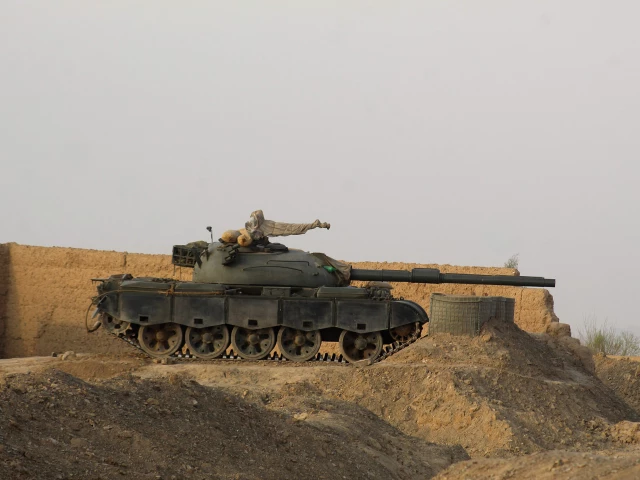
A Pakistani army tank sits on the Pakistan-Afghan border in Chaman on February 27, 2026, following nighttime cross-border fighting between the two countries. Photo: AFP
Pakistani armed forces carried out precision airstrikes on March 16 as part of “Operation Ghazab Lil Haq,” targeting what officials described as military installations of the terrorism-supporting Afghan Taliban regime in Kabul and Nangarhar, Information Minister Attaullah Tarar said Tuesday.
“Technical support infrastructure and ammunition storage facilities at two sites in Kabul were effectively destroyed. Secondary detonations visible after the strikes clearly indicate the presence of large munitions depots,” Tarar wrote on X.
✅ March 17, 2026
✅ Pakistan Armed Forces successfully carried out precision airstrikes on the night of March 16 as part of Operation Ghazab Lil Haq, targeting the terrorism of the Afghan Taliban regime which sponsored military installations in Kabul and Nangarhar.
✅ Technical support… pic.twitter.com/b8YJkGC0cv
– Attaullah Tarar (@TararAttaullah) March 16, 2026
He said four military sites of the “terrorism-sponsoring” Afghan Taliban regime were also struck in Nangarhar, destroying logistics, munitions and associated technical infrastructure.
According to the minister, the strikes were “precise” and limited to infrastructure used by the Afghan Taliban regime to support its “multiple terrorist proxies”, including Fitna Al Khawarij and Fitna Al Hindustan – terms that Pakistani authorities use for Tehreek-e-Taliban Pakistan (TTP) and the Balochistan Liberation Army (BLA) respectively.
“The false claims made by the propagandists of the Taliban regime cannot deceive Afghans and the world about their heinous actions supporting and sponsoring terrorism in the region,” he said.
Afghan Taliban authorities in Kabul said the strikes hit a drug treatment center, killing civilians – a claim Pakistani security sources dismissed as “ridiculous”.
Operation Ghazab Lil Haq was launched last month following renewed clashes along the Pakistan-Afghan border after Afghan Taliban forces fired on several locations, prompting rapid military retaliation from Pakistan.
Since then, neighboring countries have engaged in an escalation of hostilities along the border. The clashes intensified after Afghanistan launched a border offensive in response to previous Pakistani airstrikes targeting terrorist positions.
“Operations led by Ghazab Lil Haq to protect Pakistani citizens against terrorism carried out by the master of terrorism (Afghan Taliban) will continue until the desired objectives are fully achieved,” Tarar said.
Also read: Precision strikes target Taliban depot in Kabul
Video footage circulating after the strikes showed large flames and secondary explosions, which one source said confirmed that a large stockpile of explosives had been targeted in the Afghan capital.
Earlier, security sources said the army carried out operations in the Kurram sector, targeting key hideouts used by the Afghan Taliban and Fitna al-Khawarij. Several positions allegedly used for terrorist activities were hit.
The operation destroyed several Taliban posts, killing several Khawarij – the term used by authorities for terrorists linked to the TTP – while others fled, the sources added.
Separately, Pakistani forces also carried out retaliatory actions in the Bajaur sector along the Pakistan-Afghan border, targeting Afghan Taliban posts close to the border.
Security sources said the operation destroyed several Taliban positions, with the army also using guided missiles in the strikes.
The latest escalation in tensions between the two countries follows a series of retaliatory actions over the past year.
Pakistan had earlier carried out airstrikes against camps of the Tehreek-e-Taliban Pakistan (TTP) and Islamic State’s Khorasan province in Afghanistan after a wave of attacks in Pakistan, including a suicide bombing in Islamabad.
Learn more: 13 terrorists killed in intelligence operations in KP
Pakistani security sources said more than 80 terrorists were killed in the strikes. These strikes provoked attacks from Afghanistan along the border, leading to the outbreak of a new round of open conflict.
Islamabad has long maintained that TTP leaders operate from Afghan territory, an allegation that Kabul has repeatedly denied.
Tensions also increased after a series of explosions in Kabul on October 9 last year. Taliban forces then targeted areas along the Pakistani border, prompting Islamabad to respond with cross-border bombings. The exchanges caused casualties and damage to infrastructure on both sides and led to the suspension of trade after the closure of border crossings on October 12, 2025.


