
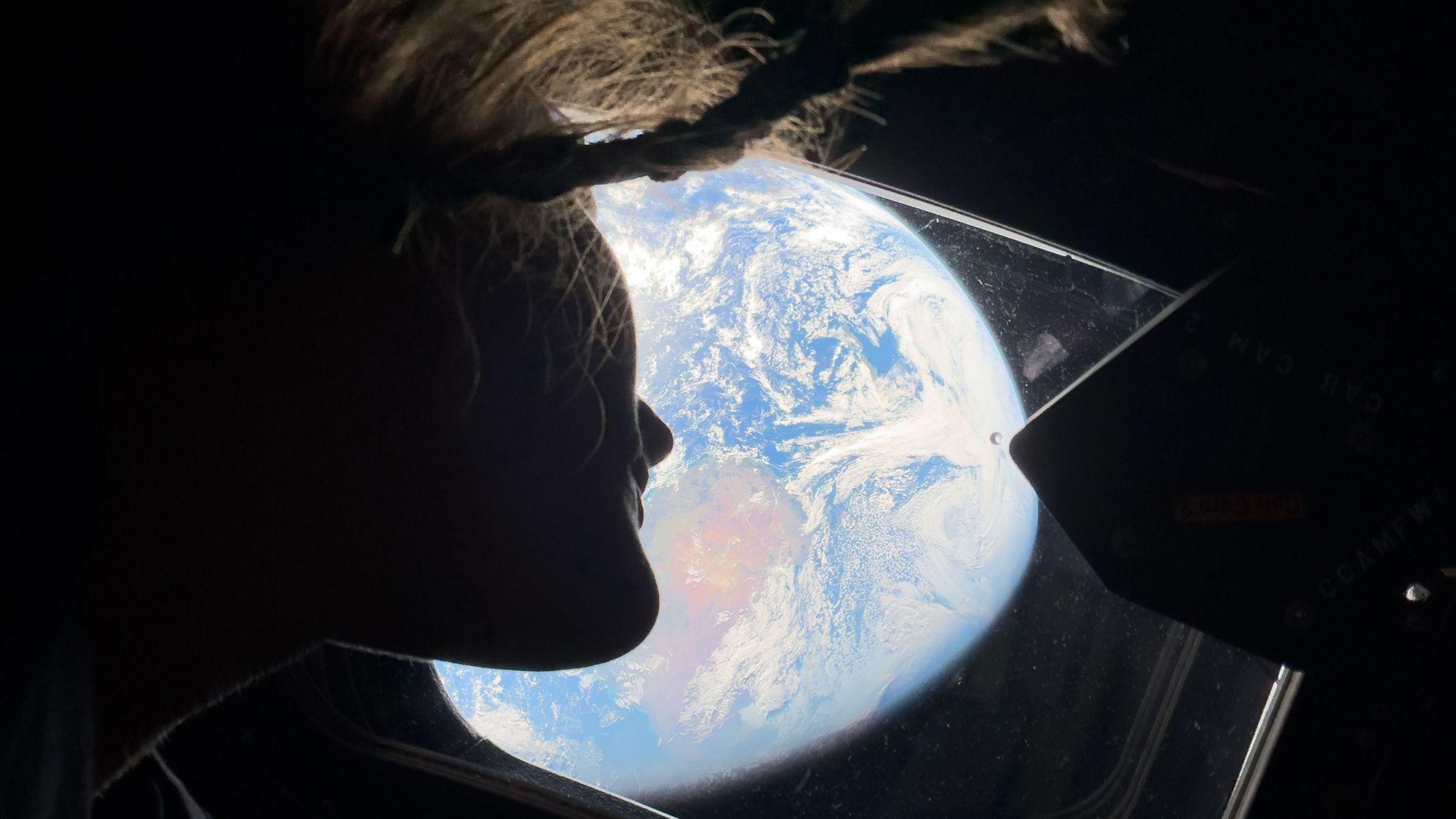
- We receive photos from the Artemis II mission
- Some of these were taken with the iPhone 17 Pro Max
- The mission is approaching the halfway point
We know the crew of the Artemis II mission took iPhones into space with them, and we’re now getting some great shots of the astronauts as they head to the Moon.
As shared by NASA, we have spectacular photos of Christina Koch and Reid Wiseman looking towards their home planet, as the Orion spacecraft speeds away from it – at speeds of thousands of kilometers per hour.
A quick check of the photos in the NASA archives (here and here) shows that these two images were taken using the selfie camera of an iPhone 17 Pro Max. This is the same model that earned a 4.5/5 star rating in its TechRadar review.
Article continues below
The astronauts themselves share photos on social networks: here is another photo of Reid Wiseman, the fifty-year-old designated as general commander of the mission. The caption simply reads “There are no words.”
Back and forth
This view is just different 🌍 @Astro_Christina and @astro_reid take a moment to look back at Earth as they continue into the depths of space towards the Moon. pic.twitter.com/NMDeLj256KApril 4, 2026
There will likely be plenty more to come, too, as Orion reaches the moon, circles around it, and returns home. We know that the spacecraft is equipped with laser communications technology capable of maintaining a high-speed connection with Earth.
NASA also shared an image of the Moon taken by the Artemis II crew, with the Orientale Basin visible on the lunar surface. This is apparently the first time the basin has been seen in its entirety by human eyes.
Once the team of astronauts has circled the Moon and started returning, they will have traveled further from Earth than any human being before them – some 252,757 miles or 406,773 kilometers.
The mission is now in its fourth day, and the entire journey is expected to last 10 days. When the Orion spacecraft returns to Earth orbit, it will be another first: the fastest crewed reentry ever attempted, at about 25,000 miles per hour (40,234 kilometers per hour).
Follow TechRadar on Google News And add us as your favorite source to get our news, reviews and expert opinions in your feeds. Make sure to click the Follow button!
And of course you can too follow TechRadar on TikTok for news, reviews, unboxings in video form and receive regular updates from us on WhatsApp Also.


