
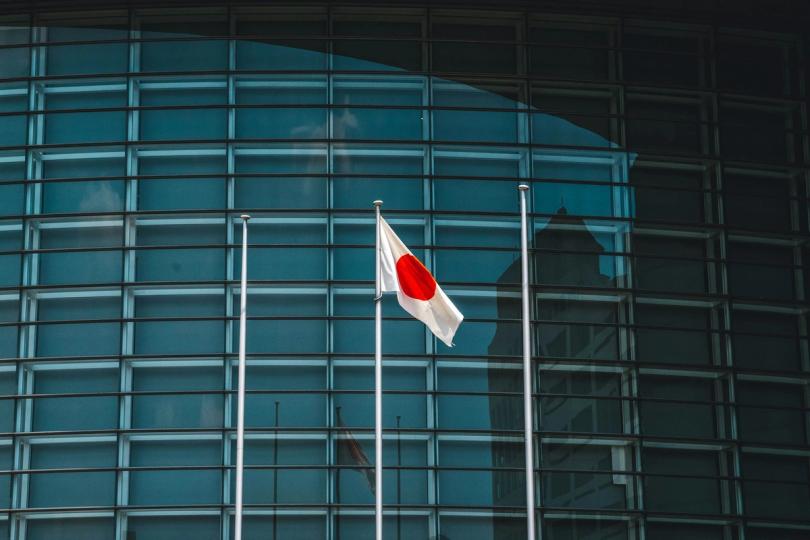
Bitcoin’s breakout past $74,000 on Monday received help from Japan.
Bank of Japan Governor Kazuo Ueda has dampened expectations of an interest rate hike at the upcoming policy meeting on April 28, signaling a more cautious stance amid uncertainty over the impact of the war in Iran on the Japanese economy.
Such decisions have reverberated across the crypto market in previous years. On August 5, 2024, a surprise rate hike from the BoJ triggered an unwinding of yen carry trades that caused bitcoin to fall from $64,000 to $49,000 in 48 hours.
The carry trade, in which investors borrow cheaply in yen and deploy into higher-yielding assets including cryptocurrencies, has become one of the largest sources of exposure to leveraged risk assets in the world. An unwinding of the yen tends to cause rapid sell-offs in risky assets, with bitcoin and major cryptocurrencies being the first to be affected.
But Ueda just signaled that the trade would remain intact for at least another month. Japan’s 20-year bond auction on Tuesday saw its strongest demand since 2019, with a bid-to-cover ratio of 4.82 compared to a 12-month average of 3.27, confirming that institutional capital agrees that the upcycle is on pause.
Twenty-year yields, near their highest since 1997, fell nine basis points after the auction.
A dovish BoJ keeps the yen weak, currently near 160 against the dollar. A weak yen keeps carry trade financing low. Cheap carry funding supports leveraged positions in risky assets, including the perpetual futures markets where Bitcoin’s rally is building.
Data last week showed $2.1 billion in new open interest in Bitcoin and $2.2 billion in open interest in ether in the 24 hours following the ceasefire, with coin-denominated OI confirming net new longs. Part of this positioning could be financed, directly or indirectly, by the same yen liquidity that Ueda has just preserved.
Japan is also one of the economies most exposed to the Strait of Hormuz, through which more than 90% of its oil imports pass.
If U.S.-Iran negotiations reach a deal and oil prices continue to fall, inflationary pressure in Japan will ease further, giving the BOJ even less reason to raise rates and extending the window during which the carry trade supports risky assets.
As such, the BOJ’s caution is an additional factor behind Bitcoin’s breakout. The $73,000 cap held for six weeks, in part because macroeconomic headwinds, from oil to rates to geopolitics, gave leveraged traders no reason to breach it.


