
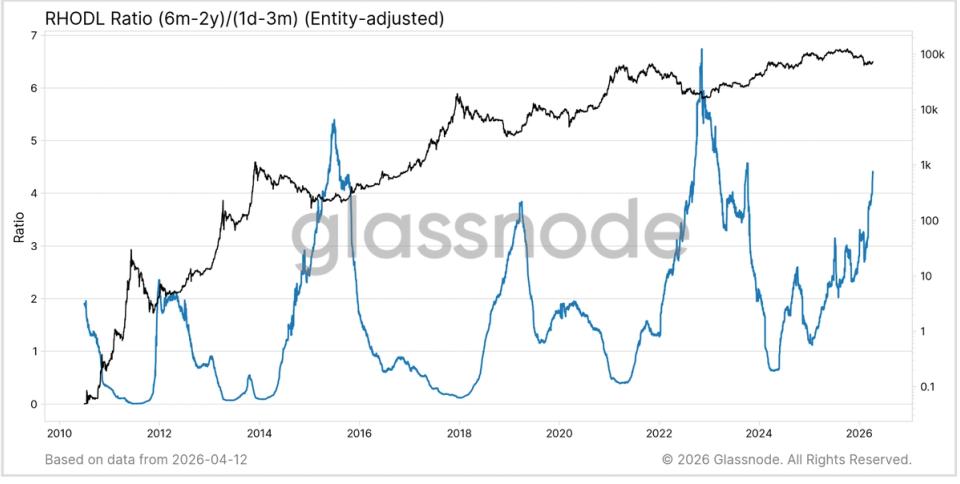
The RHODL ratio, by Glassnode, a key on-chain metric that tracks the balance between long-term and short-term bitcoin holders, emit signals more consistent with a market bottom than a cycle peak, after reaching a ratio of 4.5.
Currently at its third highest level on record, the indicator shows that wealth is increasingly concentrated in older coins as younger, more speculative holdings have been largely wiped out during bitcoin’s 50% correction over the past six months.
The ratio compares the value of tokens held by long-term investors, typically those who hold them for six months to three years, to that of tokens held by short-term participants, defined as one day to three months. By measuring this balance, it helps determine whether the market is dominated by experienced holders or by new demand from new entrants.
A rising ratio often reflects aging coins and a decline in speculative activity, rather than an influx of new buyers. This dynamic generally emerges after strong corrections visible in 2015, 2019 and 2022.
There are two occasions when the RHODL ratio has been higher than today: 2015 (ratio of 5) and 2022 (ratio of 7), both cyclical lows, which could suggest that there are further downsides for bitcoin.
However, reaching even higher levels generally requires an even deeper collapse in short-term holder activity and a near-complete exhaustion of demand, conditions that are less evident today given the 25% price rally from February lows, negative perpetual funding rates, and the broader macroeconomic risk environment that has seen the S&P 500 reach new all-time highs.


