
- Graphene experiment reveals major break in Wiedemann-Franz law
- Thermal and electrical conduction unexpectedly move in opposite directions
- The deviation from the classical law is multiplied by two under certain conditions
For decades, the Wiedemann-Franz law remained a reliable rule in condensed matter physics.
According to this principle, a material’s ability to conduct electricity should increase and decrease depending on its ability to conduct heat.
A team of researchers from the Indian Institute of Science and the National Institute of Materials Science in Japan has now documented a dramatic violation of this long-standing principle.
Article continues below
An unexpected reversal at Dirac point
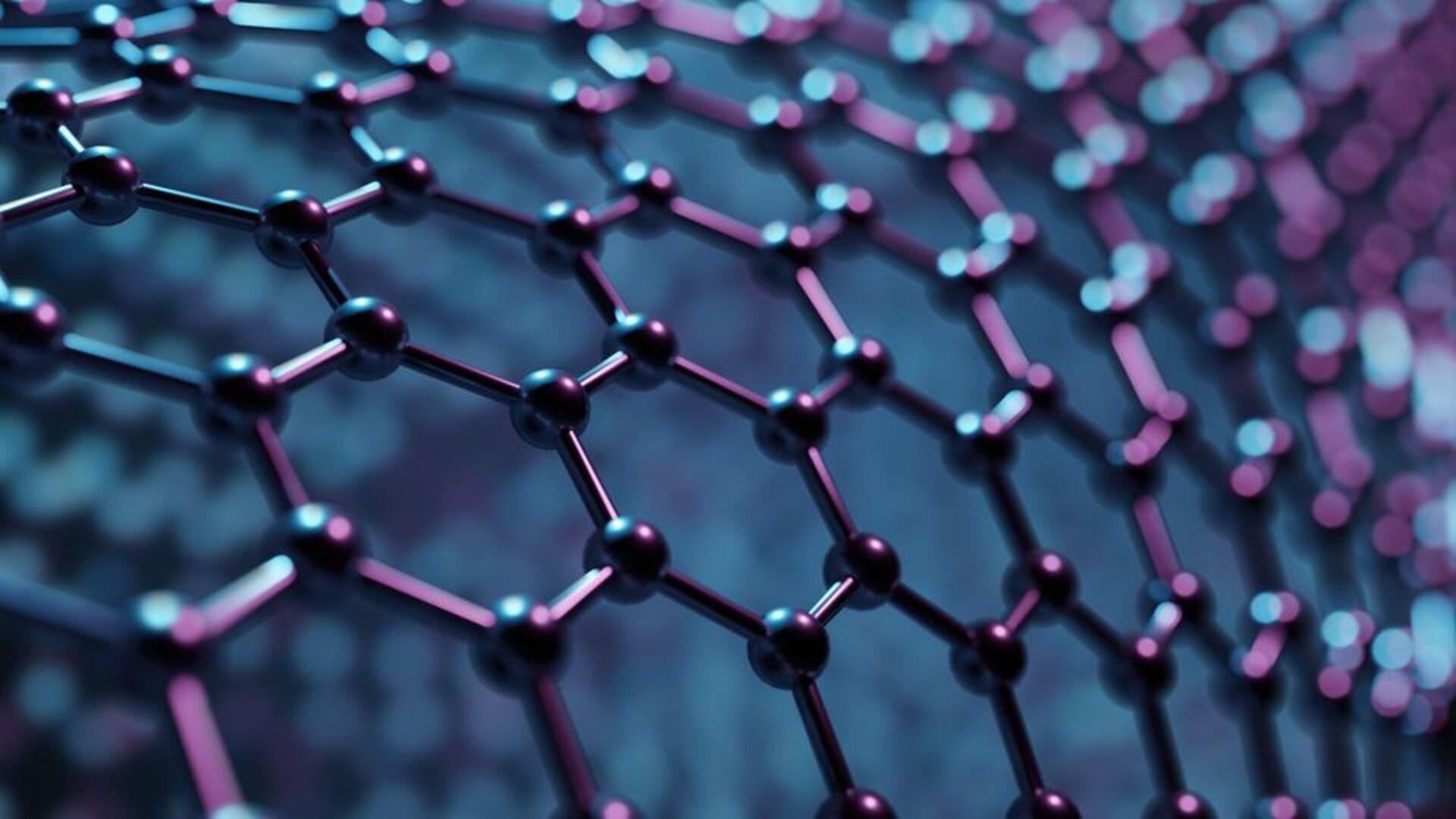
Their experiments on graphene, a single layer of carbon atoms, show that electrical conductivity and thermal conductivity can move in opposite directions rather than together.
Scientists created exceptionally clean graphene samples to eliminate interference caused by atomic defects and impurities.
They then carefully measured electrical and thermal conduction under various conditions. What emerged was a striking contradiction to established physics.
As the electrical conductivity increased, the thermal conductivity decreased and the reverse also occurred.
At low temperatures, the observed deviation from the Wiedemann-Franz law exceeded a factor of 200.
This separation between charge flow and heat flow is not a minor anomaly but a fundamental break in a rule that has guided physicists for more than a century.
Despite this apparent anarchy, this behavior is not due to chance. Both types of conduction appear to obey a universal constant that does not depend on the specific properties of the material.
This constant is directly related to the quantum of conductance, a fundamental quantity that governs how electrons move on the smallest scales imaginable.
The researchers achieved this unusual state by tuning the electron density to a special condition known as the Dirac point, where graphene oscillates exactly between being a metal and an insulator.
At this critical point, electrons stop acting as independent particles. Instead, they move collectively, forming a fluid that flows with remarkably little resistance.
“Because this water-like behavior occurs near the Dirac point, it is called a Dirac fluid – an exotic state of matter that mimics quark-gluon plasma, a soup of highly energetic subatomic particles observed in CERN’s particle accelerators,” says Aniket Majumdar, first author and doctoral student in the Department of Physics.
The team measured the viscosity of the fluid and found that it was extremely low, making this system one of the closest achievements to a perfect fluid ever observed in the laboratory.
This discovery turns graphene into a tabletop window into extreme physics.
Scientists can now study phenomena typically associated with black hole thermodynamics and high-energy particle collisions without leaving their laboratory.
The Dirac fluid could enable highly sensitive quantum sensors, capable of detecting weak magnetic fields or amplifying extremely weak electrical signals.
Although the experiment doesn’t turn all of physics upside down, it shows that even fundamental laws have limits when quantum mechanics and the collective behavior of electrons collide.
Via Daily Science
Follow TechRadar on Google News And add us as your favorite source to get our news, reviews and expert opinions in your feeds.


