NEWYou can now listen to PK Press Club articles!
The second night of the 2026 NFL Draft highlighted important trends on both sides of the ball.
Defensively, we saw a series of defensive tackles early, which indicates a priority for NFL coordinators. On the other side of the ball, select tight ends show how the league’s offenses emphasize position to create mismatches.
Here is what I remember from the second and third rounds of the draft:
1. Carson Beck and Drew Allar prove traits still matter in the scouting room
Despite skeptics who dismiss the importance of size and tools in the evaluation process, the selections of Beck (by the Cardinals at No. 65) and Allar (by the Steelers at No. 76) show that coaches and scouts are still looking for prototypes at the quarterback position.
At 6-foot-4 and 233 pounds, Beck is a throwback with a classic playing style that would have worked well in the 1990s. He shows the ability to make every throw from the pocket with touch, timing and anticipation. Although he had a few untimely turnovers that clouded his evaluation, scouts were won over by his experience (43 college starts) and management skills as the leader of two championship-caliber programs in Georgia and Miami.
Allar is 6-foot-5, 228 pounds with elite arm talent, but he has struggled with accuracy and ball placement. Despite his issues, the former five-star recruit logged 35 college starts, during which he demonstrated enough skill as a pro-style passer to warrant some consideration as a developmental prospect with starting potential.
Yes, the Penn State product’s inconsistencies have made it difficult for some evaluators to view him as a legitimate QB1 consideration. But new Steelers coach Mike McCarthy’s skills as a quarterback developer (SEE: Aaron Brooks, Aaron Rodgers, Dak Prescott) give Allar a chance to defy the odds as a potential starter.
As teams look for quarterbacks with starting potential, size and traits continue to weigh heavily in the evaluation. As a result, I’m not surprised that Beck and Allar — highly touted quarterbacks considered QB1s in their respective classes at different stages of their college careers — came off the board in the third round as developmental prospects.
2. Stopper rule Night 2
The start of the second round featured a series of run-stopping defensive tackles, which was a direct reaction to the NFL’s renewed emphasis on the ground game.
Kayden McDonald, Christian Miller and Lee Hunter were selected among the first 17 picks on day two. Defensive coordinators leaned on general managers and scouts in this draft to add more big bodies to help them stifle run runs between the tackles.
As more teams favor two-high or split-safety looks to eliminate big plays, defensive players need more big bodies up front with “two-gap” potential to win with fewer defenders in the box. McDonald, Miller, and Hunter excel at handling double teams, while also showing enough speed to win with finesse maneuvers (like the swim move).
As the league returns to some of its rugged roots, with the running game returning to the forefront, the early spate of defensive tackles is no surprise.
3. The New York Jets are focused on culture change
After a disappointing debut season, in which New York’s locker room seemingly fell apart amid a mix of believers and non-believers vying for leadership of the team, Aaron Glenn & Co. made a concerted effort to fill the roster with “winners” from championship-caliber programs.
With their first four picks, the Jets selected last season’s College Football Playoff entrants: Texas Tech EDGE David Bailey (1st round), Oregon TE Kenyon Sadiq (1st round), Indiana WR Omar Cooper Jr. (1st round) and Indiana CB D’Angelo Ponds (2nd round).
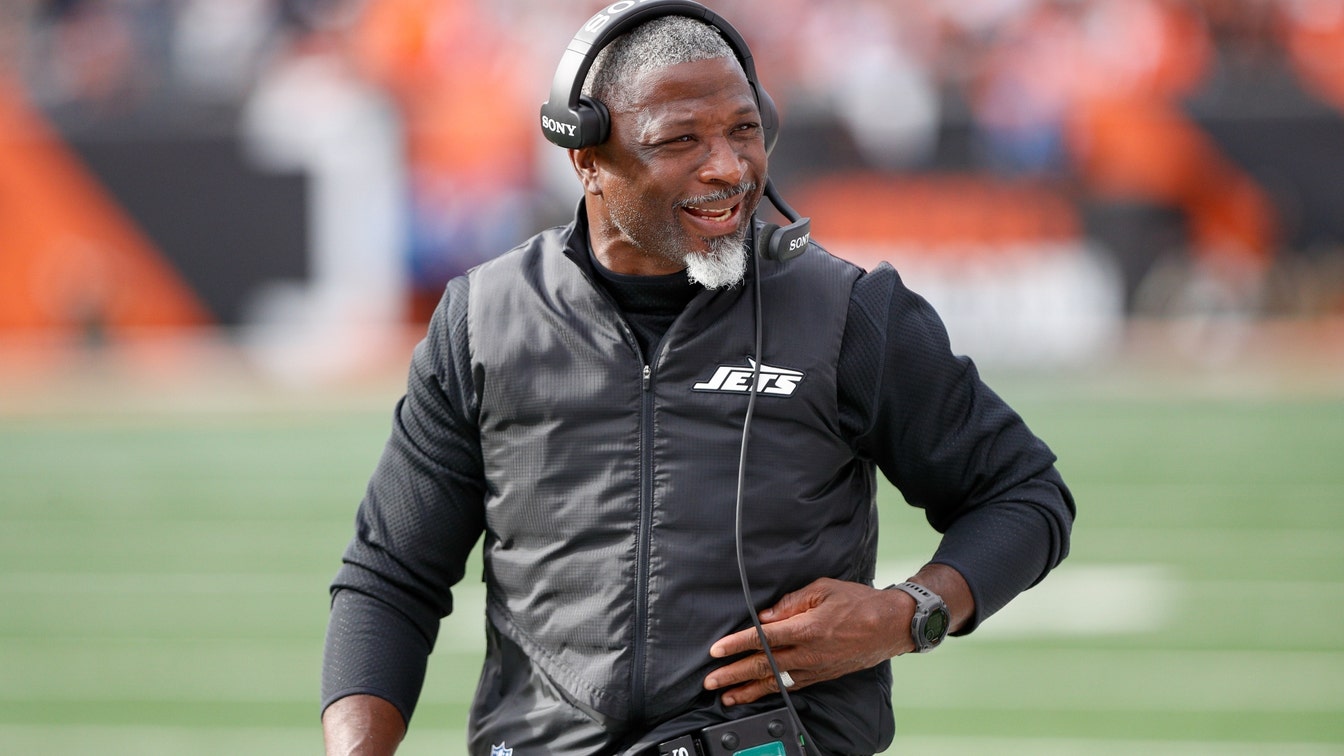
Jets head coach Aaron Glenn is looking to bounce back from a disastrous first season by changing the team’s culture. (Ian Johnson/Icon Sportswire via Getty Images)
Although this topic is rarely discussed in pre-draft reporting, teams covet players with a winning pedigree because they understand the standards and expectations of a championship program. The Jets aren’t close to title contention, but the team is laying the groundwork for a playoff run by adding a handful of rookies with championship flair to an overhauled roster that added quarterback Geno Smith, safety Minkah Fitzpatrick and linebacker Demario Davis in the offseason.
4. Offensive coordinators stockpile tight ends to create more mismatches
The Los Angeles Rams have opened a Pandora’s box with their clever use of “13” personnel (a running back, three tight ends and a wide receiver) to create mismatches all over the field.
Teams began to manipulate the numbers at the line of scrimmage, with multiple tight ends lined up next to each other to create additional space for off-tackle runs. The illusion of a running game with tighter ends can also produce big plays through play-action. Teams are also running more “YOZ” formations (tight ends lined up wider than wide receivers), with the tight end’s wide alignment forcing linebackers and safeties out of their comfort zone.
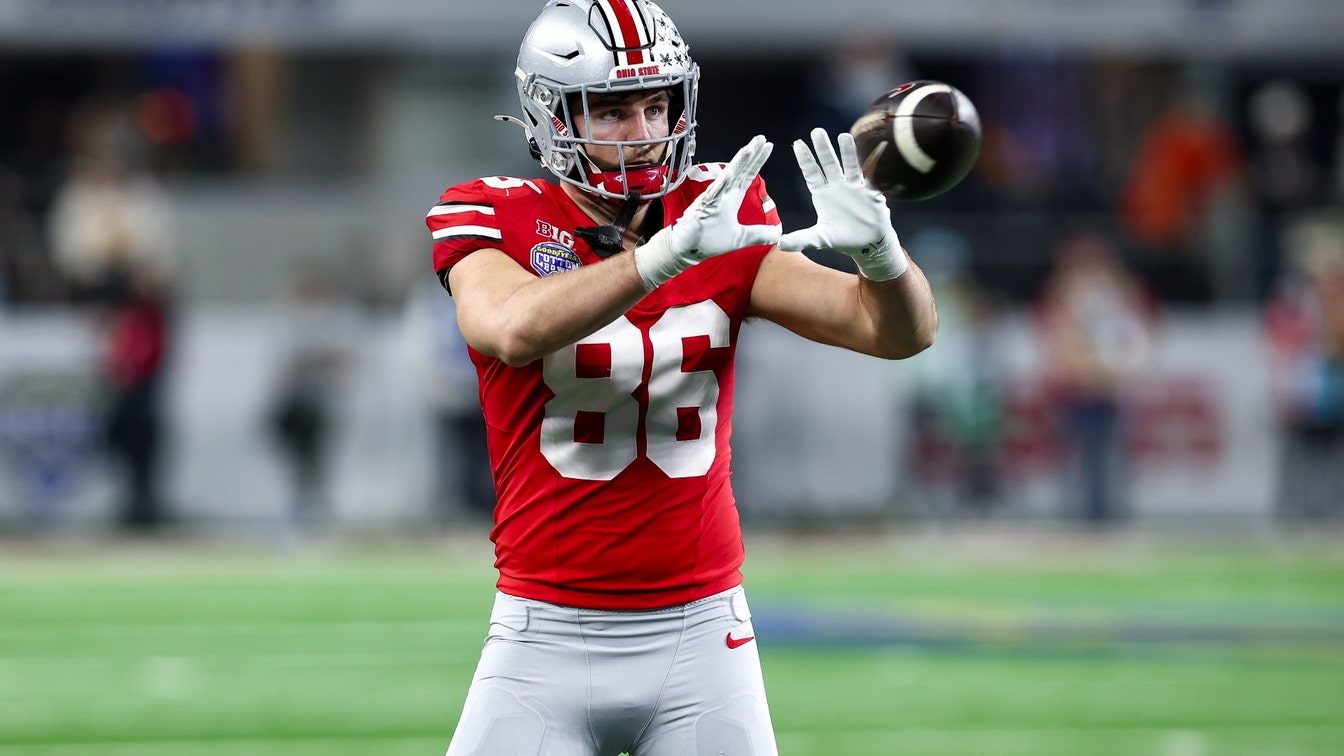
The Rams added another tight end in former Ohio State star Max Klare in the second round Friday night. (Matthieu Visinsky/Icon Sportswire via Getty Images)
No matter how they look to find an advantage, offensive players have found a cheat code using ultra-athletic tight ends on the perimeter.
The 2026 draft saw nine tight ends come off the board in the first three rounds, with a mix of “Y” (traditional tight end) and “FLEX” (H back) playmakers selected on day two. Teams looking for returning tight ends have opted for Nate Boerkircher of Texas A&M (Jacksonville Jaguars), Marlin Klein of Michigan (Houston Texans) and Sam Roush of Stanford (Chicago Bears). Meanwhile, players eager to find mismatch makers grabbed Vanderbilt’s Eli Stowers (Philadelphia Eagles), Ohio State’s Max Klare (Los Angeles Rams) and Georgia’s Oscar Delp (New Orleans Saints).
As the game evolves to feature more multi-TE sets, the race for tight ends over the first two days of the draft reflects the league’s changing landscape.