
KARACHI:
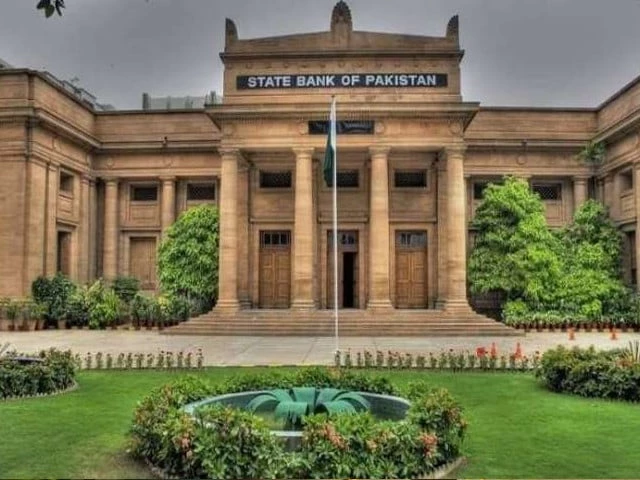
Pakistan’s steadily declining interest rate trajectory was disrupted by the fallout from the US-Israeli war on Iran, as the State Bank of Pakistan (SBP) on Monday raised its policy rate by 100 basis points to 11.50%, citing inflationary risks triggered by geopolitical escalation and the resulting closure of the Strait of Hormuz, a move that defied market expectations and drew sharp criticism from the business world, which described it as “beyond comprehension” in a context of crisis. an economic recovery that is still fragile.
The Monetary Policy Committee (MPC), at its last meeting, justified the increase by highlighting growing global uncertainties resulting from the protracted conflict in the Middle East, which has driven up energy prices, transport costs and insurance premiums, while disrupting supply chains. The central bank warned that these factors risked fueling inflationary pressures in the coming months, requiring tighter monetary policy to anchor expectations and avoid second-round effects.
However, business leaders have expressed concern that the move could hurt investment and hamper private sector activity. The Pakistan Business Forum (PBF) said the increase was difficult to understand, questioning why authorities seemed to be moving away from the goal of improving the ease of doing business.
PBF Chairman Khawaja Mehboobur Rehman said higher borrowing costs would further limit the use of private sector credit, making it more difficult for companies to expand operations.
The SBP acknowledged that inflation had already started to accelerate, with headline inflation rising to 7.3% in March, while core inflation edged up to 7.8%. He noted that inflation expectations among consumers and businesses had deteriorated in recent surveys, reinforcing the need for preemptive action.
According to the central bank’s assessment, inflation is expected to accelerate further and could reach a double-digit range in the coming months, largely due to the pass-through of rising global energy prices. Although food inflation remains relatively contained thanks to sufficient supplies, rising fuel prices have already started to feed through into transport fares and broader core inflation.
Despite these concerns, the MPC noted that the national economy has shown signs of resilience. Real GDP grew by 3.8% in the first half of FY26, supported by widespread improvements across all sectors. Large-scale manufacturing posted strong growth of 5.9% between July and February, while credit to the private sector continued to grow at around 13%, reflecting improving business activity and the lagged impact of earlier rate cuts.
Nonetheless, recent high-frequency indicators suggest some sluggish economic momentum, particularly in March, amid emerging external headwinds. The agricultural outlook has also darkened slightly due to lower-than-expected wheat production, which could weigh on overall growth.
Externally, Pakistan recorded a small current account surplus between July and March FY26, supported mainly by resilient workers’ remittances. The government also managed to shore up foreign exchange reserves through external financing, including the issuance of Eurobonds, allowing the SBP’s reserves to remain around $15.8 billion at the end of April.
The central bank expects reserves to exceed $18 billion by June 26, underscoring the importance of continued efforts to build external buffers in an increasingly uncertain global environment. He also highlighted the recent staff-level agreement at the International Monetary Fund (IMF) as a positive development supporting macroeconomic stability.
In the fiscal area, challenges persist as tax collection by the Federal Board of Revenue (FBR) fell short of targets, widening the cumulative deficit to Rs611 billion between July and March. Although the fiscal deficit has remained relatively contained so far, the SBP warned that rising global oil prices could complicate fiscal management, particularly due to the need for targeted subsidies to protect vulnerable segments.
The MPC stressed that achieving the full-year primary surplus target would likely require further spending rationalization, alongside structural reforms to broaden the tax base and reduce state-owned enterprises’ losses.
Looking ahead, the SBP argued that maintaining macroeconomic stability would require a combination of prudent monetary policy, fiscal discipline, and continued reform efforts. However, he also warned that the outlook remains highly uncertain and subject to risks related to the duration and intensity of the conflict in the Middle East, global commodity prices and potential fiscal slippages.


