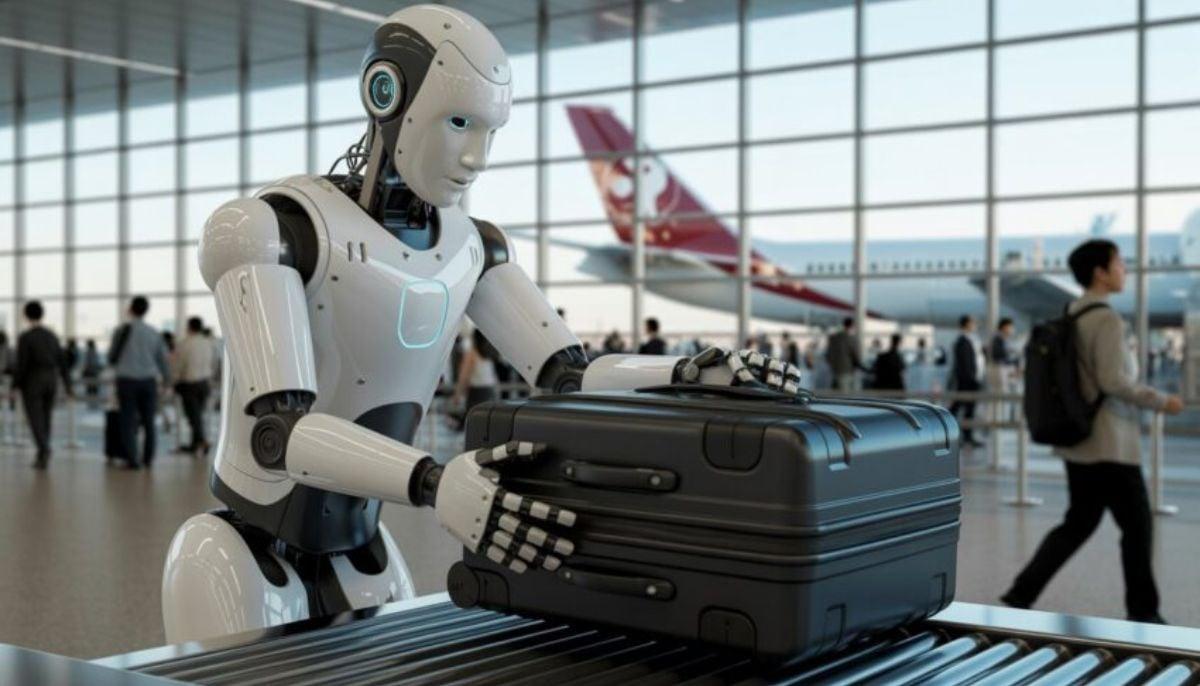
Japan Airlines (JAL) will begin using humanoid robots for ground handling tasks at Tokyo’s Haneda Airport from next month (May 2026), as part of a two-year trial.
The Chinese-made robots will initially be used to load and unload cargo containers. JAL announced the move alongside its partner GMO AI & Robotics at a media event on Monday.
The airline employs around 4,000 ground handlers and says the robots are intended to ease their workload, not replace them.
The Japanese aviation industry is facing a serious labor shortage. The problem comes from two things:
- A surge in inbound tourism;
- A shrinking working-age population.
Japan welcomed more than seven million foreign visitors in just the first two months of this year, according to JTB Group, which operates the country’s largest travel agency.
“While airports appear highly automated and standardized, their back-end operations still rely heavily on human labor and face severe labor shortages,” said Tomohiro Uchida, president of GMO AI & Robotics.
JAL said it hopes to eventually expand the robots’ functions to include cleaning cabins and operating ground support equipment. For now, handling goods comes first.
Yoshiteru Suzuki, president of JAL’s Ground Service, said deploying robots for physically demanding tasks would “provide significant benefits to employees.” However, he stressed that some tasks can still only be accomplished by humans.
The robots are already in use at several Japanese airports, primarily for security patrols and retail operations. The Haneda trial would mark one of the first deployments of humanoid robots in direct ground handling work.