
ISLAMABAD:
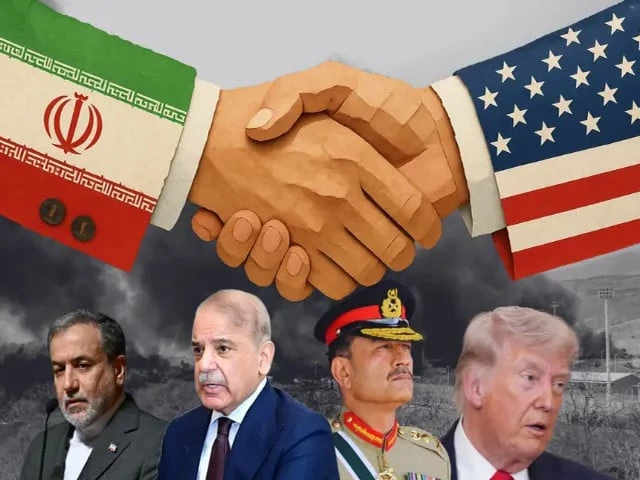
As the chances of imminent negotiations between Iran and the United States diminish, attention has also shifted away from Islamabad, at least for the moment.
Pakistan has remained in the global spotlight since the United States and Iran first agreed to a temporary ceasefire three weeks ago, leading to direct talks unprecedented between the two adversaries since 1979.
Over the past ten days, Pakistan has twice come close to organizing a new round of negotiations. But the preconditions imposed by Iran, such as the lifting of the American naval blockade, prevented a second round from taking place.
Since then, backdoor diplomacy has taken over. Islamabad may no longer be in the spotlight, but it remains a central player guiding efforts behind the scenes.
It was through Pakistan that Iran recently made a proposal to the United States to end the war.
Although exact details are not available, the proposed plan first considered reopening the Strait of Hormuz before seriously discussing other issues, including Iran’s nuclear program.
The United States has said it will not accept the current Iranian proposal.
In a social media post on Tuesday, US President Trump said Iran had informed the United States that it was “in a ‘state of collapse'”, insisting that Tehran wanted the Strait of Hormuz open as it “tried to determine its leadership”.
Besides their differences on major issues, Iran and the United States have divergent approaches on how to end the conflict.
Iran wants a step-by-step approach and does not want to sign a deal in haste. The United States, meanwhile, is pushing for an “all-in-one deal” encompassing all controversial issues, including the Strait of Hormuz and nuclear issues.
Washington believes that lifting the naval blockade in exchange for the reopening of the Strait of Hormuz would take away its main leverage at the negotiating table.
While the United States has reservations about the Iranian proposal, American media reports suggest that Tehran could soon submit a revised set of plans to Washington via Pakistan.
This shows that the diplomatic process, although moving at a slow pace, has not stopped.
At the same time, Iran is trying to develop a regional framework bypassing the United States to address some of the pressing issues.
Iranian Foreign Minister Abbas Araghchi visited Oman and Russia, while making two stops in Islamabad.
Likewise, Iran’s top diplomat spoke with the Saudi, Qatari, French and Turkish foreign ministers to discuss the developing situation.
While Russia has supported Iran and President Putin has offered to help resolve the issue, Oman appears disinclined to accept Iran’s proposal for joint control over the Strait of Hormuz.
Furthermore, an extraordinary meeting was convened by Saudi Arabia with the Gulf countries to discuss possible options.
But the unity of the Gulf countries suffered a blow when the United Arab Emirates decided on Tuesday to leave the Organization of the Petroleum Exporting Countries (OPEC), a cartel that controls the supply of oil to ensure price stability in the market.
Some observers see it as the first major sign of how the Iran-US war has forever changed the world order.
The United Arab Emirates has decided to leave OPEC, a cartel created in the 1960s to regulate the supply of oil to international markets.
OPEC, which initially had five members, was later joined by other oil-producing countries. It controls 36 percent of the world’s crude oil supply and holds 80 percent of the world’s crude oil reserves.
OPEC limits the production of its members in order to maintain price stability in the market.
The United Arab Emirates, OPEC’s second largest producer, wanted to increase their supply but could not do so because the cartel did not allow it.
Now, after leaving OPEC, the UAE can increase its oil supplies.
This could increase competition and benefit end consumers.
But the downside is that this could increase volatility in the markets and other countries could also leave OPEC.
This is just one aspect. According to some observers, there will be a new security architecture in the region after the war between Iran and the United States.
This is only the beginning, they add.


