
ISLAMABAD:
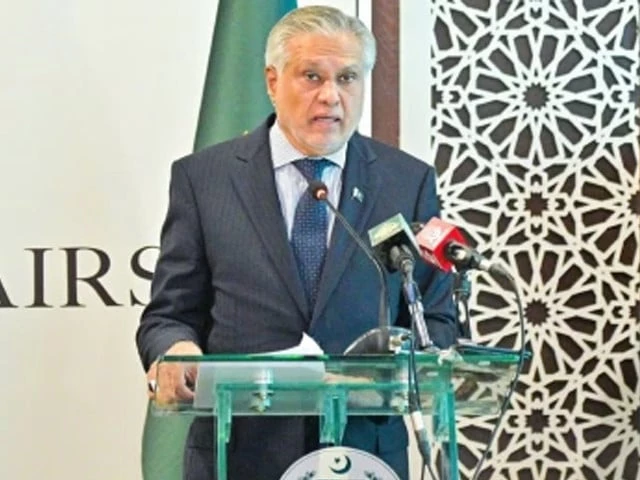
Deputy Prime Minister and Foreign Minister Ishaq Dar on Tuesday expressed hope that Pakistan’s mediation efforts in the US-Iran negotiations to end the Middle East conflict would reach an advanced stage and eventually succeed, calling them essential for world peace and the global economy.
He briefed members of the diplomatic corps and ambassadors at an event organized at the Ministry of Foreign Affairs in Islamabad on the occasion of the first anniversary of ‘Marka-e-Haq’.
He also briefed the participants about Pakistan’s role as facilitator and mediator in supporting ceasefire efforts and promoting peace in the Gulf region and the wider Middle East.
Referring to the Iran-US peace talks held in Islamabad, the deputy prime minister said Pakistan ensured progress by convincing the parties to agree to a ceasefire and facilitating engagement after their first direct talks in 47 years.
“I am happy to say that things have unfolded and progressed in a very positive way, but the parties had to return to their capitals and their leaders for the consultations,” he said.
The Deputy Prime Minister expressed his gratitude to both parties, adding that the top priority was to conclude this matter in a dignified manner, as this was the need of the region.
He said Pakistan’s aim was to continue to engage both sides as honest facilitators and mediators to negotiate and reach a peaceful settlement. “It’s necessary for the region, it’s necessary for the world, it’s necessary for the global economy,” he said.
He added that Pakistan’s objective, as a facilitator, was to end the conflict as quickly as possible.
“We are very happy that it has reached a very advanced level, and we are still hopeful that it will reach a very advanced level and eventually conclude,” Dar said.
He described Marka-e-Haq as a symbol of unity, resilience and unwavering determination of its Pakistan Armed Forces to defend the sovereignty and territorial integrity of the country, while emphasizing the determination of the nation and the armed forces to safeguard sovereignty, territorial integrity and political independence.
The foreign minister said Pakistan’s response during Operation Bunyanum Marsoos was measured, legal and in line with the UN Charter, targeting only military installations, while warning of risks of escalation, harm to civilians and threats to regional peace and security.
He warned India against any “misadventure”, recalling the past consequences during “Marka-e-Haq”. “Any misadventure against Pakistan will be faced with full might, resolve and determination,” he said.
Highlighting the situation in Indian illegally occupied Jammu and Kashmir, he said the struggle of the Kashmiri people for self-determination cannot be suppressed.
“The legitimate struggle of the Kashmiri people for self-determination cannot be suppressed by Indian occupation and urged India to take immediate and meaningful steps towards a just settlement of the Jammu and Kashmir dispute in accordance with the relevant UN Security Council resolutions and the aspirations of the Kashmiri people,” he said.
“India’s continued reliance on unilateralism and chauvinism poses a threat to regional peace and stability,” he added, asserting that Pakistan remained committed to multilateralism and peaceful resolution of disputes.
Dar also expressed concern over India’s unilateral action over the Indus Waters Treaty, saying the National Security Committee had made it clear that any attempt to stop or divert water allocated to Pakistan under the treaty would be considered an act of war.
The Deputy Prime Minister highlighted the unexplained fluctuations in river flow over recent periods.
“Beyond India’s unilateral decision to suspend the Indus Water Treaty and its attempts to politicize shared water resources, Pakistan has observed a worrying pattern of irregular and unexplained fluctuations in the river’s flow in the recent period, raising serious questions about compliance with the obligations established by the treaty,” he said.
He called the situation “worrying” and called for full transparency and data sharing under the treaty.


