
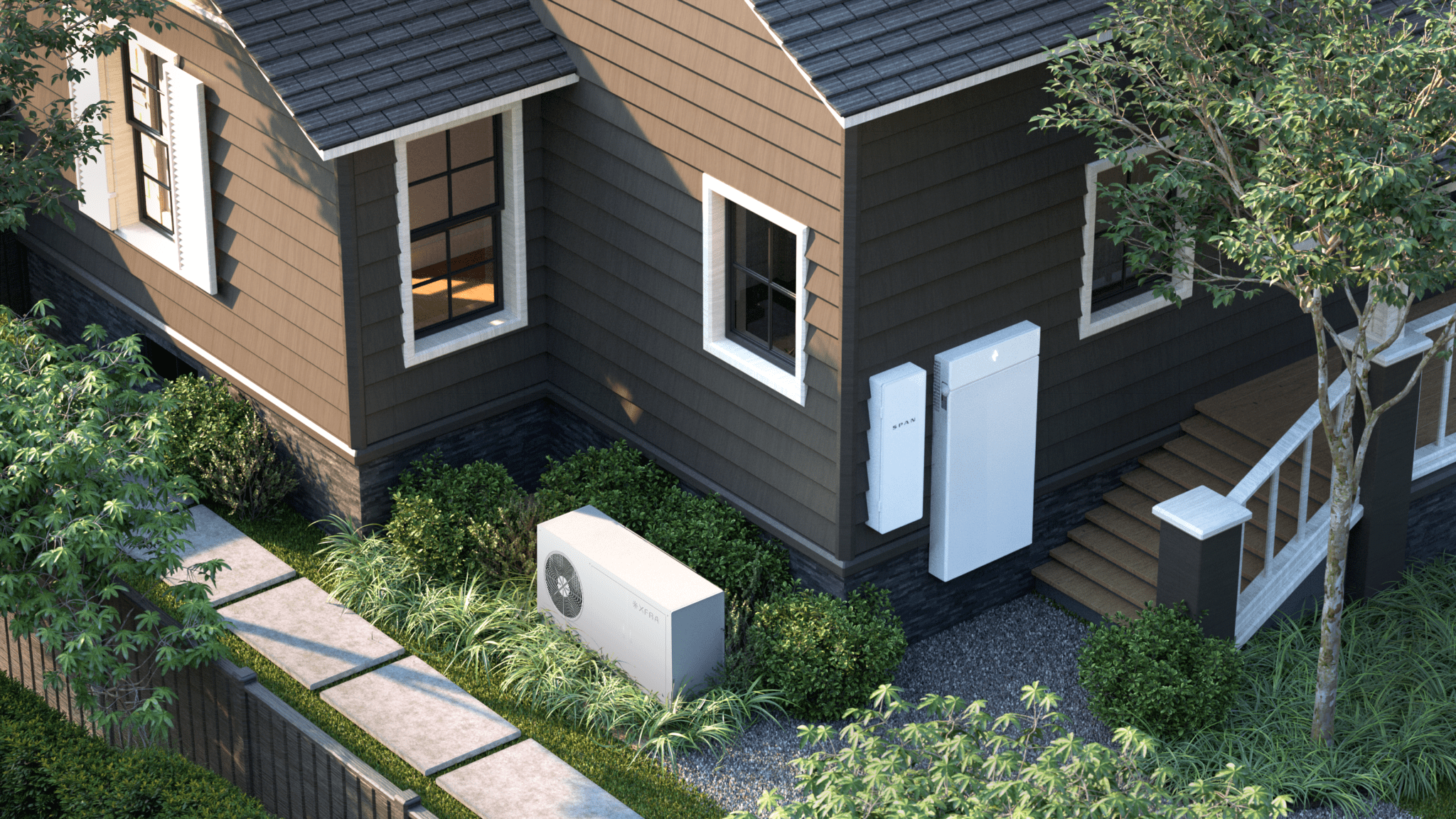
- SPAN plans to install AI-powered GPU enclosures outside ordinary suburban homes
- Landlords offered subsidized electricity to house remote IT infrastructure equipment
- Each neighborhood node contains sixteen expensive Nvidia GPUs in a compact package
A San Francisco startup called SPAN has proposed placing small data center nodes outside suburban homes.
The company says it wants to install thousands of liquid-cooled cases called XFRA nodes, each containing powerful Nvidia GPUs.
Homeowners would benefit from subsidized, or even free, electricity and internet access in exchange for hosting this equipment on their property.

A quiet case with sixteen GPUs
Each XFRA node attaches to the exterior wall of a home as an additional utility box.
The unit packs sixteen Nvidia RTX Pro GPUs and operates with minimal noise, according to company announcements.
SPAN claims it can install eight thousand such nodes for five times less money than building a conventional data center with the same computing power.
“Data centers are noisy, ugly and often drive up local electricity bills,” said Chris Lander, vice president of XFRA at SPAN.
“It’s quiet, discreet and makes energy more affordable for the host and the community.”
The system takes advantage of excess electrical capacity that already exists in most modern American homes.
“Virtually every home with 200 amp utilities has 80 amps available at any time, so we defined that as the maximum power consumption for a single XFRA node,” Lander explained.
“This home backup is provided free of charge to the host, contributing to greater energy resilience in addition to affordability,” he added.
Benefits for Utilities and Communities
SPAN claims that distributed nodes help network operators avoid costly infrastructure upgrades and that increasing electricity sales on existing network infrastructure makes electricity more affordable for everyone.
The approach focuses on AI inference tasks rather than model training, which requires thousands of GPUs to work together.
However, not everyone shares SPAN’s optimism. Ari Peskoe, director of Harvard Law School, warned that utility companies may need to adapt their local grid management to neighborhoods with many such nodes.
“If there is a block that has multiple homes with these devices, maximizing the compute and energy would force a lot of energy to that local area,” Peskoe said.
However, the project poses security concerns, as thieves can also target these cases, since each GPU sells for around $10,000.
The company plans a pilot rollout of 100 homes in 2026, followed by rapid expansion to 80,000 units across the United States by 2027.
It remains to be seen whether suburban homeowners will accept this arrangement, which many may not understand.
Meanwhile, the willingness of utility regulators and local zoning boards to approve such a decentralized computing experiment remains to be seen.
The pitch sounds appealing on paper, but the real test will come when actual residents discover what it means to live next to a box of expensive electronics that strangers control remotely.

Follow TechRadar on Google News And add us as your favorite source to get our news, reviews and expert opinions in your feeds.


