
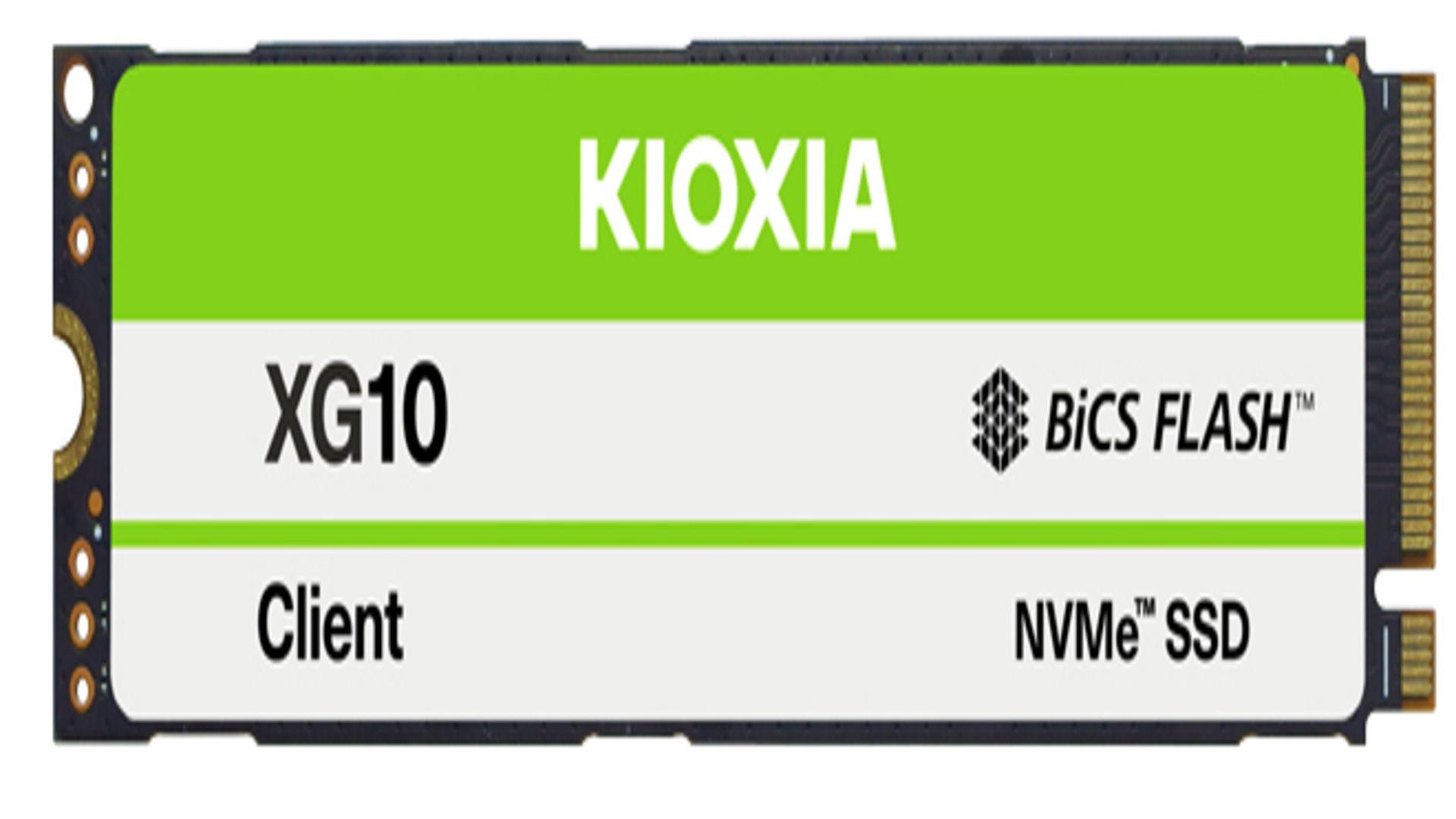
- Kioxia’s new SSD achieves storage speeds previously reserved for enterprise hardware systems
- Kioxia XG10 series doubles sequential performance compared to previous XG8 generation
- The XG10 Series combines PCIe 5.0 speeds with enterprise-grade encryption security support
Kioxia introduced its XG10 series SSD, bringing PCIe 5.0 storage speeds to high-performance workstations and office environments increasingly shaped by AI workloads.
The XG10 Series achieves sequential read speeds of up to 14,000 MB/s as well as write speeds of up to 12,000 MB/s, figures that go beyond previous consumer PCIe 4.0 products.
Its random performance also increases significantly, with the drives reaching up to 2,000 KIOPS read and 1,600 KIOPS write during demanding operations involving smaller files.

PCIe 5.0 pushes storage speeds beyond previous generations of consumer SSDs
Kioxia describes the new storage family as the successor to its previous XG8 series, using a PCIe Gen5 x4 interface and NVMe 2.0d support for improved throughput.
The company says its latest drives achieve about double the sequential performance of the previous generation, while significantly improving random read and write operations.
The company ties the XG10 series to the growing demand for local AI processing, particularly among business users working outside of traditional cloud infrastructure environments.
Kioxia says the drives are suitable for private AI model training and inference workloads, as well as video editing, large-scale content creation, and gaming systems requiring faster data management.
“PCIe 5.0 represents a major advancement for client storage, especially in the performance segment,” said Maulik Sompura, senior director of product management at Kioxia America’s SSD business unit.
He added that the company offers “significantly improved performance” intended to improve workloads run by creators, gamers and professional users handling heavier computing demands.
The focus on AI computing reflects a broader industry movement toward locally processed machine learning applications, especially as new processors increasingly incorporate dedicated neural processing hardware.
Faster storage alone does not determine overall AI performance, although high-bandwidth drives can reduce delays when transferring larger data sets and machine learning models between storage and system memory.
Availability remains limited for everyday buyers
Kioxia says the XG10 series currently exists in the sampling stage for some PC makers rather than wide retail availability for individual consumers building personal systems.
Systems equipped with the new SSDs are expected to begin shipping in the second quarter of 2026, although the company did not provide pricing information.
The drives are available in the standard M.2 2280 format and include capacities ranging from 512 GB to 4 TB, as well as support for TCG Opal 2.02 self-encrypting drive security.
Kioxia also plans to showcase the new hardware at Dell Technologies World in Las Vegas between May 18 and 21, 2026.
At the time of writing, there is no information on the price of this device, but based on its hardware, it probably won’t be cheap.
The specs look substantial on paper, although the practical benefit for many desktop systems depends more on software optimization and thermal management than just maximum benchmark numbers.

Follow TechRadar on Google News And add us as your favorite source to get our news, reviews and expert opinions in your feeds.


