
- BYD’s super-fast charging isn’t just for China
- Company introduces five-minute charging at its UK headquarters
- Only one European model will be compatible, but others will follow
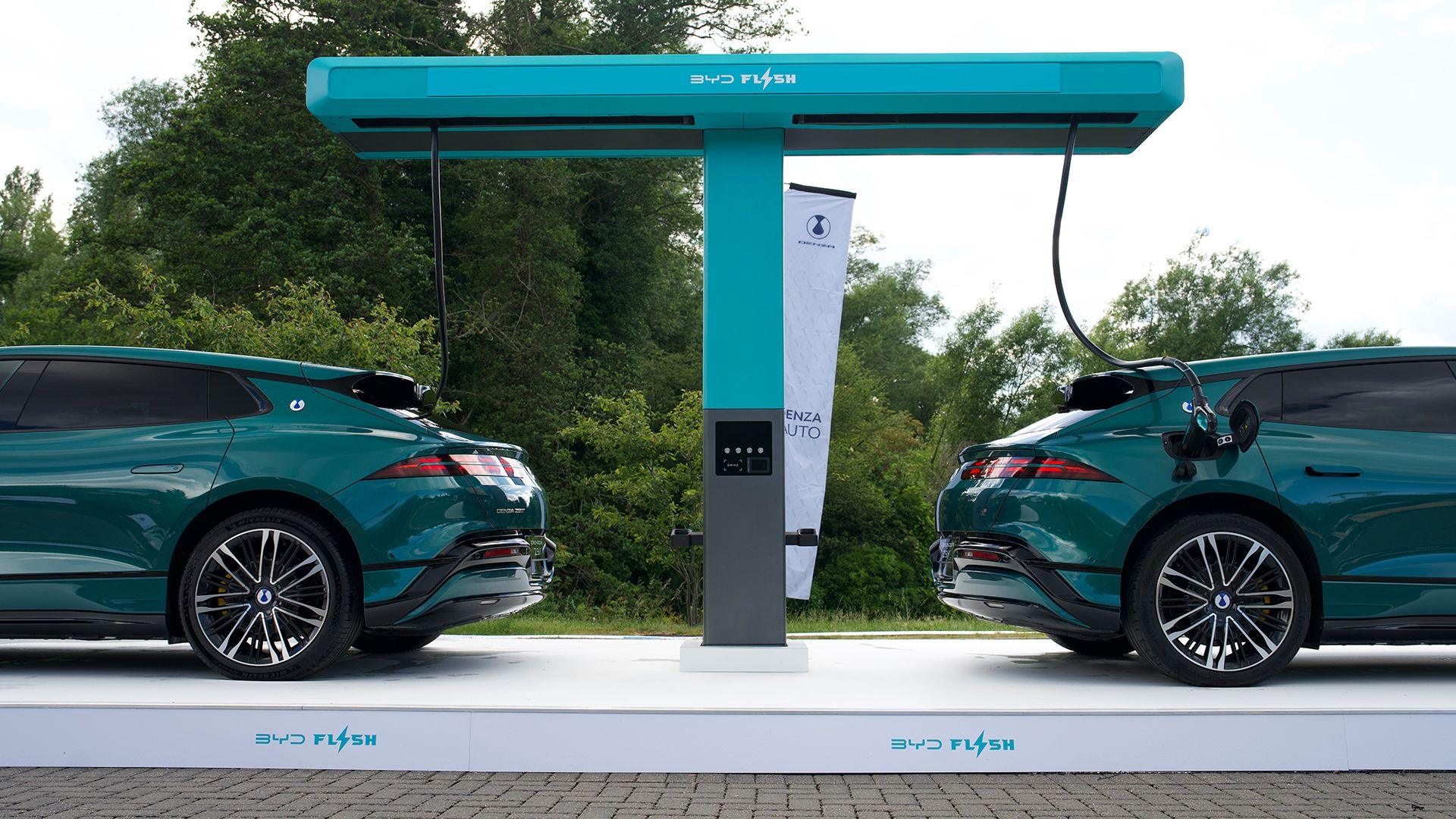
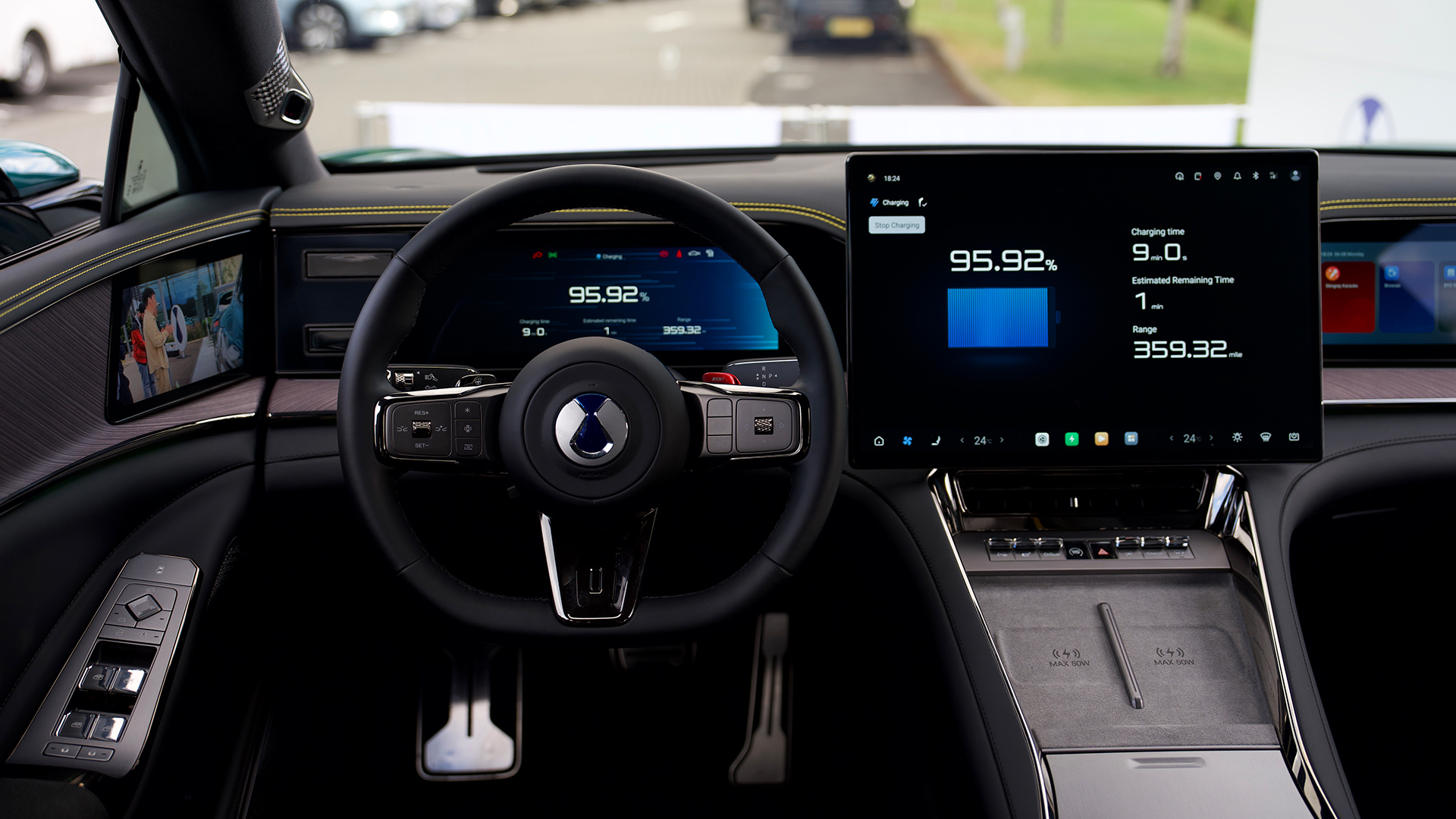
BYD showcased its five-minute EV Flash Charging technology at its west London headquarters this week, inviting guests and journalists to witness a Denza Z9 GT – BYD’s premium brand’s Porsche Taycan rival – charge its batteries from 10 to just under 100 per cent in nine minutes.
Flash chargers, which can deliver a maximum power of 1,500 kW (1.5 megawatts), far exceed the performance of today’s ultra-fast chargers, which peak in most places around 350 to 400 kW.
This next-generation technology has, in the words of BYD UK boss Bono Ge, the potential to “change people’s perceptions of electric cars”.

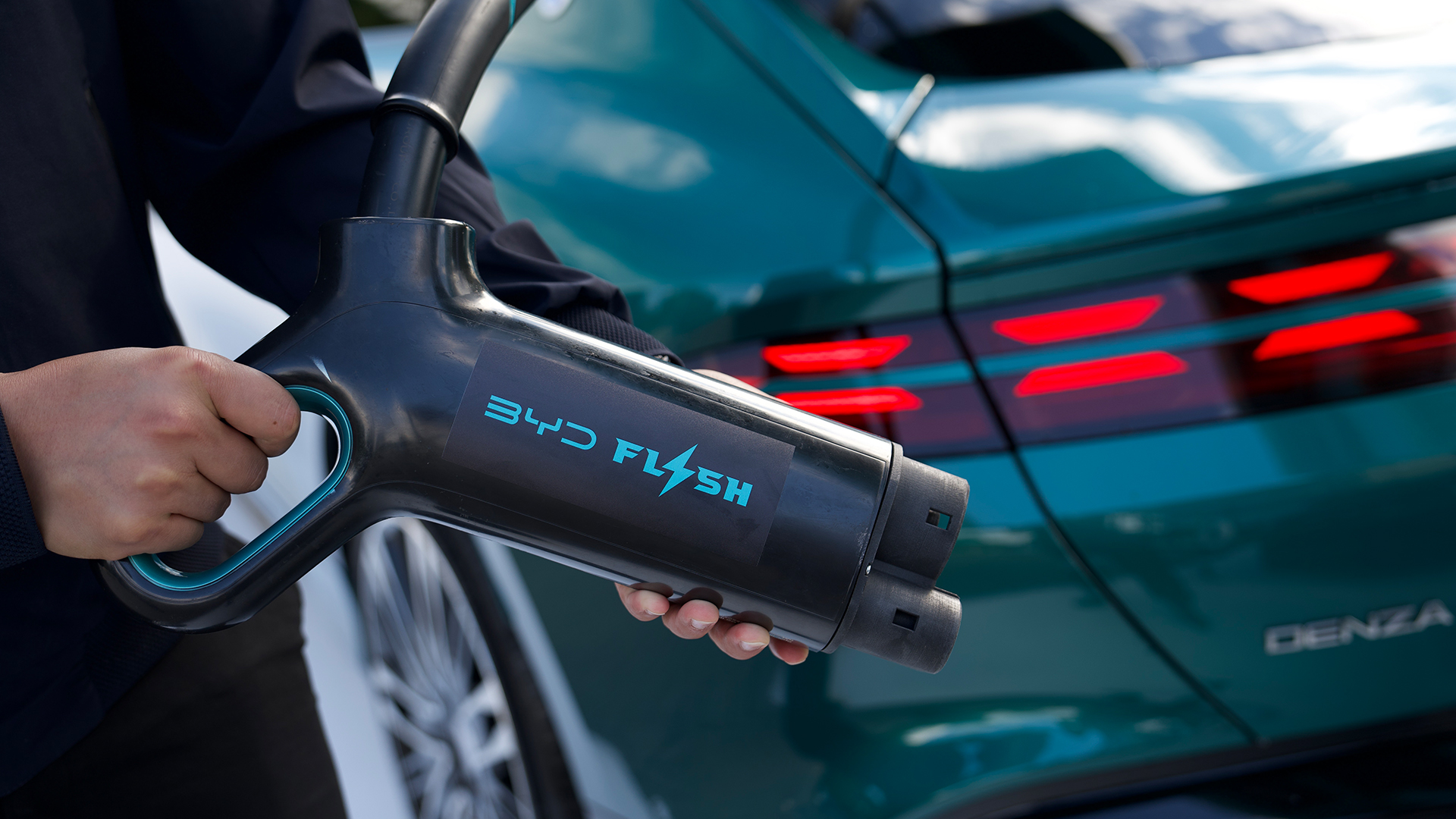
During the demonstration, BYD invited an audience member to grab the charging gun, which is a standard CCS 2 connector (so can be used by most electric vehicles), and plug it into a Denza GT 9 with a pre-empty battery that showed 10% on its infotainment screen.
To facilitate the heavy, actively cooled wiring required for such speeds, BYD designed its Flash Charge system to look a bit like regular fuel pumps, with a pulley system that keeps the cables above and away from the ground, while making them easier to move.
Once plugged in, the charging session started automatically and a BYD representative started the timer. In just a few minutes, Flash Charge technology added 200 miles of range, with charging from 10 to 70 percent taking just five minutes. Four minutes later, the battery was at 97%.
“Ready in five, full in nine and if it’s cold, add three minutes,” explained Diego Pareschi, head of electric vehicle charging at BYD, at the launch, saying that even in the harshest climates it will only take 12 minutes to fully recharge a battery, not the hours it can take some competitors.
A massive European deployment
According to Bono Ge, BYD plans to introduce some 6,000 Flash charging stands outside China by the end of 2027, with 3,000 operating in Europe and around 300 destined for the UK.
“We are already working with BYD dealers, established charging point operators (CPOs) and special partners, such as supermarkets, fast food restaurants and other high-traffic areas, to set up flash charging locations,” Bono Ge told us.
Asked about the logistical and building permit challenges faced by these high-power charging outlets, Ge said BYD’s on-site battery storage solution makes it easier to navigate the red tape.
A Flash charging station uses a massive 400 kW battery stack to help deliver such high charging speeds, meaning BYD doesn’t have to put as much demand on the local grid.
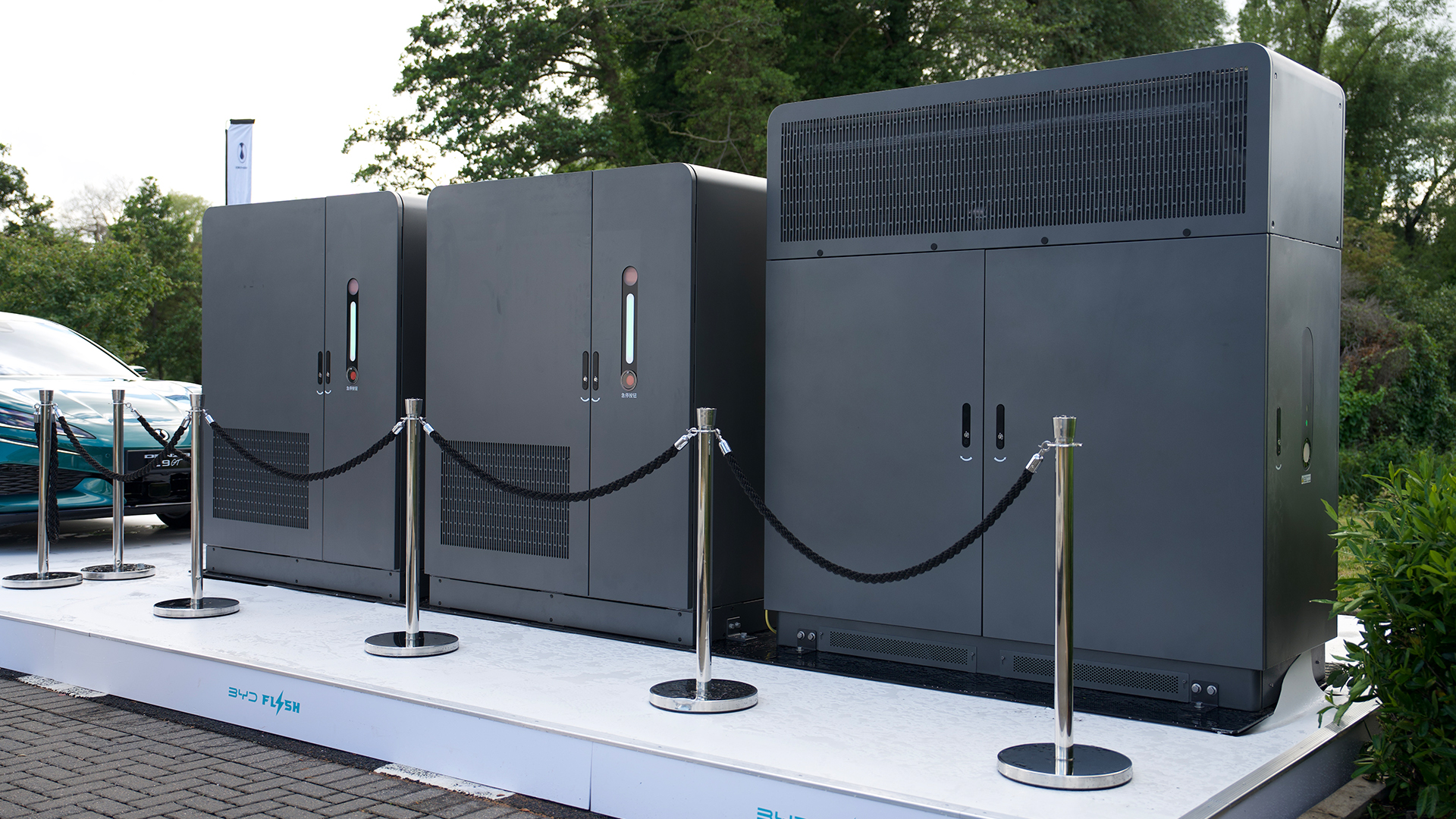
It also means on-site batteries can be recharged overnight, when electricity is cheaper, with the savings potentially passed on to customers.
“I think the ideal situation we want is to be below 50 pence per kilowatt hour,” Ge said during our discussions.
This is between 30p and 40p cheaper than most ultra-fast public chargers currently located in high-traffic areas of the UK.
Ge added that the company was initially looking to “put its customers first” and had to find ways to appease CPOs so as not to undercut them. But he went on to point out that Flash chargers are universal and therefore available for any electric vehicle, albeit at much slower charging speeds.
The trickle-down effect
BYD’s head of electric vehicle charging, Diego Pareschi, said all BYD cars with the second generation of its Blade Battery technology will be capable of flash charging, but the company has not revealed exactly which models will be released in the UK and Europe.
Currently, the Chinese company is preparing to launch its premium Denza brand outside of China, with the Z9 GT set to offer levels of sophistication and performance to the Porsche Taycan and Audi e-tron GT at a lower price.
Pareschi said Denza customers will get 18 months of free Flash charging when they purchase a Z9 GT, in a move that echoes previous Tesla incentives.
BYD continues to post record sales figures in the UK and Europe, but says it is reinvesting in these markets, with 2 billion euros reserved for the deployment of Flash Charge alone.
According to Ge, each charging station costs between £500,000 and £1 million (around $670,000/AU$955,000) to install, depending on the complexity of construction.

Follow TechRadar on Google News And add us as your favorite source to get our news, reviews and expert opinions in your feeds.


