The number of forcibly displaced people fell last year for the first time in a decade, as increasing numbers chose to return home despite often dangerous and unstable conditions, the UN said Thursday.
By the end of 2025, 117.8 million people worldwide were forced to leave their homes, a drop of 5.4 million from the previous year, the United Nations refugee agency said.
The agency said the number of people who have been forced to flee due to war, violence and persecution remained “unacceptably high”, calling for measures to significantly reduce long-term displacement over the next decade.
In its annual report, UNHCR explained that the decline in the number of displaced people was linked to “a sharp increase” in the number of refugees and internally displaced persons (IDPs) returning home.
A total of 14.7 million displaced people returned to their places of origin in 2025, the report said.
Among them, 4.4 million refugees returned to their countries of origin, representing the second highest number of refugee returns since records began 60 years ago.
Dangerous returns
U.N. refugee chief Barham Salih told reporters in Geneva that “more than 90 percent” of refugee returns last year were concentrated in Afghanistan, Sudan and Syria.
But, he stressed, “many of these returns occurred not under conditions of security and stability, but under pressure.”
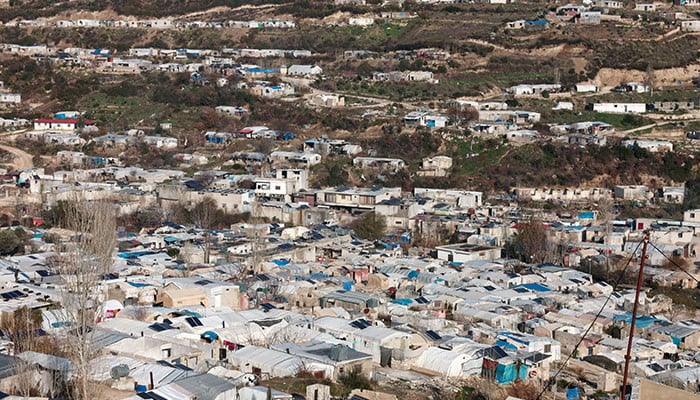
They have returned to “countries where insecurity persists, where infrastructure has been damaged and where basic services and economic opportunities remain rare,” he warned.
“Returns that are not safe (…) are not a solution,” he insisted. “They risk becoming the start of a new cycle of displacement.”
Among those displaced at the end of 2025, 41.6 million were considered refugees, including nearly 5.4 million people who crossed borders to become refugees during the year, according to the report released Thursday.
In total, 60% of these new refugees have fled just eight countries, including nearly a million from war-ravaged Sudan alone, and nearly 800,000 have fled Ukraine.
The report also highlights several crises leading to massive displacements since the start of this year. These include the Middle East war launched by the United States and Israel in February, which they say has forced 3.2 million people from their homes in Iran alone.
And in Lebanon, Israeli attacks since March have caused the displacement of more than a million people, UNHCR said.
Conflicts in Iran and Lebanon have prompted many refugees hosted there to return home since the start of the year, often in adverse circumstances, including in Syria and Afghanistan.
Refugee resettlement needed
The UN refugee agency, meanwhile, expressed concern over shrinking refugee resettlement space last year, estimating that the number of refugees needing resettlement in third countries stood at 2.9 million.
The number of resettlement places had reached 188,800 in 2024, its highest level in four decades.
But last year, this number was reduced by more than half, to just 81,800, according to the report, which notably highlights a sharp drop in the figures accepted by the United States.
“The gap between locations and needs is enormous and continues to widen,” warns the agency.
Salih, a former Iraqi president who himself was a refugee, also warned that forced displacement was becoming increasingly prolonged, often lasting years or even decades.
“Today, 70% of refugees live in protracted situations,” he stressed.
This situation is not sustainable, he insisted, calling on countries to support a new initiative aimed at lifting millions of people out of long-term displacement and dependence on humanitarian aid.
“Humanitarian aid was designed for emergency situations. It was never intended to sustain generations of people indefinitely,” he said.
The new initiative, he said, aims to halve the number of long-term displaced refugees over the next decade by expanding voluntary return, resettlement and humanitarian visa opportunities.
He expressed hope that countries would join, realizing that “there is a path to a more sustainable situation.”