
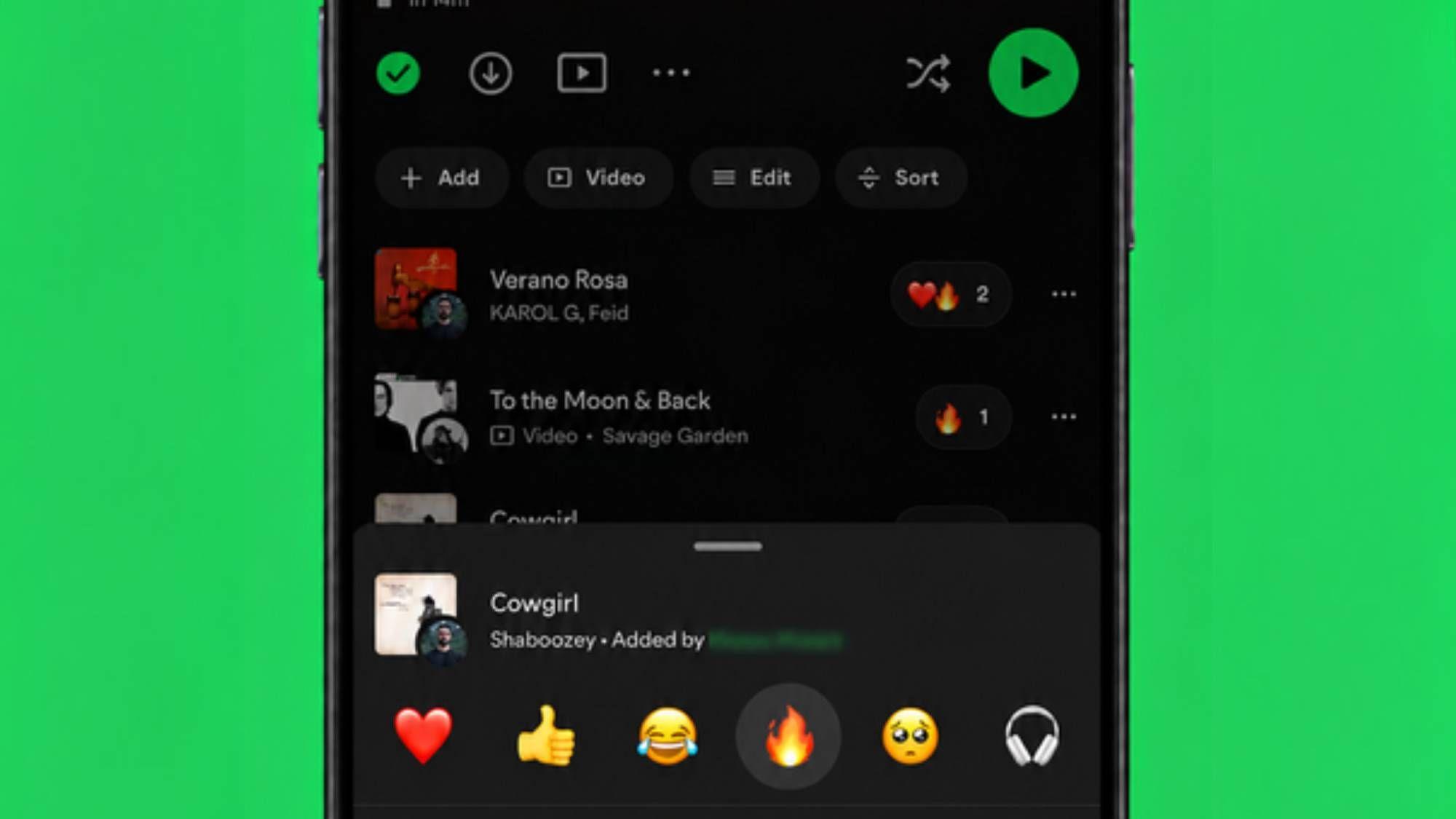
- Spotify rolls out Track Reactions for collaborative playlists
- This allows you to react to songs added by other members with a choice of six emojis
- It’s currently rolling out in select markets, but Spotify hasn’t specified which ones.
One of Spotify’s most convenient tools is collaborative playlists, which allow you and your friends to work together to group songs into one monster playlist. They now get a new upgrade that makes them even more interactive.
The best music streaming service shared on a community page is rolling out Track Reactions, which is essentially a feature that lets you use emojis to react to songs added to your collaborative playlists.
Spotify says the tool will roll out over the next few weeks in select markets to Free and Premium users aged 16 and over, although we don’t know which markets will be first.

Much like emoji reactions on platforms like Facebook Messenger, this works the same way, giving you six to choose from; a standard red heart, laughing face, thumbs up, headphones, fire and an emotional face. When you send a reaction, it appears next to the track name and you can view reactions added by other collaborators in the playlist.
The addition of Track Reactions means that collaborative playlists will now look slightly different than before. The playlist collaborators’ profile picture now appears on the song thumbnail, indicating which member added which song, and now the Track Reaction icon has taken the place to the right of a song title next to the three-dot button.
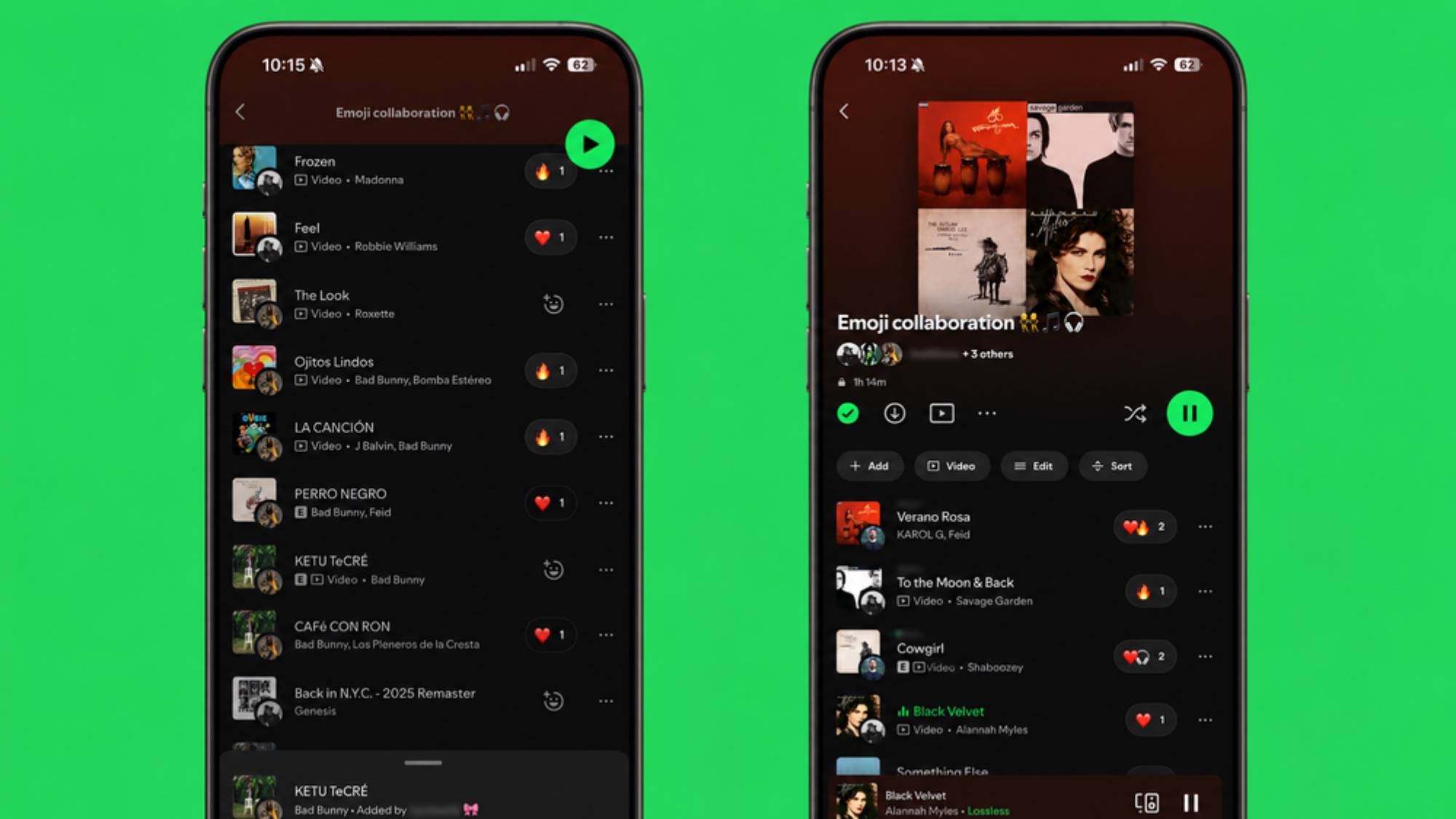
Tracking reactions are automatically enabled in collaborative playlists with 10 or fewer members, and only people in the playlist can see them, meaning outside viewers won’t be able to see which songs have which reactions. You don’t have to stick with it if you don’t want to either: the playlist creator can turn off reaction tracking in the Playlist Name and Details settings.
We’re in a time where most of Spotify’s new tools rely on the powers of AI, most recently its two new AI features for podcasts, so Track Reactions feels like a reminder that Spotify do have human elements in its user experience.
As for collaborative playlists, I mainly use them to create playlists with friends for gatherings and other social events (we have an annual summer get-together, so the tool is really useful there). Now that Spotify has brought Track Reactions into the mix, I don’t see it being used for anything other than judging everyone’s song choices – and I’m actually OK with that.
Emoji reactions are a commonly used feature among my friends in our many group chats, whether reacting to silly texts on Facebook Messenger or responding to disjointed videos we send to each other on TikTok. This will be no different in the case of Spotify, and we hope it will encourage more conversations about the music we currently listen to.
As of now, the emoji options are very limited and don’t quite represent a wide range of emotions – they all seem pretty positive, with the exception of the emotional face emoji, which is often used to represent sadness or that feeling of “smiling through pain.” To really take it to the next level, choosing to use custom emojis would open the floodgates for users to be even more expressive, or in my case, much more critical.
Follow reactions are locked to the collaborative playlist experience for the moment, and Spotify has not yet announced plans to expand it to other playlist creation tools. We’ve reached out to Spotify for more details on this, as well as to find out which markets will have access to it first, so we’ll update this story when we know more.

Follow TechRadar on Google News And add us as your favorite source to get our news, reviews and expert opinions in your feeds.


