
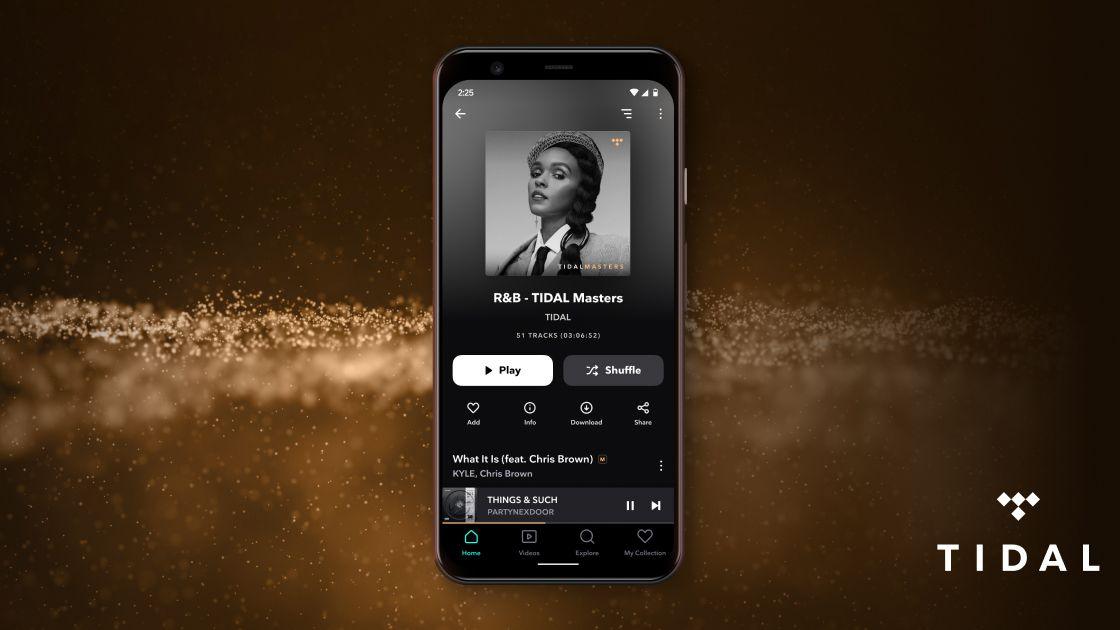
- Tidal released a new policy on AI-generated music content
- In addition to labeling 100% AI tracks, it also targets “mostly generated” elements.
- Tidal “will not tolerate AI-generated music that impersonates an artist or group”
Tired of AI sloping into your music – or tracking your delicate ear perceives be AI-generated – in recommended playlists? You are not alone.
In a welcome move for recording artists, their parents, significant others and simply fans of original musical works with human voices, high-resolution music streaming giant Tidal has released a comprehensive AI policy with the tagline “Promoting fairness and economic empowerment in the era of AI-generated music.”
The release of this policy follows significant progress in this area by Deezer, with its free AI detection tool that works on any streaming platform, Bandcamp’s strong and concise anti-AI stance outlined in January of this year, Apple’s March issue (but somewhat shaky) “transparency tags” that rely on record labels and distributors to tag AI content in Apple Music, and Spotify’s Verified by Spotify badge, which certifies that an artist is human, but does not help filter the slop from generated playlists.

Tidal’s position, while not premature, is particularly firm. The company’s detailed six-point document was released today (Monday June 29) and opens with the following statement:
“Tidal defines AI-generated music as music that is entirely or substantially generated by generative artificial intelligence. Artificial intelligence and machine learning are not new to music creation, they have simply become more common and advanced. Our policy with respect to AI-generated music aims to capture the recent developments – and rapid proliferation – of AI music generation using text.”
The missive adds that if the streaming platform will accept AI-generated music (“Artists should have the freedom to create with AI tools, and listeners should have the autonomy to choose the type of content they consume”), it will “holding AI-generated content to a higher level of content integrity.” How? By identifying it, tagging it (by mid-July of this year), and most importantly, not paying any streaming royalties for it.
The tide is turning for AI music creation using text
Interestingly, Tidal is apparently looking to go even further than Deezer here. While the rival platform’s anti-AI filter currently only works on 100% AI tracks, Tidal’s policy states: “As AI detection methods become more reliable, we will extend this tag to primarily AI-generated content.” Bold.
The Tidal document adds: “But the responsibility for identifying and labeling AI-generated content should not fall solely on Tidal. We hope – and will begin to enforce – that content distributors identify AI-generated content before it reaches our platform. “
So, a double attack against AI? It’s a decision that can only be seen as a victory for musicians and bands. That said, it remains to be seen how effective Tidal’s specific anti-AI software will be – and also who exactly helps the company achieve its admirable goals.
I asked Tidal if it had perhaps implemented Deezer’s anti-AI tool (which the company made available to competitors in January and then offered to anyone who wanted to check its playlists for AI tracks, regardless of the streaming service) and was told “We are currently working with an external partner to handle detection.”
So it seems like Tidal is keeping its cards very close to its chest as to how it’s going to implement its policies. Either way, it’s a positive step in the fight to keep music and musicians alive.
The best vinyl turntables for every budget

Follow TechRadar on Google News And add us as your favorite source to get our news, reviews and expert opinions in your feeds.


