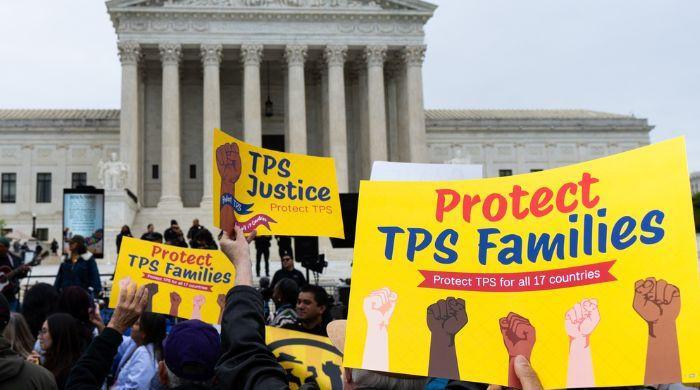
The Supreme Court dealt a blow to immigrants on Thursday, June 25, by ruling that the Trump administration can end the “temporary protected status” of immigrants.
This affected hundreds of thousands of immigrants in 13 countries.
What is temporary protected status?
Temporary Protected Status (TPS) is a humanitarian program that allows foreign nationals from countries experiencing armed conflict, natural disaster, or other extraordinary conditions to live and work legally in the United States.
Although the term refers to a temporary status, some countries have had their designations renewed for decades.
In 1990, the program was created by Congress and is administered by the Department of Homeland Security. It does not provide a pathway to permanent residency or citizenship.
Who does this affect?
The Trump administration had attempted to end TPS in 13 countries. Thursday’s decision paves the way for these layoffs.
Countries losing GST protection include:
Haiti
Syria
Venezuela
Honduras
Afghanistan
Nepal
Cameroon
Myanmar (Burma)
Ethiopia
Somalia
South Sudan
Yemen
Nicaragua
What did the Supreme Court decide?
In a 6-3 ruling, the Supreme Court concluded that federal courts do not have the authority to review the president’s decision to end TPS. With this decision, the administration is empowered to revoke the protections.
Immigrants who lose their TPS will also lose their work permits and face deportation.
What is the difference between TPS and asylum?
Although TPS and asylum protect foreign nationals in the United States, they differ significantly in terms of their purposes and outcomes.
Temporary protected status is granted to nationals of certain countries determined by the Department of Homeland Security to have unsafe conditions due to armed conflict or natural disasters. It is a class-based designation, which implies that it applies to all nationals of the country concerned without regard to their personal circumstances.
Asylum, on the other hand, is granted to people who are fleeing persecution or who have a well-founded fear of persecution in their country because of their race, religion, nationality, political opinions or membership in a certain social group. Asylum seekers must demonstrate that they individually meet the asylum requirements and, unlike TPS status, asylum holders can become residents and then citizens.
What happens next?
TPS holders from affected countries will lose their work permits and face deportation issues.
The White House called the decision a “huge victory” and said it would continue to “end the egregious abuses of our immigration system.”