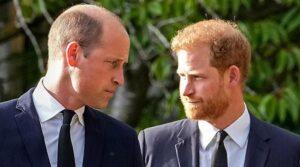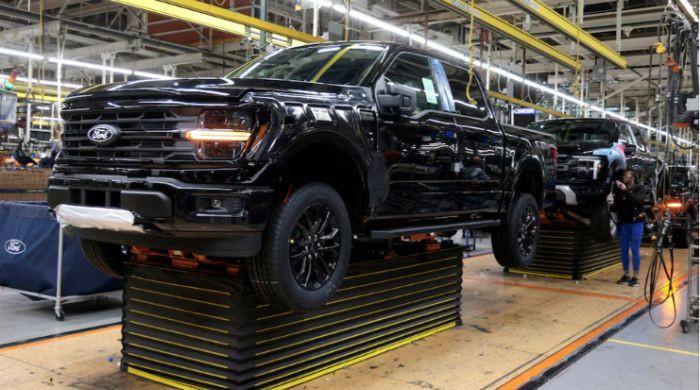
Ford brought back more than 300 retired veteran engineers, affectionately known as the “Greybeards,” after discovering that artificial intelligence simply couldn’t match their real-world skills and wisdom.
The U.S. automaker has increasingly relied on artificial intelligence for engineering tasks, manufacturing processes and quality control in recent years, but the results have been insufficient.
Ford admitted that over-reliance on automated systems led to problems that only seasoned human experts could properly resolve.
These experienced engineers, some straight out of retirement, now play a crucial role in mentoring younger colleagues, spotting potential failure points well before parts reach the factory, resolving quality issues in real time, and even reprogramming AI tools to work more efficiently.
Charles Poon, vice president of automotive hardware engineering at Ford, explained it best: “Artificial intelligence is a fantastic tool, but its value depends on the information you use to train it. » He admitted that the company had mistakenly believed that integrating design requirements into AI would automatically deliver superior products.
Kumar Galhotra, Ford’s chief operating officer, added that although the company was deploying AI in its operations, it had relied too much on automated quality systems without achieving the desired results.
The decision to rehire human talent appears to be paying off as Ford has returned to the top of JD Power’s initial quality study as the highest-rated mainstream automaker in the United States, a position it last held 15 years ago.