NEWYou can now listen to PK Press Club articles!
This story is about suicide. If you or someone you know is having suicidal thoughts, please contact the National Suicide Prevention Lifeline at 988 or 1-800-273-TALK (8255).
Former Dallas Cowboys defensive end Marshawn Kneeland, who died by suicide in November 2025 after a high-speed chase with police, was diagnosed with stage 1 chronic traumatic encephalopathy (CTE) during a postmortem analysis of brain tissue.
There are four stages of CTE, with stage 4 showing the most damage. The Boston University CTE Center diagnosed Kneeland’s brain and his family released the results through the Concussion & CTE Foundation.
Kneeland’s family, including his girlfriend, Catalina Mancera, released a statement.
CLICK HERE FOR MORE SPORTS COVERAGE ON PK Press Club
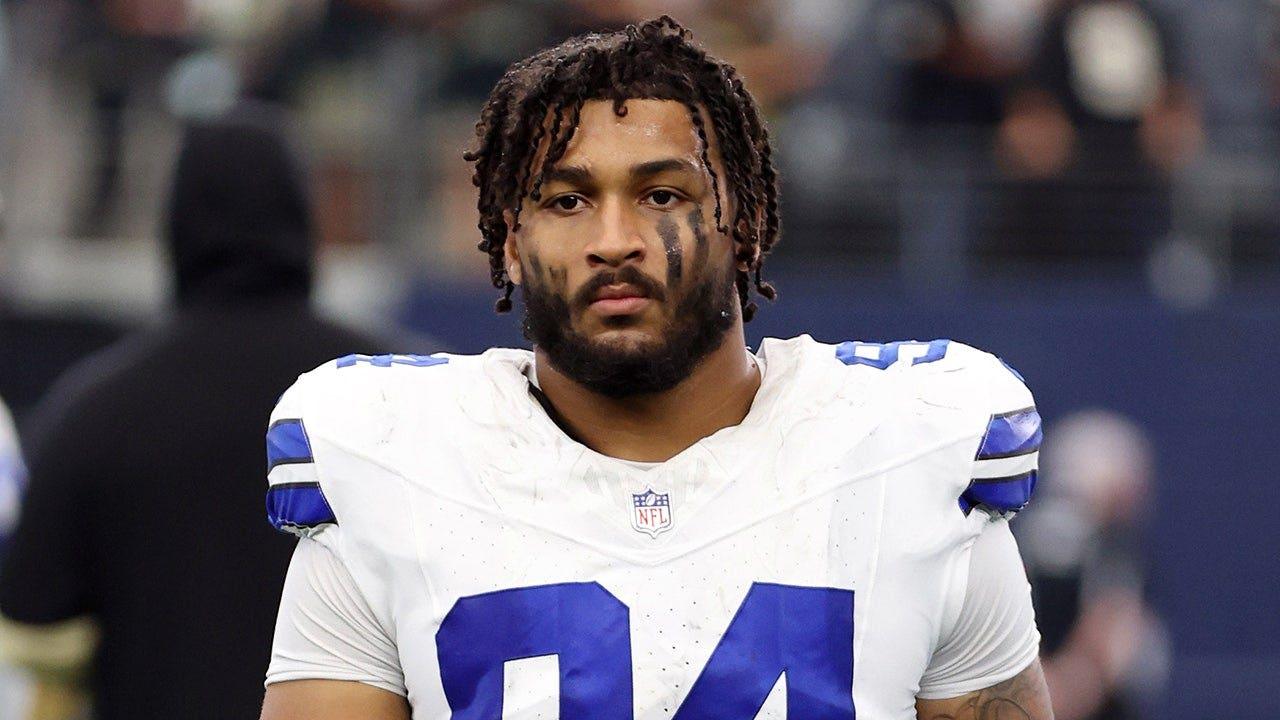
Dallas Cowboys defensive end Marshawn Kneeland (94) leaves the field after the game against the New Orleans Saints at AT&T Stadium in Arlington, Texas on September 15, 2024. (Tim Heitman/Imagn Images)
“While this diagnosis does not change the tragedy of his death, it provides important context on some of the challenges he may have faced. We are sharing this information to help people understand what athletes in the NFL and other high contact sports may be dealing with,” the family said in a statement through the Concussion & CTE Foundation.
“Raising awareness is important to us. We continue to remember Marshawn with compassion for the person he was, rather than defining him by the final moments of his life. One Love.”
Dr. Ann McKee, director of the Boston University CTE Center and chief of neuropathology at the VA Boston Healthcare System, said she was not surprised to find CTE in Kneeland’s brain.
“Unfortunately, I was not surprised to find CTE in Mr. Kneeland’s brain, because we found this progressive brain disease in nearly half of the athletes we studied who died before the age of 30,” McKee said in a statement through the Concussion & CTE Foundation.
ZERO BS. JUST DAKICH. TAKE THE DON’T @ ME PODCAST ON THE ROAD. DOWNLOAD NOW!
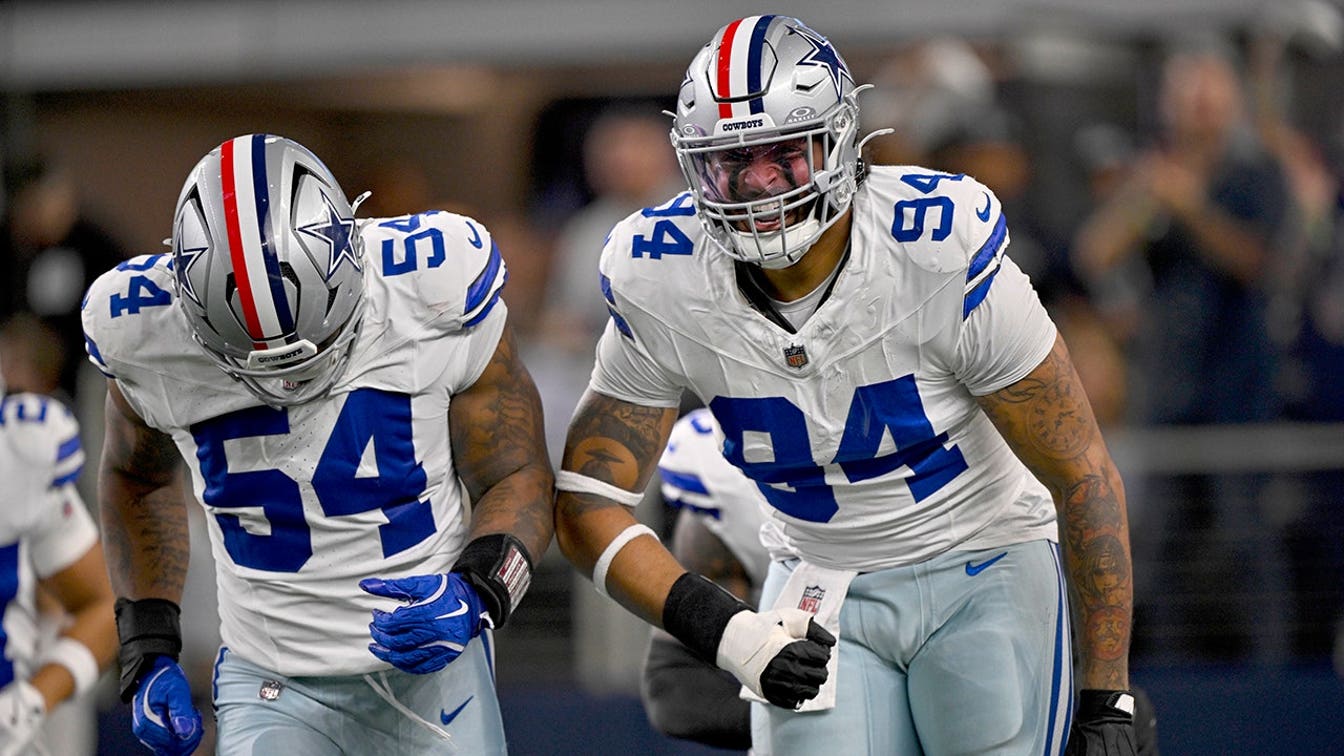
Dallas Cowboys defensive end Marshawn Kneeland (94) and defensive end Sam Williams (54) celebrate after returning a blocked punt for a touchdown during the game between the Dallas Cowboys and the Arizona Cardinals at AT&T Stadium in Arlington, Texas on November 3, 2025. (Jérôme Miron/Imagn Images)
“Thanks to the generosity of our brain donor families, we now better understand the early stages of CTE, and this brings us closer than ever to a lifelong diagnosis of this disease.” My team and I are completely dedicated to finding effective treatments and a cure for CTE. »
Dr. Chris Nowinski, CEO of the Concussion & CTE Foundation, noted that Kneeland still suffered from CTE despite playing in an era with concussion protocols and better helmets.
“Mr. Kneeland played in the modern era of concussion protocols and better helmets, and yet he still developed CTE,” Nowinski said.
CLICK HERE TO DOWNLOAD THE PK Press Club APP
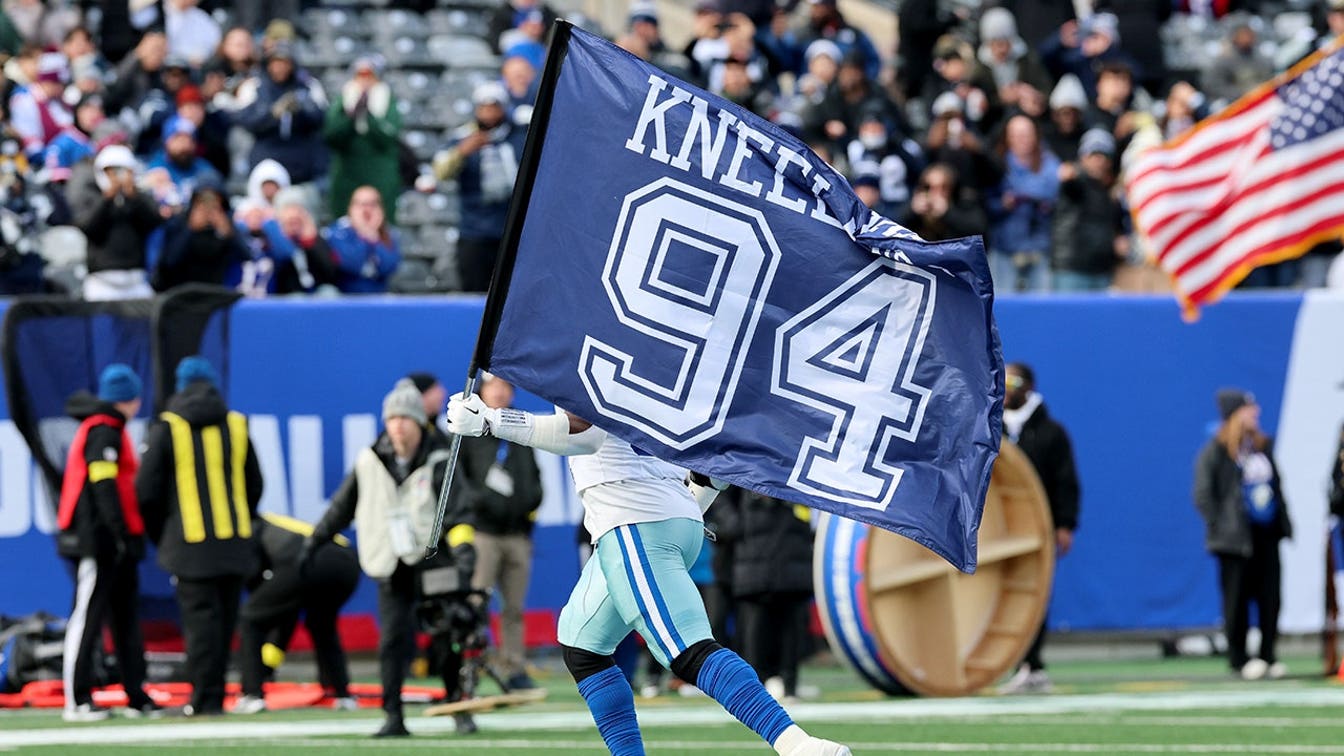
Dallas Cowboys defensive tackle Osa Odighizuwa (97) takes the field with a flag honoring late Dallas Cowboys defensive end Marshawn Kneeland before the game against the New York Giants at MetLife Stadium in East Rutherford, New Jersey on January 4, 2026. (Vincent Carchietta-Imagn Images)
“We have no reason to believe that the current generation is at lower risk of CTE than previous generations. Concussion prevention protocols do not prevent CTE because CTE is caused by repeated head impacts, not just concussions. If we want to reduce the risk of CTE, we must implement CTE prevention protocols and aggressively reduce the number and force of head impacts at all levels of the game.”
Kneeland started playing soccer when he was 7 years old. He played at Western Michigan University before being selected in the second round of the 2024 NFL Draft by the Cowboys.
In 18 career games with the Cowboys, Kneeland recorded 26 tackles and one sack. His death came just days after he recorded his first NFL touchdown in a game against the Arizona Cardinals by recovering a blocked punt in the end zone.