NEWYou can now listen to PK Press Club articles!
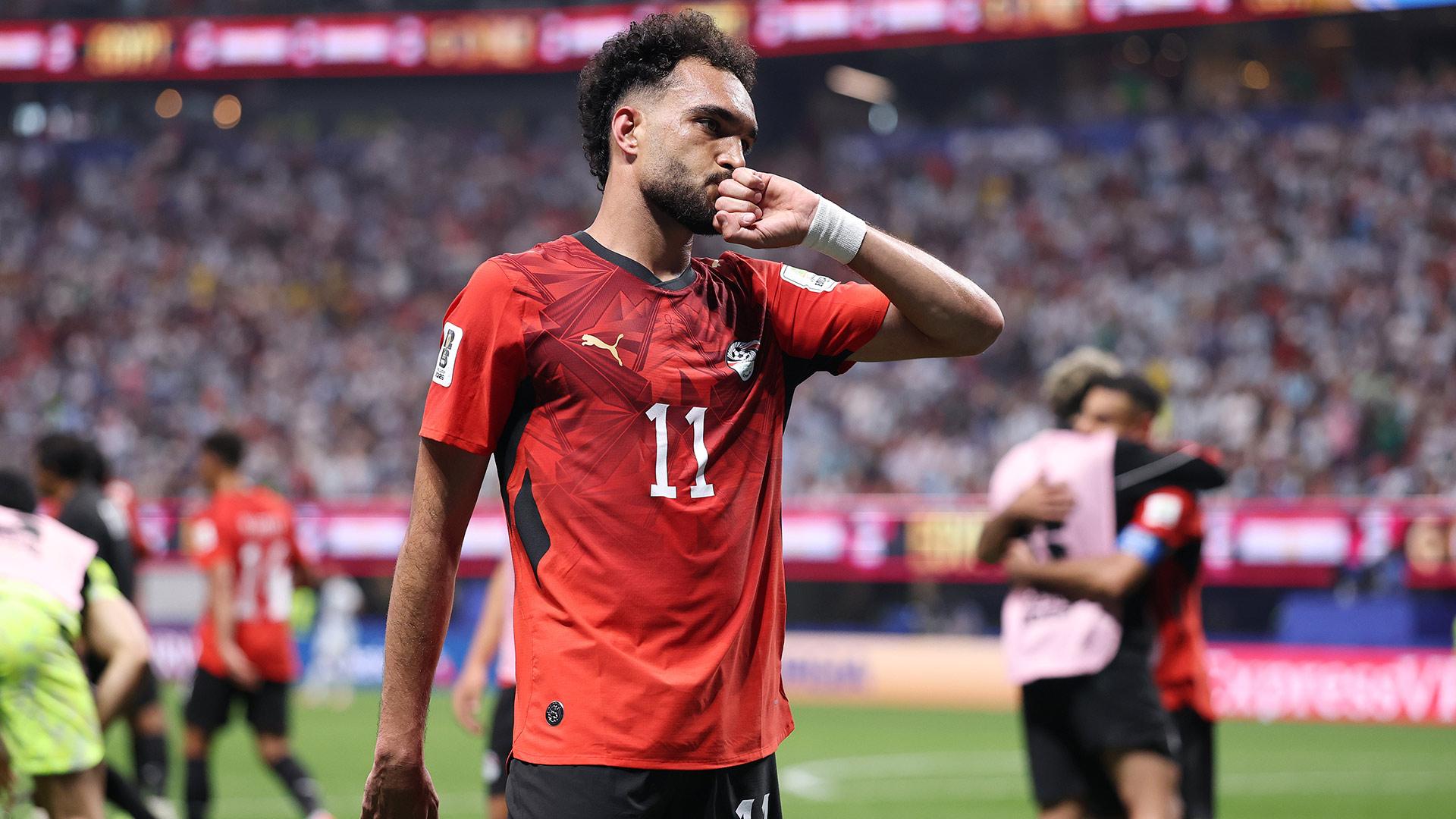
Egypt almost put Argentina on the ropes in the 58th minute of the World Cup round of 16 on Tuesday, until VAR intervened.
Midfielder Mostafa Zico’s breakaway goal that would have put Egypt up 2-0 was disallowed after a VAR check determined that midfielder Marawan Attia had fouled Argentina defender Lisandro Martínez before the goal. However, the foul occurred while Argentina were on attack, leading to some controversy over whether VAR overstepped its scope.
“It’s certainly not within the reach of VAR. [realm] to look at that,” FOX Sports analyst Rob Green said on the broadcast. “It’s the full length of the field.”
FOX Sports soccer refereeing expert Dr. Joe Machnik, on the other hand, thought the fact it was a foul meant the goal should have been disallowed.
“A foul in the offensive phase of the game, which leads to a goal or possession by the team that [scores] a goal may result in the goal being disallowed and a free kick being awarded,” Machnik explained.
Still, Green believed Argentina got away with it because he didn’t agree with the decision.
“What a disappointment for Argentina. All the way down the field,” Green continued. “The fact that, 100 yards away, someone steps on someone’s feet is not the reason VAR was introduced into the game. We have now reached a point where we have reached way beyond the powers it should have. The referee saw the tackle, decided not to give it and Egypt, with a brilliant breakaway goal, were denied a two-goal lead.”
Argentina could do nothing from the ensuing free kick, and Egypt was able to take a 2-0 lead when Ziko scored again in the 67th minute. However, Argentina scored in the 79th minute to cut Egypt’s lead to 2–1, and Lionel Messi scored the equalizer in the 83rd minute. So, the unauthorized objective assumes great importance.
Referee François Letexier was at the center of controversy on Tuesday after an Egyptian goal was ruled out following a VAR review. (Sébastien Frej/Getty Images)
“It’s not a decision for VAR”
FOX Sports’ other soccer rules analyst, former FIFA referee Mark Clattenburg, disagreed with the call and review of VAR.
“I don’t believe that A. it was a foul and B. that there should be a VAR intervention to disallow that goal,” Clattenburg told us after the match.
“It’s not a decision for VAR,” he added.
He highlighted a lack of consistency in enforcement throughout this World Cup, with previous comparable incidents not being given a second look by VAR.
“My point of view is simple: this challenge, this type of foul, is not consistent with the way the referees have officiated this tournament,” Clattenburg said. “They allowed some physical challenges. They allowed some physical contact. And you can argue that it’s not a foul. And certainly, it’s not a VAR intervention when the referee made the decision on the field of play, and it’s a very subjective decision whether it’s a foul or not. It’s not a clear foul.”
Clattenburg also shared Green and others’ take on the enormous distance and time between the foul and the disallowed goal.
“VAR [was] looking at something too deeply and looking for something that happened in the match to try to overturn Egypt’s goal,” Clattenburg continued.
“This one had a lot of passes and a long distance to the goal and a lot of time. It’s not like one or two seconds. It must have been, what, 10 seconds from the foul to the goal scored, so that’s too long too.”
Due to the questionable contact and being about three-quarters of the way from the goal, play should have been stopped, not least because Argentina had time to reset, he said.
“If we look at Argentina,” Clattenburg added, “they made decisions that definitely benefited, and this one definitely benefited Argentina because it was a disallowed goal. And certainly a lot of people around the world will see that as an unfair intervention by VAR.”
“This fulfills the protocol”
After the match, Machnik explained about the “World Cup NOW” call that the process used to remove the goal from the scoreboard and call the foul was correct.
“It’s been part of the VAR protocol for a long time, it’s one of the first things they decided, that they didn’t want a foul to lead to a goal being scored to allow that goal to be awarded,” Machnik said. “Now, they never said there was a distance, that the foul was going to happen five seconds before or 75 yards away. Until a team regained possession or made a play, that possession was clearly gained from the foul and that foul led to the possession that led to the goal.
“It’s within protocol, and that’s why it was denied.”
Even though the on-field referee likely saw the tackle and chose to let the play continue, Machnik stressed that doesn’t mean the on-field call will still stand.
“Refereeing, at this level, is all about angles,” Machnik said. “So from the angle the referee may have had, this foul happened in one corner of the pitch. He’s quite far away. Maybe he didn’t have an angle. The assistant referee on that side of the pitch is at the other end.
“So what VAR says is: ‘Let me show you a different angle.’ And when you see from a different angle, there is a mistake, his foot was stepped on. »
Machnik admitted that VAR had won Egypt a magical moment and that the end result would not always be a decision that would satisfy people.
“We don’t like it,” Machnik said. “Most of the time, that’s how I feel about what VAR has done to the game. About 75% of the time it takes away something fun. The other 25% of the time it presents us with something ugly and painful.”
How Egypt reacted to the goal disallowed by VAR
Egypt coach Hossam Hassan made it clear he disagreed with the VAR control that led to Zico’s disallowed goal.
“I’m not convinced of this result. I’m not convinced of the way things went in this match,” Hassan said via the Associated Press. “I don’t want to try to put it nicely here with nice wording, choice wording, and saying bad luck and so on.
“We were treated unfairly today. We suffered an injustice.”
WHAT YOU SHOULD READ NEXT
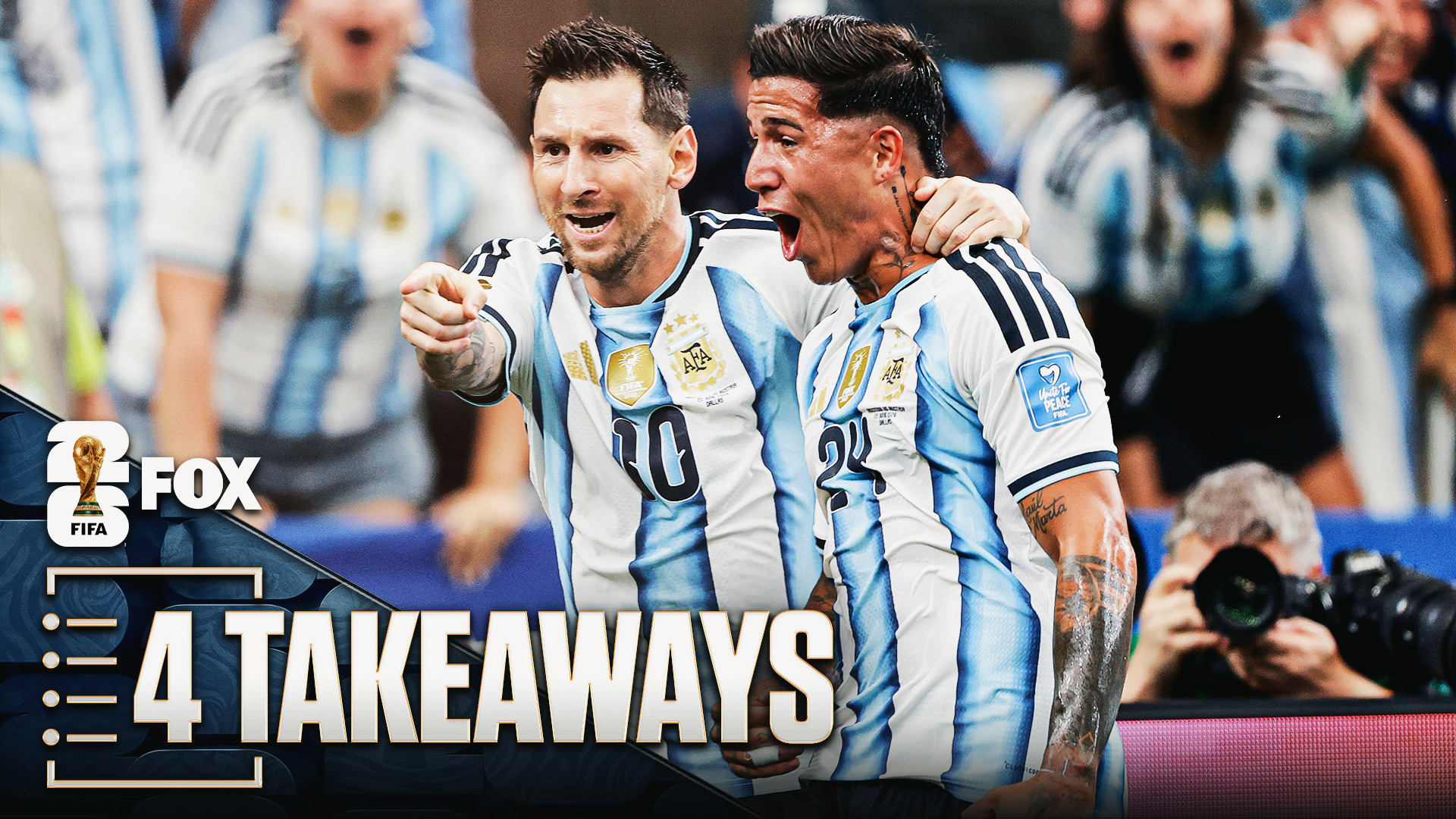
Argentina made an incredible comeback on Tuesday afternoon.