
ISLAMABAD:
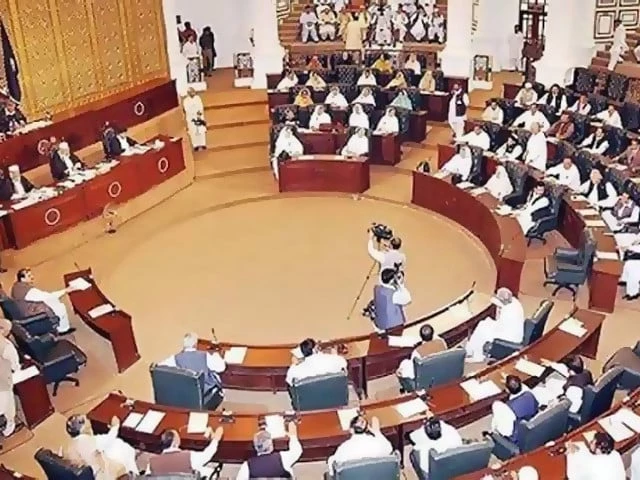
More than two months after the Khyber-Pakhtunkhwa (KP) Assembly quietly enacted a package of laws expanding lawmakers’ salaries, allowances and legislative privileges, the legislation has come under renewed public scrutiny after excerpts of the laws resurfaced on social media, sparking criticism over improved benefits, official passport rights and assembly privileges provisions.
The controversy centers on two of the three laws passed by the KP Assembly on April 30: the KP Province (Salaries and Allowances of Members) Act and the Powers, Privileges and Immunities of the KP Assembly (Amendment) Act, 2026.
Although the legislation received the governor’s assent in early May and largely escaped public attention at the time, screenshots of the enacted laws began circulating online this week, reigniting debate over the scope of benefits granted to lawmakers and the implications of some of the new provisions.
The legislative package also included a law relating to the salaries and allowances of presidents. Although the president’s bill was revised following criticism during its passage through the Assembly, the rest of the legislation generated little public debate after it passed.
Criticism has focused primarily on the KP Province (Members’ Salaries and Allowances) Act and the KP Assembly Powers, Privileges and Immunities (Amendment) Act, which expand the range of benefits available to lawmakers while also extending certain legislative privileges.
Among the provisions criticized are enhanced allowances and benefits for lawmakers, including access to government rest homes, airport VIP lounges, exemption from toll taxes, security provisions and the right to an official passport for members, with the same facility extended to their spouses for life, subject to applicable federal law.
Besides, the KP Assembly Powers, Privileges and Immunities (Amendment) Act has also come under scrutiny with regard to the provisions relating to legislative privilege. One of its most debated clauses provides for imprisonment of up to six months, a fine, or both, for publishing proceedings or evidence that the Assembly has ordered kept confidential. The provision has fueled concerns online about its potential implications for media coverage and transparency.
PML-N Parliamentary Leader in the National Assembly Dr Tariq Fazal Chaudhry also criticized the legislation, accusing the provincial government of prioritizing the privileges of legislators over public welfare.
In an article on
Responding to the controversy, KP Chief Minister Shafi Jan’s spokesperson rejected allegations that the provincial assembly approved blue passports for lawmakers and their spouses or passed a law allowing journalists to be jailed for six months.
He called the reports “false” and “baseless,” argued that the issuance of passports fell under the jurisdiction of the federal government, and said no such privilege had been added in the legislation.
However, the adopted law on salaries and allowances of deputies stipulates that deputies are entitled to an official passport, with the same facility granted to their spouse for life, subject to the provisions of the applicable federal law.
Similarly, the Powers, Privileges and Immunities (Amendment) Act contains a provision prescribing imprisonment of up to six months and fine for publication of proceedings or evidence which the Assembly has ordered to be kept confidential.
Defending the increase in legislators’ remuneration, Shafi Jan said KP legislators remained the lowest paid legislators in the country, receiving a monthly salary of Rs 175,000.
He argued that lawmakers from Punjab, Sindh, Balochistan and the National Assembly were receiving significantly higher salaries, saying the legislation only brought KP lawmakers closer to their counterparts elsewhere.
The controversy has also reignited questions about transparency. Although they came into effect in May, the laws could not be found on the official website of the KP Assembly or in its online legislative archives at the time of filing this report, although excerpts of the laws were circulating widely on social media.
Commenting on the issue, Ahmad Bilal Mehboob, president of the Pakistan Institute for Legislative Development and Transparency (PILDAT), said that salary increases for legislators often generate a negative public reaction as politicians usually suffer from a poor public image and many people are unaware of the context behind such increases.
“Being legislators is a full-time job and not all legislators come from a wealthy class, so legislators must receive a market-conforming salary,” he said.
However, Mehboob said some of the newly approved benefits were difficult to justify.
“Lifetime diplomatic passports for lawmakers and their families are an unwarranted requirement. Likewise, multiple licenses for banned handguns are another unreasonable requirement and amount to seeking status above the law. Legislators should focus on legislation and executive oversight rather than seeking unreasonable benefits,” he added.


