
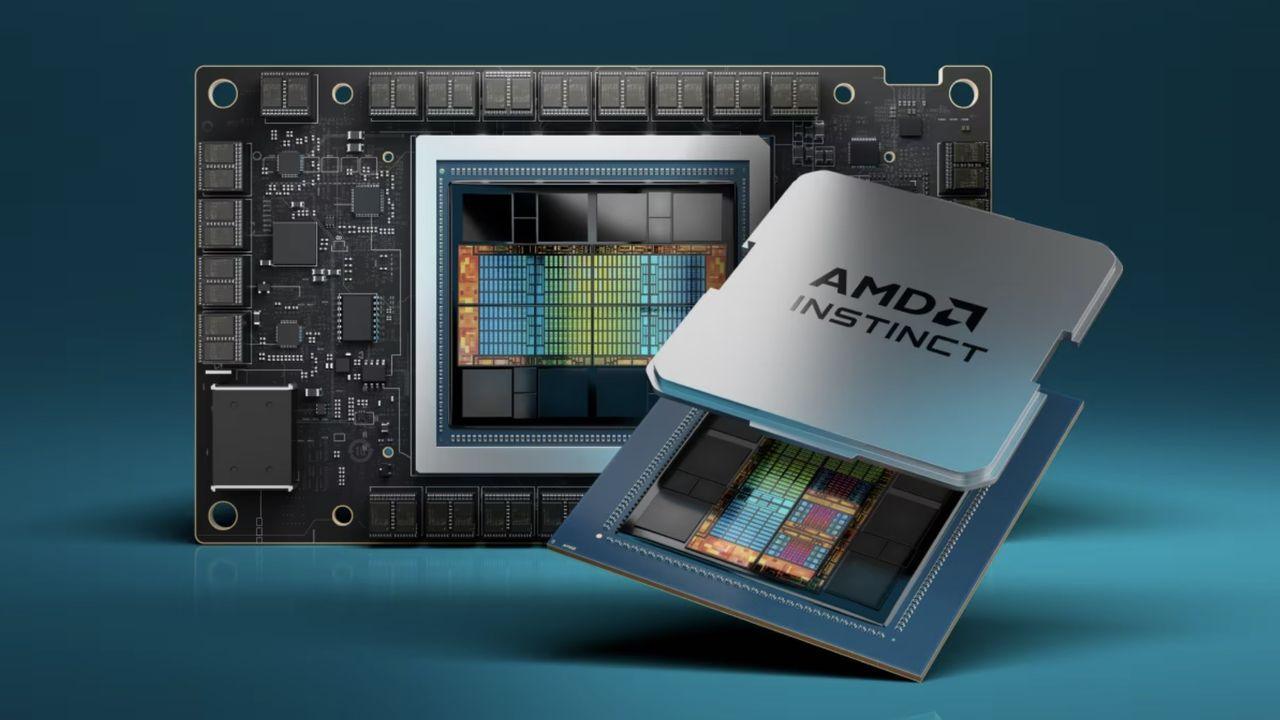
- Launch of AMD’s Versal Premium Gen 2 packaged memory officially ends HBM in its adaptive SoC lineup
- The move represents an approximately 65% reduction in bandwidth from the 840 GB/s of the no longer available HBM Versal, down to just 288 GB/s.
- AMD considers this a win, citing better availability, a smaller form factor, efficiency gains, and a guaranteed memory supply for the next 15 years.
The AI boom may have just eaten AMD’s lunch, thanks to an HBM shortage that forced it to resort to lower-bandwidth LPDDR5x for its Versal Premium Gen 2 packaged memory offerings.
AMD recently announced the Versal Premium Gen 2 packaged memory family, which leverages up to 32GB of LPDDR5x memory directly on the chip package.
The move, which effectively reduces bandwidth by 65% compared to previous generation Versal offerings using HBM, is seen by many as the need of the moment as memory reserves dwindle in the face of overwhelming demand.
A needs-based transition to lower bandwidth memory
AMD’s decision is calculated, even if it comes at a significant performance cost to the chip designer. HBM memory supply is tight, and even within AMD’s own lineup, its more cost-effective (and more demanding) Instinct data center GPUs are taking priority for current and future iterations of HBMs.
AMD is therefore both a beneficiary and a victim of the same wave of AI demand that creates opportunities on one side but limits supply for other segments, such as its consumer hardware, gaming and SoC divisions.
AMD’s Versal line comes from Xilinx, which it acquired in 2022. Xilinx shipped its first integrated memory FPGAs, Virtex UltraScale+ HBM parts, in 2018 with up to 16 GB of first-generation HBMs. The Versal HBM follow-up series, a variant of the Versal Premium line, supported up to 32 GB of HBM2e with 840 GB/s bandwidth.
The problem for AMD is not just the supply for its new Versal FPGAs, what it calls an adaptive SoC (System-on-Chip), but the fact that these are extremely long-running products. In other words, support, dedicated provisioning, and accessories must remain available to consumers for a long time if they want to adopt and continue working with a particular class of FPGA, which complicates things.
AMD discontinued its latest generation Versal lineup in September 2025, citing HBM2E supply constraints rather than issues with the chips themselves, and offered no alternatives to customers, stating only that “final orders (LTBs) for adaptive SoC parts will be accepted through June 30, 2026, subject to hardware availability.”
The new Versal line effectively fills this gap, stating that it has a 15-year life cycle and citing “memory longevity” as the reason for its move to LPDDR5X.
AMD’s move brings it other advantages despite the obvious bandwidth choke point: LPDDR5X has better availability than HBM for the foreseeable future, and it also operates at industrial temperatures, while HBM tends to be stacked in a way that requires advanced cooling. Not only does the LPDDR5X run cooler, often passively in most configurations, but with only 4 onboard memory chips, it is more than 60% smaller than comparable FPGAs.
The new FPGAs will be considerably cheaper to manufacture than their HBM alternatives under current market conditions, and with Chinese memory suppliers such as CXMT also eyeing the same market, Versal Gen 2 could be the long stay that its predecessor was initially intended for a rapidly changing market.


