
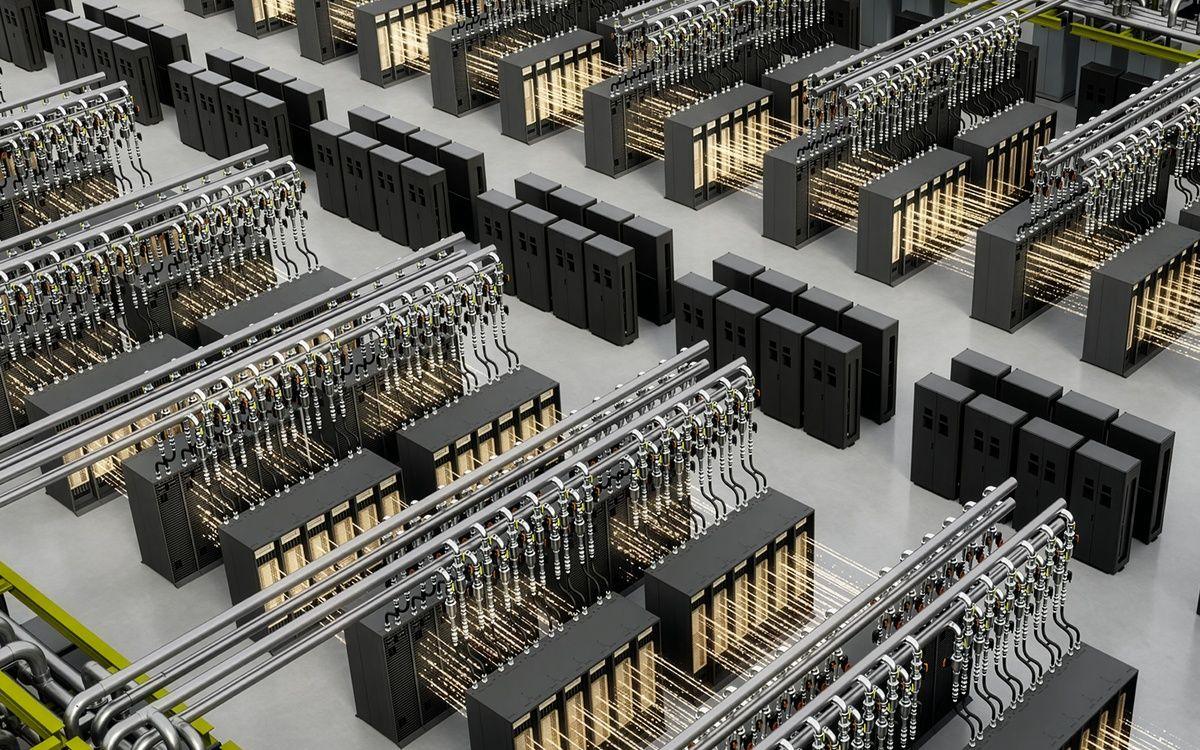
- 13,750 Vera CPUs and 27,500 Rubin GPUs will drive computing in the Nvidia Vera Rubin AI factory
- The project will be the world’s first national AI infrastructure for physical AI
- By partnering with Noetra Corp, Nvidia supplies hardware to drive Japan’s FRONTia project
Japan’s Ministry of Economy, Trade and Industry (METI) is supporting a partnership between Noetra Corp and Nvidia to lay the foundation for its national artificial intelligence initiative, Project FRONTia.
Noetra Corp – which includes NEC, Sony, Honda, SoftBank Corp and has the backing of 44 other companies and organizations – won a tender on June 30, 2026 to manage FRONTia until 2030, with up to 1 trillion yen (about $6.1 billion) expected to be invested in the project over the five years.
Japan views FRONTia as the heart of its sovereign AI ecosystem for industry, providing the computing power needed to develop advanced multi-modal core models that can be used to drive physical AI. Robotics in industry and healthcare can potentially benefit, as well as the development of superior AI agents and digital twins.

What is the FRONTia project?
Aimed at fostering collaboration between global technology leaders and Japan’s manufacturing expertise, and harnessing real-world industrial data, the FRONTia project (referring to the “Development of Multi-Modal Base Models for AI Robotics and Physical AI” project) is described as “the core of the country’s physical AI ecosystem”, by Ryosei Akazawa, Japan’s Minister of Economy, Trade and Industry.
“By fostering collaboration between Japan and the world’s leading innovators, including NVIDIA, and leveraging Japan’s strengths, such as its on-site expertise and manufacturing technology infrastructure, we will build highly reliable multi-modal core models and help solve global social challenges.
Once built, the Nvidia Vera Rubin AI facility will provide Noetra’s multi-modal core models to domestic model developers and businesses. Nvidia’s AI-related software models and libraries will also be available.
The FRONTia project has, however, attracted some criticism. The parties concerned highlighted the lack of financial transparency from Noetra and the Japanese government, as well as the presence of Nvidia as a partner, with the American company seen as a strategic rival. Meanwhile, the massive energy costs associated with AI installations are once again seen as an unnecessary problem to create.
“Japan invented modern manufacturing. Today, it is building the AI factories that will power the next industrial revolution,” said Jensen Huang, founder and CEO of Nvidia.
“NVIDIA is honored to partner with Japan and its industry leaders to build the AI infrastructure that will power the country’s industries, its economy, and a new generation of innovation.
Is the world ready for physical AI?
The impact of AI on the creative industries has been widely debated, but its potential beyond “generative” processes – such as in physical space – has escaped scrutiny. To date, physical AI (the integration of AI with physical hardware such as robots, vehicles, or industrial machines) has not been able to evolve as quickly as generative AI with increasingly in-depth LLMs.
Predicting the next word is much easier than, say, predicting changing terrain for an autonomous machine, and without the delicate motor skills of a human, no process can be completely automated.
This is a problem for physical AI, and investing money into developing solutions like the NVIDIA Vera Rubin AI Factory will surely have a direct impact on the workforce. A successful physical AI project means more automation from robots and fewer physical tasks.

Follow TechRadar on Google News And add us as your favorite source to get our news, reviews and expert opinions in your feeds.


