
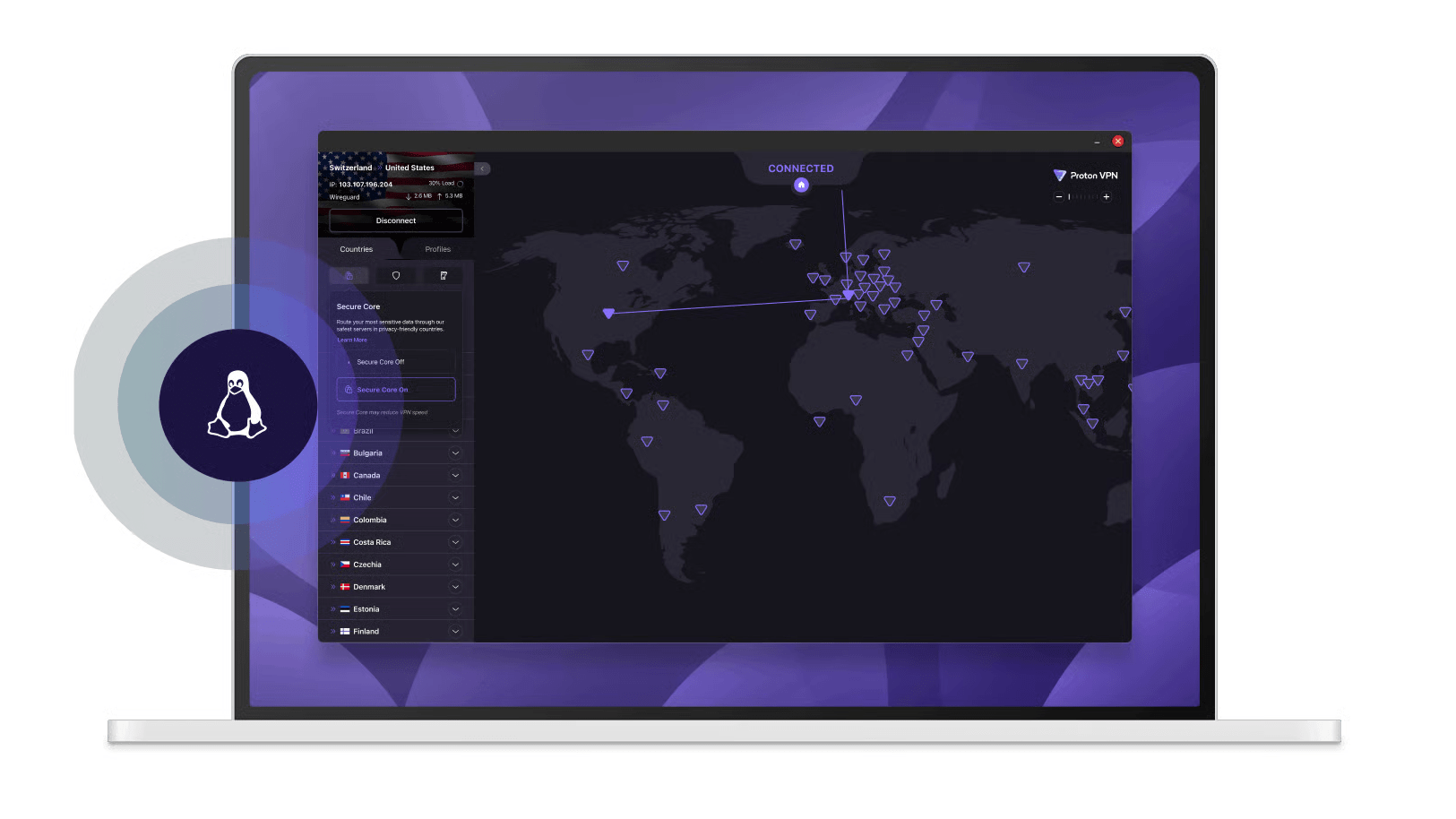
- Proton VPN’s Stealth Protocol is now available in beta for Linux GUI users
- Obfuscation feature hides VPN traffic to better evade censorship
- It is currently supported on Debian, Ubuntu and Fedora distributions
In a major win for open source enthusiasts, Proton VPN has officially released its proprietary Stealth protocol into beta for Linux. Known for being one of the best VPN services on the market, the Swiss provider continues its efforts to bring the Linux experience on par with its Windows and Mac counterparts.
Announced on its official Reddit account, the release introduces powerful obfuscation capabilities to the platform. Simply put, the Stealth protocol makes your VPN connection appear like regular, unencrypted internet traffic, allowing you to bypass aggressive internet blocks and firewalls in highly censored regions.
Speaking directly to TechRadar, the Proton VPN team confirmed the deployment, noting high demand from the open source community. “Our Linux community has expressed a desire for support for the Stealth protocol, and we are happy to make this a reality,” a Proton spokesperson said.
Being a beta version means users may experience instabilities and bugs. This is why Proton encourages users to report any issues. “We welcome user feedback as much as possible,” Proton told TechRadar.
Proton also confirms that Stealth is only available on Debian, Ubuntu and Fedora distributions at the moment, with more coming by the end of summer. If you want to test the feature today, it’s worth noting that it’s currently limited to the Proton VPN Linux GUI (graphical user interface) app.
Going Unnoticed: Why Stealth Matters for Linux
Authoritarian governments, restrictive Internet service providers (ISPs), and strict workplace network administrators frequently use a technique called Deep Packet Inspection (DPI) to detect and block VPN traffic.
Standard VPN protocols, like OpenVPN and WireGuard, have distinct cryptographic signatures. Even if your data is securely encrypted, DPI can analyze the metadata of your connection, spot these signatures, and immediately cut off your access to the wider web.
Obfuscated servers, such as those used by Proton’s Stealth protocol, remove this identifying metadata. By encapsulating the connection to make it look like standard HTTPS web traffic, Stealth effectively hides the fact that you’re using a VPN in the first place.
As Proton notes, “Linux users now have an effective and easy way to hide their VPN traffic. The Stealth protocol helps avoid deep packet inspection and makes it more difficult to detect and block a VPN.”
Stealth Protocol is now available in beta on Linux
from r/ProtonVPN
The Stealth beta is part of a much larger strategy to revamp Proton’s offerings for Linux.
Over the past year, we’ve seen the vendor promise a complete overhaul of Linux, bringing parity between its desktop clients. Since then, the company has provided official one-click installs on the Snap store, introduced better stability updates, and most recently expanded its capabilities with a new split tunneling feature.
Bringing Stealth to Linux fulfills one of the major promises Proton made earlier this year. It also reaffirms that users of open source operating systems are not left out when it comes to vital anti-censorship tools.
While CLI (Command Line Interface) users will have to wait a little longer, this beta version of the GUI is a huge step forward for digital freedom.
Follow TechRadar on Google News And add us as your favorite source to get our news, reviews and expert opinions in your feeds. Make sure to click the Follow button!


