
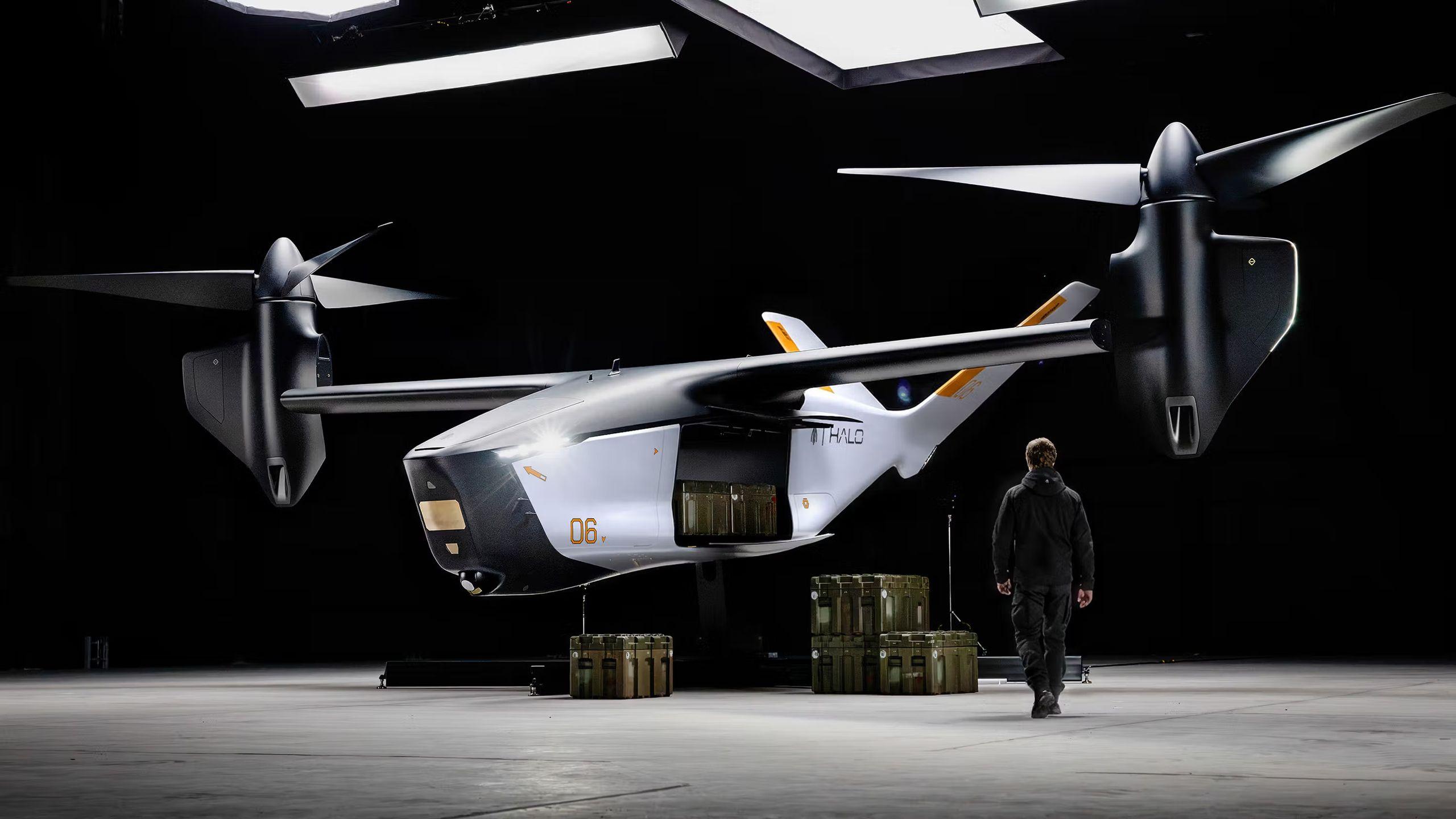
- Anduril and Archer Aviation have unveiled Thunder, an autonomous tilt-rotor “loyal wingman” designed to fly alongside manned attack helicopters
- The rotorcraft can carry up to 10 air-to-ground missiles or 76 guided rockets while being equipped with anti-drone technology.
- Its first flight is planned for 2027, but no pricing has been disclosed and no named customers have been announced.
Anduril opened the 2026 Farnborough International Airshow with the kind of reveal the event is increasingly built around: not a jet, but a robot.
The defense startup, in partnership with electric aircraft maker Archer Aviation, unveiled Thunder, an autonomous Group 5 attack rotorcraft designed to fly alongside manned attack helicopters like the Boeing AH-64 Apache and the U.S. Army’s upcoming Bell MV-75 Cheyenne II, or to operate entirely on its own.
The Thunder aims to address the growing recognition that the modern battlefield is primarily one for near-surface weapons and personnel, by providing a cheaper and safer option for Western militaries.

Thunder design focuses on “mass”
Anduril has repeatedly mentioned mass when it comes to the Thunder, and for good reason.
Not only can the Thunder essentially act as a standalone air unit in a formation containing other attack helicopters, but it can also carry an impressive amount of munitions and electronic warfare equipment, essentially multiplying the threat posed by any helicopter squadron.
Not only does it risk fewer lives, if any, but it also costs less than a fully equipped attack helicopter and the trained personnel needed to man it, making it a no-brainer for the future if it delivers on its promises.
The exchange is intended to be obvious: deploy enough autonomous wingmen at a price low enough so that the loss of one of them is an accounting event and not a notification of loss. This is the same “affordable mass” doctrine that Anduril and others brought to the fighter world through collaborative fighter programs.
The Thunder simply expands it from fast, fixed-wing jets to Army attack aviation, which is arguably where Ukraine has shown the need to be greatest.
It is also, tellingly, a team concept rather than a replacement concept. Anduril doesn’t claim that Thunder makes Apache obsolete; he claims that Thunder keeps the Apache relevant by absorbing the parts of a mission most likely to kill a crew, while the humans stay further back and make the decisions.
Anduril’s ambitions for collaborative fighter jets are already visible: a drone he designed recently launched an AMRAAM air-to-air missile at a digital target, with human pilots still firmly in control, even as the aircraft’s autonomy continues to grow.
The Thunder is now a full-scale model with a goal of first flight expected in 2027, meaning some details are subject to change. But even though Anduril Industries remains tight-lipped about costs and potential customers, the rotorcraft appears linked to the UK’s Project NYX Apache-wingman program, for which the defense contractor’s UK arm has already been shortlisted.

Follow TechRadar on Google News And add us as your favorite source to get our news, reviews and expert opinions in your feeds.


