
NCCIA objects to maintainability of pleas, says motions for suspension of sentence were filed prematurely
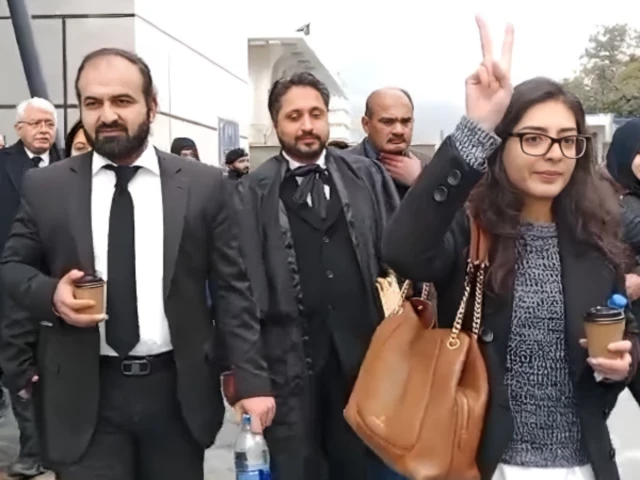
Lawyer and rights activist Imaan Mazari and her husband, lawyer Hadi Ali Chattha. PHOTO: EXPRESS
The Islamabad High Court (IHC) on Friday reserved its decision on upholding applications for suspension of sentences granted to lawyers Imaan Mazari and Hadi Ali Chattha in the controversial social media posts case.
Imaan, a rights activist and lawyer, and Chattha, a lawyer, were sentenced in January 2026 to a combined 17 years in prison on multiple charges related to controversial social media posts that the prosecution said amounted to an anti-state narrative under cybercrime laws.
Justice Muhammad Azam Khan heard requests to suspend the sentences.
Read: SC adjourns Imaan Mazari and Hadi Ali Chattha request for stay amid IHC proceedings
At the start of the hearing, the National Cyber Crime Investigation Agency (NCCIA) raised objections to the maintainability of the requests, as the agency’s attorney argued that the requests were filed prematurely.
“We request that our miscellaneous motion be heard first. If the other miscellaneous motion is heard before ours, our motion will become ineffective,” argued the lawyer.
Mazari and Chattha’s lawyer, Faisal Siddiqui, told the court that he was ready to present arguments on the various motions.
“They say that if the requests for suspension of sentence are rejected, then the two cases should be heard together,” he argued.
Addressing the defense lawyer, Justice Khan remarked that he should prepare himself first, adding that it would be better for the protection of his rights.
In response, Faisal Siddiqui said he waived his rights and was ready to present his arguments.
The court said it would first consider the prosecution’s objection to maintaining the motions before proceeding.
Social media cases
The case against Imaan and Hadi concerns allegedly controversial posts and reposts on X, described by authorities as “anti-state.” The NCCIA registered the case under the Prevention of Electronic Crimes Act (PECA) 2016, alleging that the content was intended to incite divisions and portray state institutions in a negative manner.
The case about the social media posts came to the IHC after the trial court proceedings on November 19, during which the statements of all prosecution witnesses were recorded. The two lawyers had challenged procedural irregularities, including the recording of evidence in their absence and the appointment of court-appointed counsel without their consent, prompting the IHC to intervene.
Legal bodies, including the Islamabad Bar Association, criticized aspects of the proceedings, arguing that the defendants’ right to a fair defense had been compromised.
Their request to transfer the case was heard by the High Court, which refused to grant an immediate stay. The couple then approached the Supreme Court, which temporarily stayed the trial until the High Court completed its hearing.
Learn more: IHC adjourns suspension pleas of Imaan Mazari and Hadi Chattha until June 4
Meanwhile, several other FIRs surfaced against the couple during this period. One of the newly surfaced FIRs, registered at Kohsar Police Station on July 26, 2025, was filed following the complaint of Police Commissioner Safdar Hussain in connection with a protest by the Balock Yakjehti Committee at the National Press Club under several sections of the Anti-Terrorism Act.
The couple were arrested on January 23 near the underpass outside the Serena Hotel on their way to the district court and then sent to 14-day remand by an anti-terrorism court.
A district court and a sessions court subsequently sentenced them to a combined term of 17 years’ rigorous imprisonment each: five years under Section 9 of PECA (plus a fine of Rs 5 million), 10 years under Section 10 (plus Rs 30 million) and two years under Section 26-A (plus Rs 1 million), with additional imprisonment for non-payment of the fines. The judge also acquitted them of PECA’s hate speech charge under Article 11, saying prosecution witnesses did not support the allegation.


