
PM Shehbaz warns of delays, orders Gulf roadshows to promote changed policy for industrial refinery projects
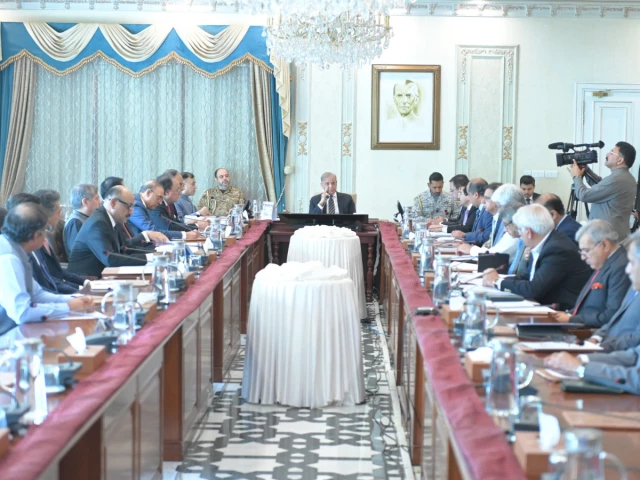
Prime Minister Shehbaz Sharif chairs a meeting of the Cabinet Committee on Energy in Islamabad. PHOTO: Office of the Prime Minister
The Cabinet Committee on Energy on Tuesday approved amendments to the Pakistan Petroleum Refining Policy 2023 that will enable the upgrading of Pakistan’s existing oil refineries to produce Euro-V standard gasoline and diesel, while reducing the production of fuel oil and other low-value petroleum products, according to a statement issued by the Prime Minister’s Office (PMO).
Prime Minister Shehbaz Sharif chaired the cabinet committee meeting at the Prime Minister House, where members reviewed refinery improvements, energy sector reforms and progress in the implementation of the refining policy.
The Prime Minister said modernization of existing oil refineries was an urgent national requirement and a key pillar of Pakistan’s energy security framework. He added that the upgraded refineries would not only better meet the country’s energy needs, but also help reduce dependence on imported fuels while increasing the supply of environmentally friendly petroleum products.
Departure date: January 28, 2026.
وزیراعظم محمد شہباز شریف کی زیر صدارت کابینہ کمیٹی برائے توانائی کا اجلاس وزیراعظم ہاؤس میں منعقد ہوا۔ 2023 منظوری دی گئی۔
وزیراعظم نے کہا کہ آئل ریفائنریز کی اپ گریڈیشن وقت کی اہم ضرورت ہے… pic.twitter.com/vgywz8Uf9c
– Prime Minister’s Office (@PakPMO) July 28, 2026
The meeting was informed that modernization of existing refineries was essential to increase production capacity. Officials said the production of Euro-IV and Euro-V compliant fuels was necessary to meet Pakistan’s international environmental commitments, reduce air pollution and provide consumers with better quality fuel.
Prime Minister Shehbaz directed authorities to introduce reforms to improve the performance of the Oil and Gas Regulatory Authority (OGRA) and better respond to market requirements in order to promote competition, transparency and investments in the energy sector.
He stressed that the amended policy must be implemented effectively and without delay, warning that negligence or unnecessary delays would not be tolerated.
Tasking relevant ministries and institutions to accelerate the reform process while maintaining close coordination with all stakeholders, Prime Minister Shehbaz reaffirmed the government’s commitment to pursue sustainable reforms in the energy sector, promote modern technology and create a conducive environment for investment.
Read: Oil Minister holds meetings on energy investments
The prime minister also ordered authorities to organize roadshows in Qatar, Saudi Arabia and other Gulf countries to promote the amended policy on industrial refinery projects.
Meanwhile, officials told the meeting that the amendments for industrial refineries aim to ensure the production of eco-friendly, Euro-V-compliant gasoline and diesel, while reducing the production of fuel oil and other low-grade petroleum products.
Furthermore, Prime Minister Shehbaz congratulated Oil Minister Ali Pervaiz Malik and his team for their work on the amendments to the refining policy and directed the authorities to increase Pakistan’s strategic reserves of petroleum products.
The meeting was attended by Minister for Planning Ahsan Iqbal, Minister for Economic Affairs Ahad Khan Cheema, Minister for Finance Muhammad Aurangzeb, Minister for Petroleum Malik, senior federal secretaries, among other senior government officials.
Before policy changes
The approval comes after weeks of uncertainty over proposed changes to brownfield refinery policy, with industry stakeholders expressing concern that the government could retrospectively reduce presumptive duty protection from 7.5% to 5%.
Refinery representatives argued such a move would penalize companies for delays they say were caused by the government’s failure to execute upgrade agreements, although the industry had agreed to draft agreements in 2024.
Learn more: Time to dig deeper or continue importing
Government sources, however, maintained that the proposed reduction was linked to the failure of refineries to sign upgrade agreements within the stipulated time frame.
Industry officials rejected the claim, saying the deals were never delayed by the refineries and that they had repeatedly asked the Petroleum Division, OGRA and other government forums to complete the signing process.
The dispute centered on the protection of presumptive rights, a key incentive under the 2023 policy, designed to support investments in upgrading refineries for the production of Euro-V compliant fuels and to reduce the production of fuel oil. Industry representatives said the 7.5% protection mechanism has existed for more than two decades and reducing it would harm the profitability of planned investments. They also said changes introduced under the 2024 Finance Act – which moved major petroleum products from the zero-rated tax regime to the exempt sales tax regime – significantly increased non-recoverable tax costs and further delayed the implementation of the policy.


