
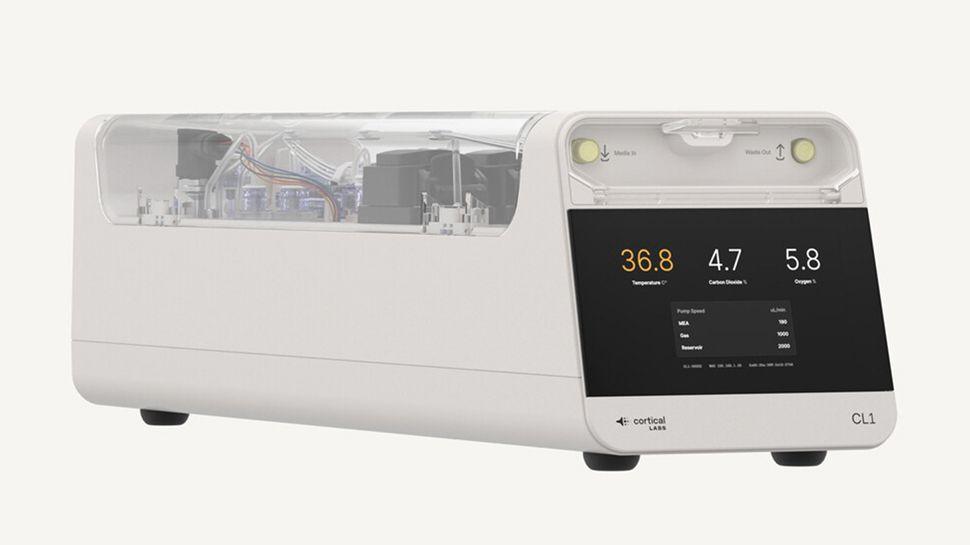
- Cortical Labs built the first deployable biological computer, at a price of $ 35,000
- The CL1 incorporates living neurons with silicon for real -time calculation
- The next step will be to build a stack of network servers of biological neurons
Despite the undoubtedly impressive progress that we have assisted in recent years, AI is still lagging behind from human intelligence. Although it can process large amounts of data, recognize models and generate high -speed responses, it lacks real understanding and reasoning, and although it improves, the question of hallucinations – when AI invents – remains a problem.
Two years ago, researchers from Johns Hopkins University in Australia, as well as scientists from Cortical Labs in Melbourne, suggested that the response to real and less artificial AI was organoids – computers built with human brain cells. Quick advance until today, and Cortical Labs has transformed theory into reality with the production of the world’s first biological computer in the world.
The CL1, which will be made on order but is available for online purchase (the time purchase option on fleas will also be offered), is a synthetic biological intelligence (SBI).
Connection directly to neurons
“Real neurons are cultivated in a solution rich in nutrients, providing them with everything they need to be healthy. They develop on a silicon chip, which sends and receives electrical impulses in the neural structure, “explains the company.
The world in which neurons exist is created by the biological intelligence system of cortical laboratories (organic) and “manages a simulated world and sends information directly to neurons on their environment. As neurons react, their impulses affect their simulated world. We give life to these neurons and integrate them into the bios with a mixture of hard silicon and soft tissue. You can connect directly to these neurons. »»
In deployment of the code directly in real neurons, the company affirms that the CL1 can resolve the most difficult challenges of today: “The neuron is self-programming, infinitely flexible and the result of four billion years of evolution. What digital AI models spend huge resources to try to imitate, we start. »»
“Today is the culmination of a vision that has been offering cortical laboratories for almost six years,” noted Dr. Hon Weng Chong, founder and CEO of Cortical Labs. “However, our long -term mission was to democratize this technology, which makes it accessible to researchers without specialized hardware and software. The CL1 is the achievement of this mission. Although today’s announcement is incredibly exciting, this is the foundation of the next stage of innovation.
A report of New atlasCortical complaint builds a “pile of neural network servers of raw neurons, housing 30 individual units which each contain the cells of their electrodes, which should go online in the coming months”. The site reports that the company aims to have four batteries available for commercial use via a cloud system by the end of 2025.
As for the prices, the CL1 will be surprisingly affordable. “The units themselves should have a price of around $ 35,000 US, to start (everything that is close to this type of technology is currently at a price of € 80,000, or nearly $ 85,000)”, “,” New atlas Add.
For the context, Apple’s “best failure”, the Lisa, which paved the way for Macintosh and even Microsoft Windows, sold $ 9,995.00 in January 1983, which, adjusted for inflation, third at $ 32,500 today. Will CL1 be as important for the future of IT as LISA? It is impossible to say it, but for the moment its impact will largely depend on scalability, practical applications and the way it fits into existing AI and IT systems.


