
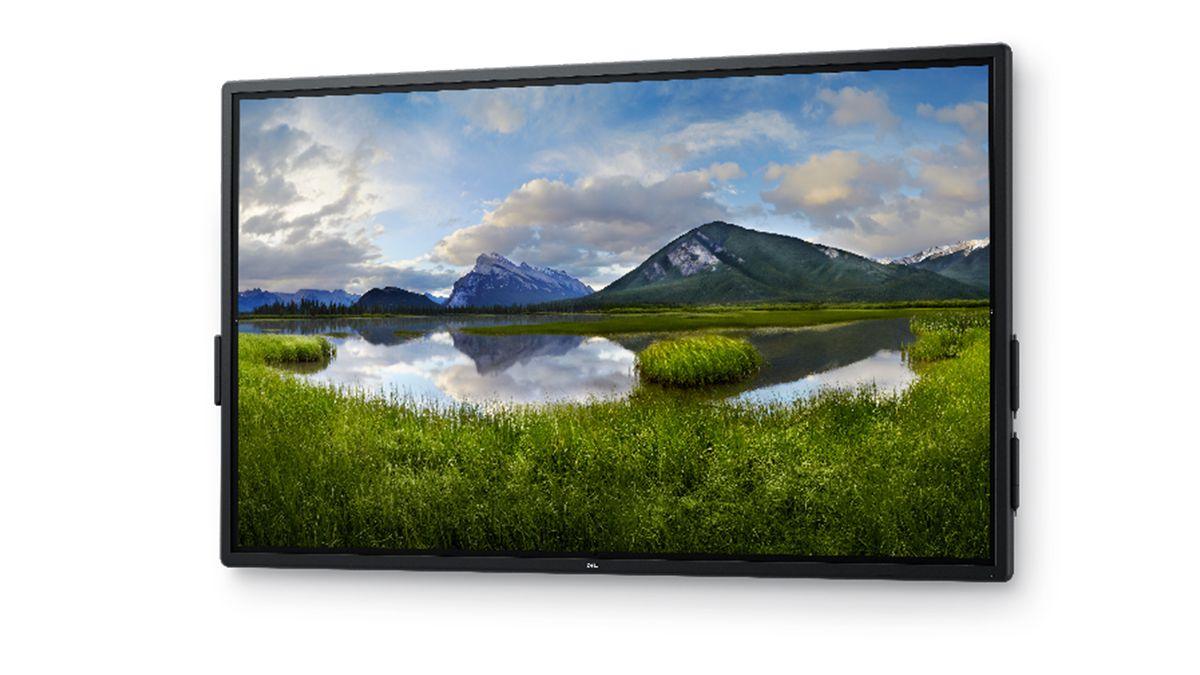
- A high price could withdraw some users from the new Dell Pro 75 Plus
- Viewsonic’s display board could eliminate Dell’s wind
- The display offers an impressive table of ports
One of the last Dell monitors is delivered with a high price, but it is a giant of a display.
The Dell Pro 75 Plus is, as its name suggests, a huge 75 -inch 75 -inch touch screen designed for more professional parameters, such as an office space or a meeting room. You could probably integrate it into a home office space, but it could be exaggerated.
The new Pro 75 Plus is equipped with 20-point touch-up technology and has 20W speakers alongside USB-C, HDMI, DisplayPort and Ethernet capabilities. Likewise, the screen includes exclusive access to Dell screen fall features and Dell Pro Micro Integration, making it the “ultimate solution to improve productivity and commitment”, according to the company.
Are you looking for a cheaper option? We covered you
The Pro 75 Plus is also equipped with Crestron Connect and Crestron Xio Cloud options, revealed DELL, allowing remote management and greater control via office network systems.
It will certainly be attractive for companies that revised their internal technology, but the price could be a major stumbling block, at $ 3,999.
The Pro 75 Plus is in no way the most expensive touch screen that we have encountered in recent years. Techradarpro was impressed by the Viewsonic IFP9850 4K Ultra HD screen in 2020, for example.
The huge 98 -inch screen is still sold at $ 8,490, more than double the Dell monitor.
However, if you are on the market for something cheaper, the viewsonic IFP75G1 display board is an excellent option. Also measuring at 75 inches, the interactive display will make you fall half the price at $ 1,999, but that is part of a limited -term promotion.
The 4K UHD display has some separate advantages compared to its counterpart Dell, with a 40-point touch screen, two internal speakers 10W, three HDMI ports and nine USB ports.
In particular, the screen also gives users the choice of a slit PC to really launch things, with available Android and Windows options.


